
24/7 Customer Support

Free returns

Same-day & Next-day Delivery

Quality Guaranteed

Unlock Your Welcome Offers: FREE Delivery | Up to 80% OFF | Free 30-day JoyPlus trial
Download the APP
Replacing an oven can look straightforward until you compare installation sizes, cavity capacities, cleaning systems and electrical requirements. Many UK shoppers focus on the finish or number of cooking programmes, then discover that the appliance does not fit the existing housing, needs an unexpected hardwired connection or offers a cleaning function that does not match their routine.
This guide explains the main buying traps, the specifications worth checking and which built-in electric ovens may suit different households.
A 60cm built-in oven usually has an external width of approximately 595mm, but cabinet cut-out dimensions vary. Depth, ventilation gaps, control-panel clearance and installation height also matter. A double oven may be designed for an eye-level housing unit, while a built-under model is intended to sit beneath a worktop.
Always compare the manufacturer’s installation diagram with your existing cabinet before ordering. For replacement projects, measure:
A pyrolytic self-cleaning oven heats the cavity to a high temperature, turning suitable grease and residue into ash. It can reduce scrubbing, but trays, side shelves and some runners usually need to be removed first. The cycle also uses additional electricity and creates considerable heat, so ventilation and supervision are important.
Hydrolytic or steam-clean systems loosen light residue with water. Catalytic liners absorb and break down some grease during cooking. These features reduce cleaning effort but do not remove the need for occasional wiping, especially around the door glass and seals.
A smart oven with Wi-Fi may offer remote preheating, recipe guidance and monitoring through an app. However, connectivity does not replace correct food preparation, supervision or safe installation. Check whether the app works with your phone, whether the oven requires a 2.4GHz network and whether remote operation is suitable for your household.
If you mainly bake, roast and grill manually, a reliable multifunction oven with clear controls may provide better practical value than connectivity alone.
A built-in single oven generally provides one cavity of around 56–78 litres. This suits most couples, smaller households and kitchens with a separate microwave or air fryer.
A built-in double oven offers two independent cavities, allowing different temperatures and cooking modes at the same time. This is useful for family cooking, Sunday roasts and entertaining. Check the split carefully: a larger main cavity with a smaller top oven may be more useful than two similarly sized compartments, depending on your cooking habits.
A fan oven circulates heated air to support more even cooking across multiple shelf levels. A multifunction oven adds settings such as conventional heat, fan-assisted cooking, grill, fan grill, pizza, defrosting and bottom heat.
Do not judge an oven by the number of programmes alone. Look for the functions you actually use and check whether shelves, trays and air-fry accessories are included. For keen bakers, stable temperature control and suitable shelf positions may matter more than a long menu of automatic settings.
Capacity is measured in litres, but usable space can be affected by shelf positions, fan housings and grill elements. Models in this guide range from 56 to 78 litres for single cavities, while double ovens provide separate capacities.
An A-rated oven remains common in the UK, while selected models are listed as A+ or A++. Energy ratings should be compared alongside cavity size and cooking habits rather than treated as a guarantee of a specific bill reduction.
Many built-in electric ovens require hardwiring by a qualified electrician. Some models use a 13-amp supply, while higher-powered appliances may need a dedicated circuit. Confirm the product specification and installation instructions before purchase.
The following product matches are organised by household needs rather than a single universal ranking.
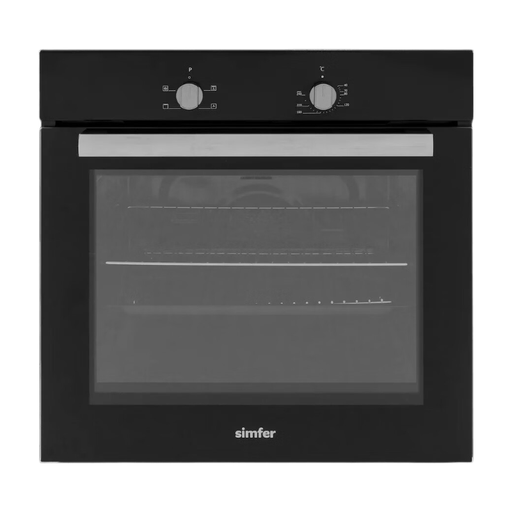
Why This Fits Their Persona: A straightforward option for first-time buyers, rental upgrades or smaller households seeking a black 60cm-style fan oven with simple controls.
Its specification clearly states a 56-litre capacity, four functions and a double-glazed door, helping buyers compare practical features instead of relying on vague capacity claims.
A-rated efficiency, turbo fan cooking, integrated 2,000W grill and black finish.
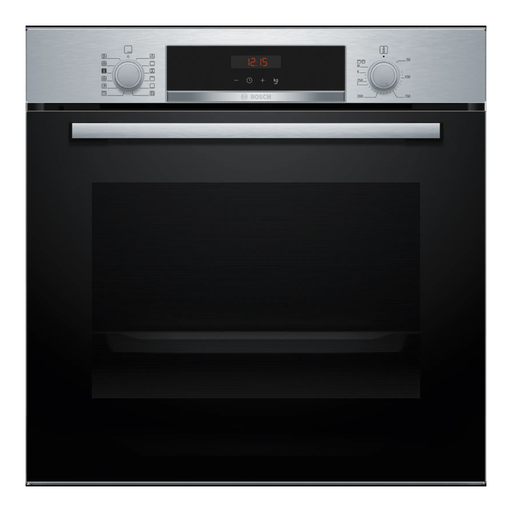
Why This Fits Their Persona: Suitable for homeowners upgrading to a stainless steel single oven with automatic programmes, steam-assisted cooking and pyrolytic cleaning.
The cleaning method and hardwired connection are specified clearly, so buyers can plan for both high-temperature cleaning and professional installation.
71-litre cavity, 3D Hotair, Hotair Steam, AutoPilot 10 and A energy rating.

Why This Fits Their Persona: A practical match for families, regular entertainers and cooks who need two cavities at different temperatures.
The two cavity capacities are stated separately: 72 litres for the main oven and 38 litres for the top oven. This makes the available cooking space easier to assess.
Nine main-oven functions, catalytic liners, soft-close doors and A energy rating.
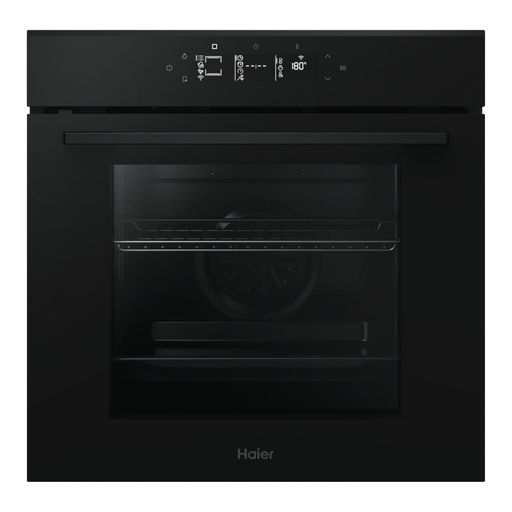
Why This Fits Their Persona: Designed for shoppers who want app connectivity, air-fry cooking and a larger single cavity without moving to a double oven.
Its 70-litre capacity, A+ rating, Wi-Fi and Bluetooth connectivity are listed separately, helping distinguish useful specifications from general smart-home language.
Multifunction cooking, Air Fry mode, hydrolytic cleaning, telescopic runners and hOn App compatibility.
We have compiled a complete, real-time list of products that fully satisfy these strict selection criteria and UK safety regulations.
Not always. Some models are designed for a 13-amp supply, while higher-powered ovens require hardwiring or a dedicated circuit. Check the exact product specification and ask a qualified electrician to assess the existing installation before fitting.
Lifespan depends on frequency of use, cleaning habits, installation quality and component wear. Keeping ventilation clear, avoiding abrasive products and following the manufacturer’s maintenance instructions can support reliable operation. Warranty terms vary, so check whether cover applies to parts, labour or registration requirements.
An A+ model may use less energy under the stated test conditions, but real-world running costs also depend on cavity size, cooking temperature, preheating and frequency of use. Compare the official energy information and choose a capacity that matches your household rather than paying solely for the rating.