
24/7 Customer Support

Free returns

Same-day & Next-day Delivery

Quality Guaranteed

Unlock Your Welcome Offers: FREE Delivery | Up to 80% OFF | Free 30-day JoyPlus trial
Download the APP
Choosing a new built-in oven is a significant decision for any kitchen renovation or appliance upgrade. A seamless, integrated look is the goal, but the market is filled with technical jargon and features that sound impressive but may not suit your actual needs. Many UK homeowners find themselves paying for functions they never use or, worse, discovering their new oven doesn't fit the cabinet space they have.
As the Joybuy Product Recommendation Officer, my role is to help you navigate these choices with clarity. We will look past the marketing hype and focus on the practical details that ensure you get an oven that serves you well for years. Let's start by examining three common pitfalls that can lead to buyer's remorse.
To make an informed choice, focus on these non-negotiable parameters. They determine how the oven will perform, fit and impact your utility bills.
The first decision is how much cooking capacity you need and where the oven will be located.
Consider how much time you are willing to spend cleaning your oven.
With energy costs being a primary concern, an oven's efficiency rating is more important than ever. An A-rated electric oven is the standard for good efficiency, but many newer models now achieve an A+ rating, offering even lower running costs over the appliance's lifetime. This rating is a legal requirement and provides a reliable way to compare the energy consumption of different models.
Instead of a generic list, we have matched specific models to different user needs, helping you find an oven that truly fits your lifestyle.
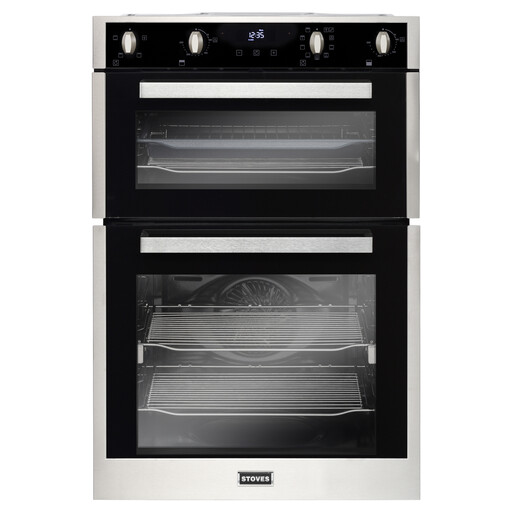
Why This Fits Their Persona: This built-in double oven is perfect for preparing large family meals. You can roast a chicken in the main fanned oven while simultaneously grilling vegetables in the top cavity, streamlining Sunday dinner preparation.
It avoids the cleaning trap by using effective catalytic liners. This system actively helps break down grease during cooking, offering a genuine reduction in cleaning effort without the high cost of a full pyrolytic system.
Dual Cavity Flexibility: A 54L main fan oven and a 38L conventional top oven with grill. Telescopic Runners: Safely and easily slide hot dishes out of the oven.
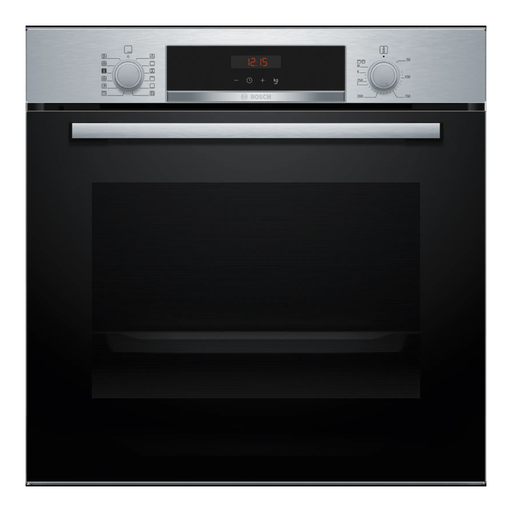
Why This Fits Their Persona: For those undertaking a high-spec kitchen renovation, this Bosch oven offers a premium finish and advanced features. The stainless steel design is timeless, while the retractable dials maintain a sleek, minimalist look when not in use.
This model delivers the gold standard of self-cleaning. Its pyrolytic function completely eliminates the need for chemical cleaners and hard scrubbing, justifying its premium positioning and avoiding the ambiguity of lesser "easy-clean" claims.
Pyrolytic Self-Cleaning: Heats to high temperatures to burn grease to ash. 3D Hotair: Ensures even heat distribution on up to three levels simultaneously.
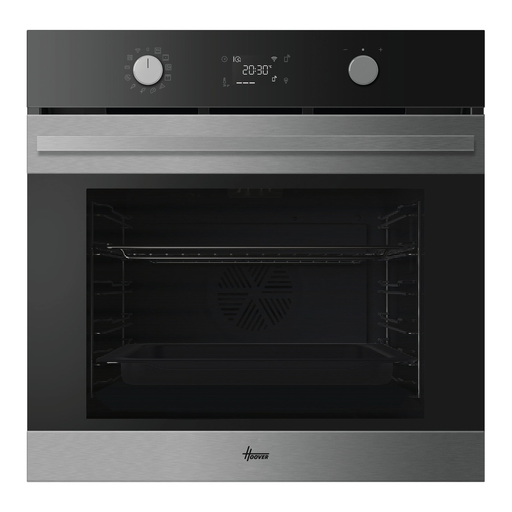
Why This Fits Their Persona: For those who want their kitchen appliances to be as connected as the rest of their home, this smart oven is an ideal choice. The hOn app allows you to pre-heat the oven on your way home from work, ensuring it's ready to go when you are.
This model avoids the "gimmicky smart feature" trap by offering genuinely useful connectivity. The app provides access to a library of recipes and allows for remote control and monitoring, adding real convenience beyond a simple timer.
Full Smart Connectivity: Control and monitor your oven remotely via the hOn app. A+ Energy Rating: Highly efficient performance to help manage electricity bills.
We have compiled a complete, real-time list of products that fully satisfy these strict selection criteria and UK safety regulations.
Yes, absolutely. Built-in ovens are high-power appliances that must be hardwired into a dedicated circuit with an appropriate fuse rating. This is not a standard plug-in appliance. For safety and to comply with UK wiring regulations, installation must be carried out by a qualified electrician.
This is a crucial distinction. A built-in oven is designed to be installed into a tall kitchen cabinet, usually at eye level. A built-under oven is specifically designed to fit in the shorter space beneath a standard kitchen worktop. They are not interchangeable, so you must purchase the correct type for your kitchen layout.
The running cost depends on your electricity tariff and how often you use the oven. However, as a guide, an A-rated electric oven with a capacity of around 65-70 litres typically consumes between 0.8 to 1.0 kWh per hour on a conventional setting. At an average electricity rate of 25p per kWh, this would equate to approximately 20-25p per hour of use. An A+ rated model would be around 20% more efficient.