One-tray family-roast cooks
If chicken and vegetables normally share one large roasting tin, focus on whether the tin fits, how the oven cooks and whether its timer meets your needs. A second cavity may offer little practical value for this meal.


For chicken and vegetables cooked together in one roasting tin, start with a built-in single oven whose cavity fits the tin and offers a suitable fan or hot-air mode. A taller built-in double oven makes more sense if you regularly cook another dish at a different temperature or time, provided its main cavity fits the tray and your kitchen has suitable housing. Compare cleaning options separately, and check the installation requirements before ordering.
If chicken and vegetables normally share one large roasting tin, focus on whether the tin fits, how the oven cooks and whether its timer meets your needs. A second cavity may offer little practical value for this meal.
If the traybake often accompanies a separately timed dessert, side dish or grilled food, compare two independent cavities with a single oven’s multi-level cooking. Extra shelves do not provide separate temperatures.
If regular roasting leaves grease and baked-on residue to deal with, compare the exact cleaning system and its instructions alongside cooking space and installation needs.
Decide whether the meal needs one cavity or two, then check the roasting-tin fit and the cleaning routine you are willing to follow.
Choose it when: Chicken and vegetables usually cook together, with any extra shelf cooking able to share the same oven settings.
Trade-off: One cavity cannot cook another dish independently at a different temperature.
Choose it when: Another dish regularly needs its own cooking time or temperature alongside the traybake.
Trade-off: The appliance needs taller housing, and its main cavity must be checked on its own rather than judged by combined capacity.
| Concern | What to check | Who this matters to |
|---|---|---|
| Tray fit and cooking space | Measure your roasting tin; compare cavity dimensions and shelf positions where available. Use capacity in litres as a starting point, not proof that the tin fits. | If I cook chicken and vegetables together, I need the tin to sit comfortably in the cavity and a cooking mode that suits the meal. Around 50% of consumers put tray fit and cooking space first. |
| Separate dishes | Check whether you need independent cavities or only another shelf. For a double oven, check the main-cavity size and required housing height. | When a side dish or dessert needs different settings, I want to cook it without changing the roast’s programme. Roughly 30% of consumers make separate-dish flexibility their primary concern. |
| Cleaning after roasting | Identify the exact model’s cleaning system and read its cycle and cool-down instructions; a self-cleaning feature can still leave residue to wipe away. | Frequent roast dinners make baked-on grease the part I most want to manage. About 20% of consumers put the cleaning workload first. |
Similar-looking fronts do not establish the same usable cavity space. Comparing oven capacity in litres helps, but the tin’s shape and shelf layout matter too.
Measure the tin and cabinet opening, then compare the oven’s capacity, available internal dimensions, shelf positions and installation drawing.
A second cavity adds cooking flexibility, but it does not make the main cavity large enough for every chicken traybake. Double ovens also need taller housing than standard single ovens.
Check the main cavity against your tin and confirm the appliance dimensions and required cabinet opening.
Replacing a single oven with a taller double oven may require changes to the existing cabinet.
Cleaning systems work differently. AEG describes pyrolytic cleaning as turning grease and food residue into ash, which still needs wiping away after the cycle.
Read the exact model’s cleaning instructions, including what must be removed beforehand and when the oven is cool enough to clean.
Connection requirements vary by model. Electrical Safety First advises having an oven fitted by a qualified electrician.
Check the model’s connection instructions and your existing supply before ordering; ask a qualified electrician if the required installation is unclear.
An unsuitable existing supply may require electrical work before the oven can be fitted.
Bosch has built-in single, added-steam and double-oven models relevant to this choice.
AEG is relevant when comparing a built-in single oven with multi-level cooking or a specified cleaning system.
NEFF has built-in single-oven models for buyers considering multi-level cooking, door access or added steam.
These built-in single and double ovens address either a one-tray meal or the need to cook another dish separately. Check your roasting tin, cabinet opening and electrical requirements against the exact model before choosing.
 No image available
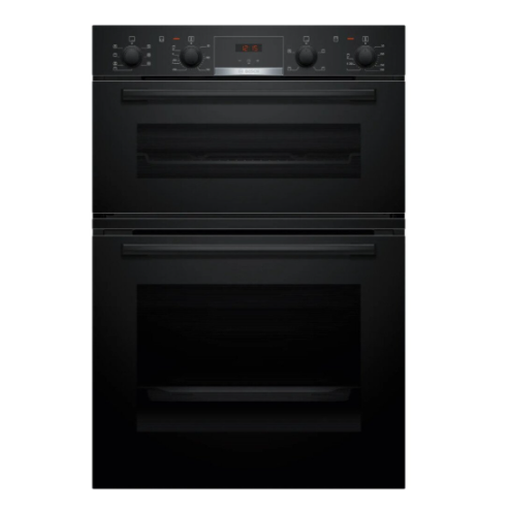
Consider this double-oven format if another dish regularly needs its own cavity alongside the chicken traybake.
Bosch lists two cavities, 3D Hotair and appliance dimensions of 888 × 594 × 550 mm for the MBA533BB3B. Check the main cavity against your tin and confirm the required cabinet opening and electrical connection.
 No image available
The double-oven format is worth considering when the roast and another dish need separate cooking spaces.
The product name specifies a 90 cm format. Check that the main cavity fits your roasting tin and that the appliance suits the cabinet and electrical installation.
 No image available
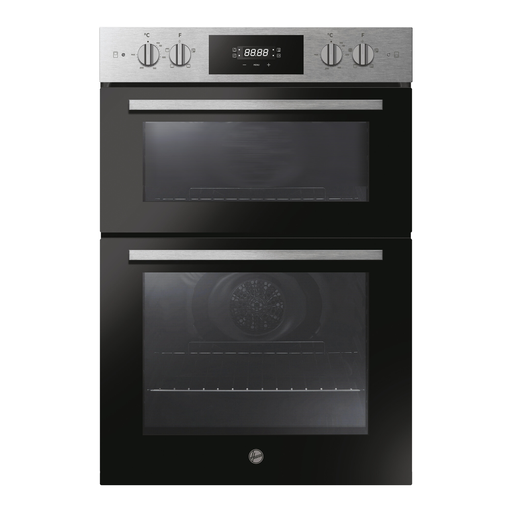
Two-cavity cooking could suit a traybake served with a separately timed dish.
Before choosing this variant, confirm its fuel configuration, appliance and installation dimensions, electrical connection and main-cavity fit; the product information gives conflicting fuel and height details.
 No image available
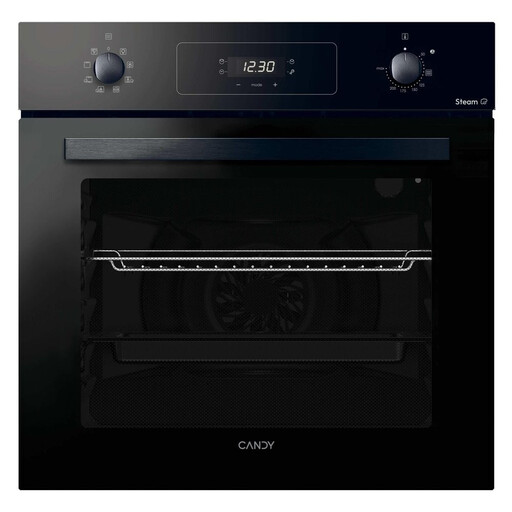
A single cavity is a straightforward format to consider if chicken and vegetables normally cook together.
The product name states a 65 L capacity. Check the actual tray fit, shelf positions, cabinet opening and connection instructions rather than relying on capacity alone.
 No image available
This single-oven format is relevant when the family meal usually fits in one roasting tin.
Check the cavity and shelf layout against your tin, then confirm the required housing cut-out and electrical connection for this model.
A full-size single oven can suit a meal cooked on one tray if its cavity and shelf arrangement accommodate your roasting tin. Check the exact model’s dimensions and capacity; choose a double oven for independently timed or heated dishes, not simply because its combined capacity sounds larger.
A fan or hot-air mode is worth considering, particularly if you expect to cook on more than one shelf. Bosch, AEG and NEFF describe multi-level cooking on selected models, but follow the instructions for your chosen oven and check the chicken’s doneness before serving.
Check the thickest part with a clean food probe rather than relying on an oven setting or steam feature alone. UK government food-safety guidance for businesses gives 75°C for 30 seconds as one safe cooking combination, measured at the centre of the food.
Check the exact oven’s connection instructions and existing supply before arranging installation. Electrical Safety First advises having ovens fitted by a qualified electrician; connection requirements differ between models.