Households replacing a single oven
If you usually make one main dish, a full-size single cavity may meet your needs without a change to tall double-oven housing. Check shelf space against your fish-pie dish, not just the stated capacity.


A full-size built-in single oven is a sensible starting point if you usually bake one family fish pie at a time, provided your dish and kitchen housing fit. Choose a double oven if you regularly need a separate space for sides or dessert, but check the taller housing and electrical requirements before changing formats. Cooking and cleaning features are worth comparing only after those practical checks.
If you usually make one main dish, a full-size single cavity may meet your needs without a change to tall double-oven housing. Check shelf space against your fish-pie dish, not just the stated capacity.
If sides or dessert often need a different cooking time or temperature from the fish pie, two separate cavities may be more useful than extra functions in one cavity.
If you are replacing a built-in appliance, establish the cabinet opening, fit type and electrical connection before choosing cooking extras. A nominal width alone does not establish that a replacement will fit.
Start with installation and space for your baking dish, then decide whether you need a second cavity. Cooking modes and cleaning features can distinguish models that meet those requirements.
| Concern | What to check | Who this matters to |
|---|---|---|
| Cabinet fit and connection | Compare the installation opening and connection requirements with your kitchen; do not rely on a nominal 60 cm or 90 cm description. | If I am replacing an oven, I need to know it can go into my cabinet and connect to the available supply before I choose features. Around 29% of consumers would put fit and connection first. |
| Dish space and cavities | Check the baking dish, including its handles, against usable shelf space; decide whether separate dishes need independent cavities. | When making a family fish pie, I need room for my actual dish and may want sides cooking separately. Capacity and cavity choice would come first for around 29% of consumers. |
| Cooking and browning | Compare the exact model’s fan or hot-air modes and browning options; follow its instructions for shelf position and use. | I want control over how the topping browns without assuming a named feature guarantees the result. Around 24% of consumers would prioritise cooking functions. |
| Cleaning | Identify the model’s cleaning system and read which surfaces or parts still need manual cleaning. | After regular family meals, I would rather choose a cleaning routine I will actually use. Cleaning would be the primary concern for around 18% of consumers. |
The cited single ovens are approximately 595 mm high, while the cited Bosch and Neff double ovens are 888 mm high. Changing formats may require different housing.
Measure the opening and compare it with the exact model’s installation instructions, including required clearances.
A double oven offers separate cooking spaces, but that advantage matters most when you regularly cook dishes with different timings or temperatures.
Decide how often a second cavity would be used before committing to the taller format.
Claims about even heat and baking results apply to particular manufacturer features; they do not establish how every fish pie will turn out.
Check the model’s available modes and accessories, then use the appropriate recipe and oven instructions.
The cited Bosch and Neff models specify no plug and connection by an electrician. That requirement should not be assumed for every oven.
Read the exact model’s installation guide and plan a suitable connection before ordering.
The BBIMA17300 is a 60 cm built-in single-oven example with a stated 72 L cavity.
The HQA534BB3B single oven offers an added-steam feature; the MBA578BS7B is a separate, taller double-oven option.
The cited Neff range includes the B3ACE4AG3B single oven and U2ACH7AG7B double oven.
These built-in single and double ovens offer options for one main family dish or for cooking another dish in a separate cavity. Check your baking dish, cabinet opening and electrical requirements against the exact model before choosing.
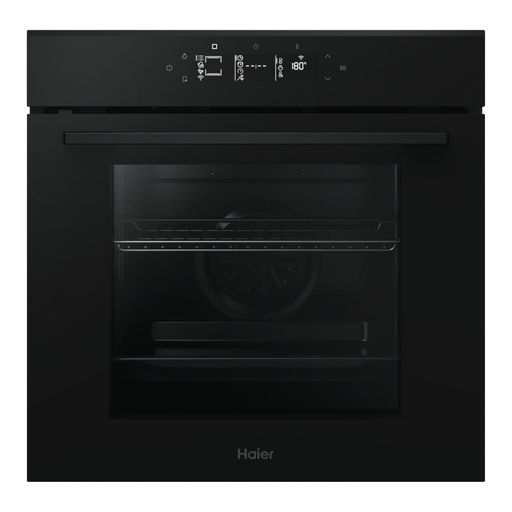 No image available
For a meal centred on one fish pie, check whether your dish and its handles fit the usable shelf space. This is a 70 L built-in oven; confirm the cabinet opening and connection requirements.
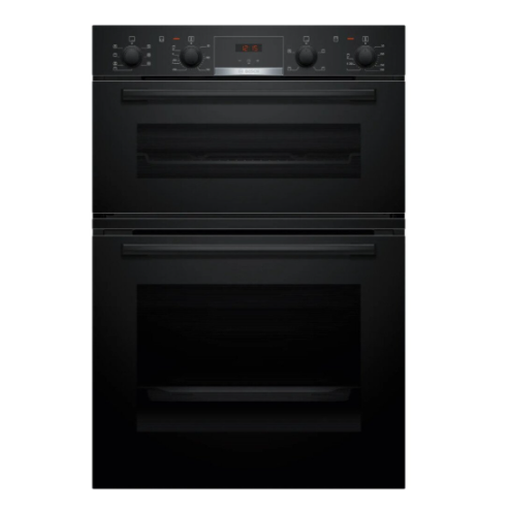 No image available
Consider the double-oven format if you regularly cook a fish pie and another dish separately. Check that your kitchen has suitable tall housing, that your baking dish fits and that the electrical connection can be arranged.
 No image available
Two cooking spaces may suit meals with a fish pie and a separately timed side. The 90 cm description does not establish the required cabinet opening: check the installation dimensions, dish fit and electrical connection.
 No image available
A single cavity is worth considering if the fish pie is usually your only oven dish. Compare your baking dish with the shelf layout, and check cabinet and electrical requirements before replacing an existing oven.
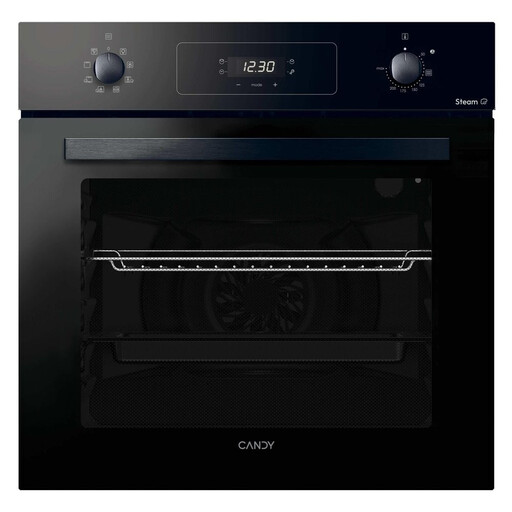 No image available
For a family meal cooked mainly in one cavity, check that the fish-pie dish fits comfortably. This model is listed as a 65 L built-in oven; confirm the installation space and connection instructions.
No: a full-size single oven can suit a household making one main dish at a time. A double oven becomes more relevant when you regularly need separate cooking spaces for sides or dessert; the cited Bosch and Neff double ovens are 888 mm high, so check your housing first.
It is a practical cooking option to compare, but it does not guarantee a particular topping or baking result. Check the modes on the exact model and follow the recipe and oven instructions for shelf position.
Yes. The cited Bosch and Neff models specify no plug and connection by an electrician, but requirements vary by appliance. Check the installation documentation against your kitchen’s supply and plan the connection before delivery.
Choose a system whose instructions and routine suit you rather than assuming all cleaning labels mean the same thing. The cited models include catalytic, hydrolytic and pyrolytic approaches; check the exact appliance for surfaces or parts that still need manual cleaning.