What to check before buying
Start with the eater’s texture requirements, then compare nutrition on a like-for-like basis and choose a pack size that matches planned portions.
| Priority | What to check | Your needs |
|---|
| Texture |
For a prescribed International Dysphagia Diet Standardisation Initiative (IDDSI) texture, follow the individual preparation advice and applicable size and softness tests. A product description is not a texture test. |
I can eat ordinary soft foods, or I need a meal prepared to a specific prescribed texture. Royal Berkshire NHS Foundation Trust advises using modified-texture meal ideas alongside tailored clinical advice. |
| Salt and sugar |
Read both per-100g and per-serving figures, including the serving size. Sainsbury’s states that its Reduced Sugar & Salt 4 x 400g beans contain 30% less sugar and 30% less salt than its own standard baked beans. |
I want to compare the amount in the portion I expect to serve, rather than rely on “reduced” wording alone. |
| Tin count |
Compare the number and size of tins: cited options include four 400g or 415g tins, while Waitrose Essential is listed as an individual 420g tin in a mix-and-match offer. Plan for opened portions as well as cupboard storage. |
Four tins work for my meal plan, or I would rather choose individual tins according to how many meals I have planned. |
| Ingredients |
Check the current can for ingredients, allergens and any dietary suitability statement. Do not transfer details from one tin size or recipe to another without checking its label. |
I need a recipe that fits my ingredient preferences or allergy requirements, not just a familiar brand name. |
Joybuy multipack options
These are standard baked-bean multipacks for planning ordinary meals: one Heinz four-pack and Branston packs of four or six tins. Compare their tin counts and current labels; do not treat them as prescribed-texture foods.
 No image available
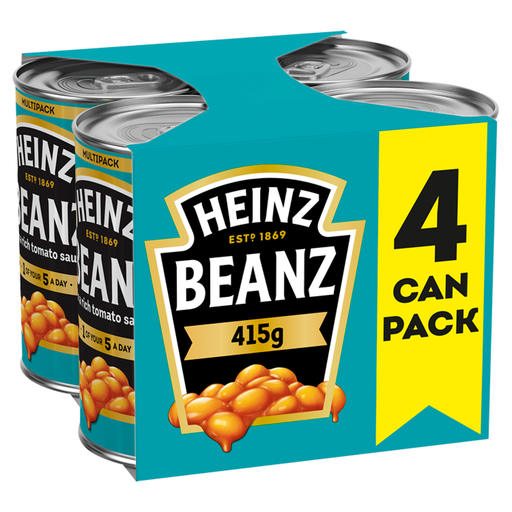
Heinz Baked Beans in Tomato Sauce 4 x 415g
Four 415g tins suit a plan for several ordinary baked-bean meals. Tesco Groceries lists 8.9g sugars and 1.3g salt per half-can serving of this standard recipe; check the current can for the figures relevant to your portion.
Purchase link unavailable
 No image available
Branston Beans in Tomato Sauce 6 x 410g
Six 410g tins provide more separate tins for a household planning several meals. Check the can’s nutrition and storage instructions against the portions you expect to use; this is not identified as the reduced-sugar-and-salt variant.
View on Joybuy
 No image available
Branston Baked Beans 4 x 410g
Four 410g tins offer a smaller tin count than the Branston six-pack shown here. Check the current can’s nutrition and storage instructions when planning portions; this is not identified as the reduced-sugar-and-salt variant.
View on Joybuy
Questions about buying and using baked beans
Are ordinary baked beans suitable for someone with dysphagia?
Not automatically. The International Dysphagia Diet Standardisation Initiative requires Level 6 soft and bite-sized food to meet size and softness tests; Royal Berkshire NHS Foundation Trust advises following tailored speech and language therapy and dietetics advice for modified-texture meals.
How should I store beans left over from an opened tin?
Follow the instructions on your tin. The cited Waitrose Essential listing says to transfer unused beans to a non-metallic container, cover and refrigerate them, then use them within two days.
How can I compare reduced-sugar-and-salt beans?
Compare nutrition on the same per-100g basis and for the portion you intend to serve. Sainsbury’s stated 30% sugar and salt reductions for its 4 x 400g reduced recipe are against Sainsbury’s standard baked beans, not every competing recipe.
Does a vegan claim tell me everything I need to know about allergens?
No. Check the allergy information on the current pack separately. The cited M&S Only 7 Ingredients 220g beans are labelled vegan and vegetarian but also state that they are unsuitable for people with milk or egg allergy; do not assume those details apply to another pack size.
What does a best-before date mean on tinned beans?
A best-before date concerns quality rather than being the same as a use-by date, according to GOV.UK guidance that includes tinned foods. Follow the tin’s storage instructions and do not treat the two types of date as interchangeable.


