What should you check?
Start with the amount you will serve at dinner, then compare recipes and the instructions for anything left after opening.
| Priority | What to check | Your needs |
|---|
| Tin size |
Check the weight of each tin and the number in the pack. Compare roughly 400g tins with smaller portions according to how much you will serve at once. |
For a shared dinner, I can use a larger tin. If beans are a small side for one, I would rather open less at a time. |
| Recipe |
Compare salt and sugars per 100g on the exact products, then consider your serving size. The NHS explains that nutrition labels provide per-100g figures and sometimes per-portion figures. |
If I am choosing between standard and reduced recipes, I want to know what each label actually says, especially when the rest of the meal includes toppings or sauces. |
| Ingredients |
Read the ingredients and allergen statement on the physical pack. Do not treat a vegetarian or vegan description as an answer to an allergy question. |
When serving someone with an ingredient restriction, I need to check the particular tin I am using. |
| Opened tins |
Follow the pack’s transfer, refrigeration and use-within instructions. The reviewed Sainsbury’s 4x400g pack specifies use within 2 days; the reviewed M&S products specify 3 days. |
Can I use what is left in the time stated on this pack, or would a smaller tin fit my plans better? |
Brand and retailer references
These examples show why pack format and recipe need checking at product level; they do not describe every item sold under each name.
Heinz
UK retailer listings include Heinz baked beans in smaller tins and multipacks of 415g tins.
- Waitrose & Partners lists its reviewed Heinz 4x415g pack as suitable for vegetarians and vegans, with 0.60g salt per 100g.
- Check the exact pack for its recipe, ingredients and serving instructions; one Heinz format does not describe them all.
Sainsbury’s
Its own-label range includes a standard 4x400g baked-bean multipack.
- Sainsbury’s lists 0.58g salt per 100g for that pack and provides hob and microwave instructions.
- Its reviewed 4x400g pack says to transfer opened contents to a non-metallic container, refrigerate and use within 2 days.
Tesco
Tesco Groceries lists own-label baked beans alongside branded single tins and multipacks.
- Its listed formats include 420g own-label tins and Heinz multipacks of 200g or 415g tins.
- Use each product’s own label to compare the recipe and portion size.
M&S
M&S lists a four-pack described as containing seven ingredients, as well as other baked-bean products.
- Its reviewed seven-ingredient product lists 0.50g salt per 100g.
- The same product page says it is not suitable for people with milk or egg allergy and instructs shoppers to refrigerate opened contents and eat them within 3 days.
Waitrose
Waitrose & Partners lists Essential standard and reduced-salt-and-sugar baked beans alongside branded formats.
- Its range listing includes 420g Essential tins and Heinz and Branston multipacks.
- Check the exact product rather than assuming the standard and reduced recipes have the same nutrition or ingredients.
Joybuy product options
These options include four multipacks for planned or shared meals and one smaller single tin for a modest serving. Check the tin count, recipe and instructions for the format you would use.
 No image available
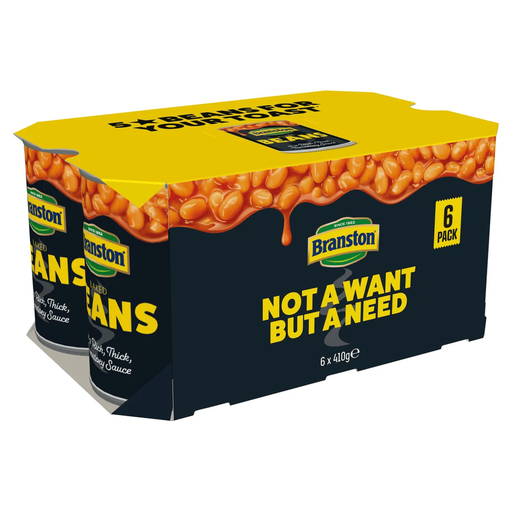
Branston Beans in Tomato Sauce 6 x 410g
Six 410g tins provide separate portions for planned meals. After opening a tin, transfer any remainder to a covered container, refrigerate and use within 2 days.
 No image available
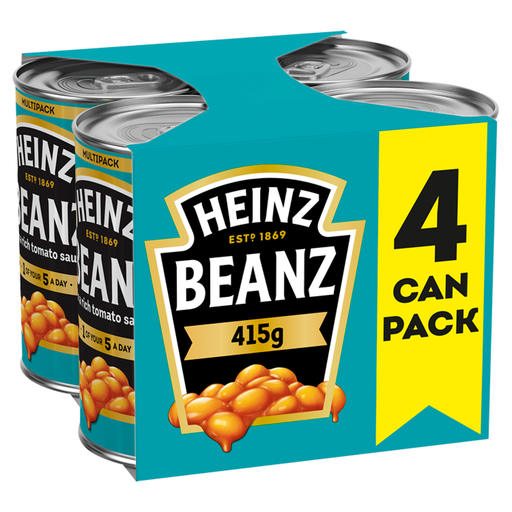
Heinz Baked Beans in Tomato Sauce 4 x 415g
Four 415g tins suit meals where you expect to use a larger tin. The product details give hob and microwave instructions; refrigerate unused beans in a non-metallic, airtight container and use within 2 days.
 No image available
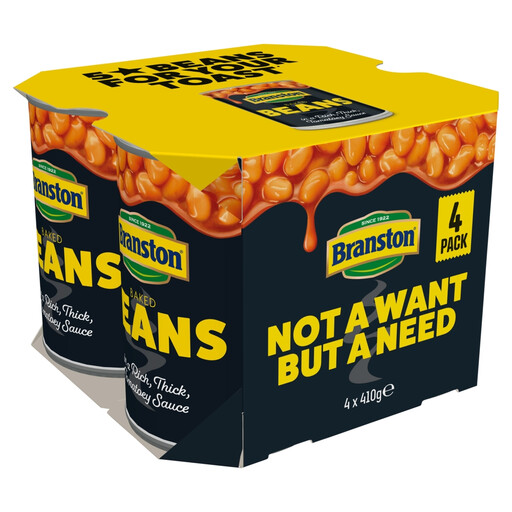
Branston Baked Beans 4 x 410g
This four-tin format gives you 410g in each tin. The product details include hob and microwave preparation; transfer opened contents to a container, refrigerate and use within 2 days.
 No image available
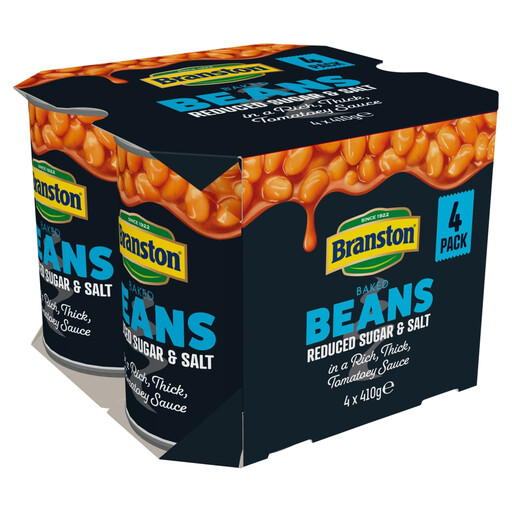
Branston Reduced Sugar & Salt Baked Beans 4 x 410g
For a reduced-sugar-and-salt recipe in 410g tins, this four-pack lists 0.39g salt and 2.8g sugars per 100g. Compare the exact panel with any standard recipe you are considering. Refrigerate opened contents in a suitable container and use within 2 days.
 No image available
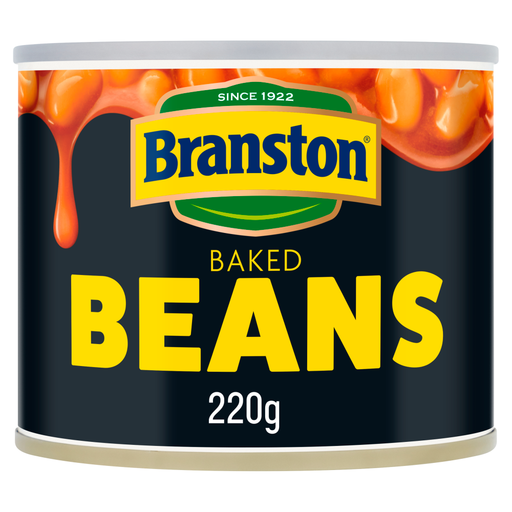
Branston Baked Beans in Tomato Sauce 220g
This is one 220g tin, not a bulk multipack. It is an option when a smaller serving better matches the meal; transfer any unused beans to a separate container, refrigerate and use within 2 days.
Questions about choosing and using beans
Should I choose a large tin or a smaller portion?
Choose a roughly 400g tin when it fits a shared meal or you have a plan for any remainder. A smaller tin may fit a solo meal better if you would otherwise leave much of a large tin unused; follow the opened-pack storage instructions either way.
How should I heat baked beans?
Follow the instructions on the exact pack. The reviewed Sainsbury’s 4x400g product provides hob and microwave methods and says to check that the food is piping hot after heating.
What should I do with beans left after opening?
Transfer them from the tin to a suitable container, refrigerate and use them within the time on the pack. The reviewed Sainsbury’s product states 2 days, while the reviewed M&S products state 3 days.
Are all baked beans suitable for vegans or people with allergies?
No single suitability statement covers every recipe or every dietary requirement. Waitrose & Partners describes its reviewed Heinz 4x415g pack as suitable for vegans, while the reviewed M&S seven-ingredient product says it is not suitable for people with milk or egg allergy. Check the physical label of the product you will serve.
Which nutrition figures help me compare recipes?
Use the per-100g figures to compare the same nutrients across tins, then consider how much you will serve. The NHS explains that pre-packed food labels include information such as sugars and salt per 100g, sometimes with figures per portion as well.


