New parents planning simple cupboard meals
Several unopened tins can be kept for meals such as beans on toast or jacket potatoes when cooking plans change. Check the pack’s storage directions and dates before putting it away.


For cupboard meals, a four-tin pack gives you several separate tins without committing to a larger stock-up; choose six or more tins if you have room and expect to use them. If a baby or young child may eat the beans, compare the exact label and follow age-appropriate feeding guidance rather than assuming a standard or reduced-sugar-and-salt recipe is suitable.
Several unopened tins can be kept for meals such as beans on toast or jacket potatoes when cooking plans change. Check the pack’s storage directions and dates before putting it away.
A four-tin pack suits a smaller cupboard stock-up; a six- or eight-tin pack calls for more space and a realistic plan for using it. Tin size matters too if a meal uses only part of a can.
If the beans might also be served to a child, the recipe needs a separate check. NHS meal ideas include reduced-salt-and-sugar baked beans once a baby is used to a wide range of solid foods; the exact product label still matters.
Start with how many tins you can store and use, then compare recipes and opened-can instructions for the people eating them.
| Priority | What to check | When it matters |
|---|---|---|
| Cupboard backup | Check the number and size of tins, unopened storage directions and best-before date. GOV.UK explains that best-before dates on tinned foods concern quality, unlike use-by dates. | I want unopened tins ready for simple meals when plans change, with enough cupboard space to keep them as directed. |
| Portion planning | Compare four-tin packs with larger packs by tin size and likely use. Before opening a standard-sized tin for one portion, consider what you will do with the remainder. | A smaller stock-up suits me if cupboard room is tight; more tins make sense when I expect to use them across repeated meals. |
| Recipe and label | Compare salt and sugars per 100g and per serving on the exact pack. Check ingredients as well as any reduced-sugar, reduced-salt or no-added-sugar wording; these describe different recipes. | If a young child may share the meal, I need to check the product against age-appropriate guidance. NHS meal ideas mention reduced-salt-and-sugar beans only once a baby is used to a wide range of solid foods. |
| Opened tins | Read the product’s container, refrigeration and use-within instructions. Tesco and Sainsbury’s examples say to transfer leftovers to a non-metal container and use them within two days; the reviewed M&S example says three days. | When one tin lasts beyond a meal, I need a plan for storing the remainder and using it within that product’s stated period. |
NHS guidance says babies should not have much salt. Its meal ideas specify reduced-salt-and-sugar baked beans once a baby is used to a wide range of solid foods, rather than treating every standard recipe as interchangeable.
Check the child’s stage of eating, the exact ingredients and nutrition label, and relevant NHS feeding guidance. Do not add salt when preparing a baby’s food.
Opened-can directions differ: the reviewed Tesco and Sainsbury’s products specify a non-metal container, refrigeration and use within two days, while the reviewed M&S product specifies three days.
Transfer and refrigerate leftovers as the particular label directs, and plan when you will use them.
A tin that is too large for one meal may leave a portion you cannot use within its labelled period.
The Waitrose listing for Heinz No Added Sugar says the beans contain naturally occurring sugars and lists steviol glycosides. Its stated salt reduction is relative to Heinz standard beans, not every other recipe.
Compare the full nutrition panel and ingredients on the pack that you intend to serve, particularly if a child may eat it.
Heinz baked beans appear in standard and No Added Sugar recipes, with several multipack sizes in the reviewed retailer listings.
Tesco lists an own-label baked-bean pack containing four 420g tins.
Sainsbury’s lists standard and reduced-sugar-and-salt baked beans in four-tin, 400g-per-tin formats.
Waitrose lists Essential standard and reduced-salt-and-sugar baked beans as individual 420g tins.
M&S lists several baked-bean recipes, including standard and no-added-sugar options.
These four- and six-tin packs are options for keeping baked beans on hand for repeat cupboard meals. Compare the pack size and exact recipe with the portions your household will use.
 No image available
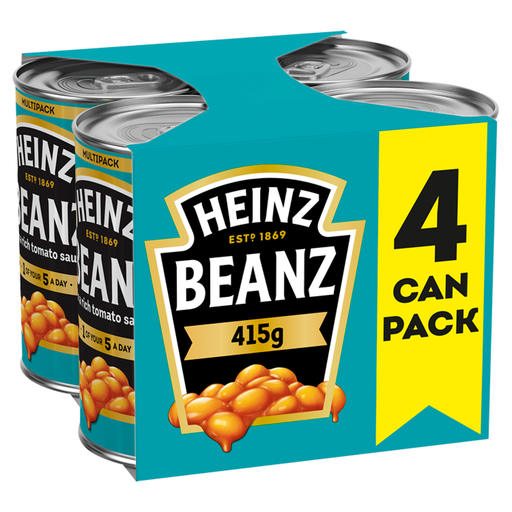
Four 415g tins allow you to open them across separate meals. If a young child may eat the beans, check the exact salt label and age-appropriate feeding guidance.
 No image available
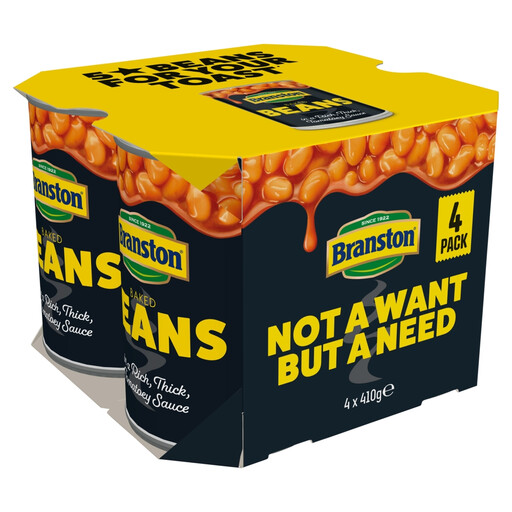
This four-tin pack offers separate 410g tins for meals on different days. Plan around the opened-can instructions if a meal will use less than one tin.
 No image available
Six 410g tins suit a cupboard plan that calls for more repeat meals than a four-tin pack. Check that you have room for the full pack and follow its directions when opening and heating a tin.
 No image available
This four-tin, 410g-per-tin pack offers a reduced-sugar-and-salt recipe. Compare its full nutrition panel and ingredients with the meal you are planning; the recipe name alone does not establish suitability for a baby.
They can if you have suitable dry storage and expect to use the tins. Check each pack’s storage instructions and best-before date; GOV.UK explains that a best-before date on tinned food concerns quality, rather than serving as a use-by deadline.
Follow that tin’s storage instructions. The reviewed Tesco and Sainsbury’s products direct you to transfer leftovers to a non-metal container, refrigerate and use within two days; the reviewed M&S product specifies three days.
Do not assume an adult recipe is suitable. NHS guidance says babies should not have much salt, and its meal ideas include reduced-salt-and-sugar baked beans once a baby is used to a wide range of solid foods. Check the exact product label and guidance for your child’s stage of eating.
No. The Waitrose listing for Heinz No Added Sugar says the beans contain naturally occurring sugars and lists steviol glycosides among the ingredients. Read the nutrition panel and ingredients rather than relying on the recipe name alone.
Compare the figures per 100g on the exact products, then look at the serving information for the portion you expect to use. GOV.UK explains that a front-of-pack traffic-light label, where present, can help compare nutrients such as sugars and salt alongside the back-of-pack nutrition information.