
24/7 Customer Support

Free returns

Same-day & Next-day Delivery

Quality Guaranteed

Unlock Your Welcome Offers: FREE Delivery | Up to 80% OFF | Free 30-day JoyPlus trial
Download the APP
As a Joybuy Product Recommendation Officer, my role is to help you navigate the crowded marketplace. When it comes to something as fundamental as hydration, making a smart choice matters for your wallet, your convenience and your health. Buying bulk bottled water seems straightforward, but a few common pitfalls can lead to wasted money and frustration. Let's look at how to get it right.
Many shoppers fall into a few simple traps when they buy water in bulk. Understanding them is the first step to making a better purchase.
water multipack formats can result in a lower price per litre than their larger counterparts. Without checking the unit price, you could be paying more for the convenience of a single large package.cases of bottled water is great for an office water supply, but can be a storage nightmare in a small city flat. Conversely, relying on small 500ml bottles for home use creates unnecessary plastic waste and can be inefficient. The right format depends entirely on your lifestyle, storage space, and consumption habits.To ensure your bottled water delivery meets your expectations, focus on these core parameters. They provide a clear framework for choosing the right product beyond just the brand name.
Understanding the terminology is crucial. The choice between still and sparkling is a matter of preference, but the source also matters.
Whether you need a still water multipack for daily hydration or a sparkling water delivery for dining, clarifying the type is your first step.
The mineral analysis on the label provides a snapshot of the water's taste profile and characteristics. Here are a few key terms to understand:
Consider how and where you will be using the water.
Based on these practical considerations, here are a few options matched to different UK lifestyles.
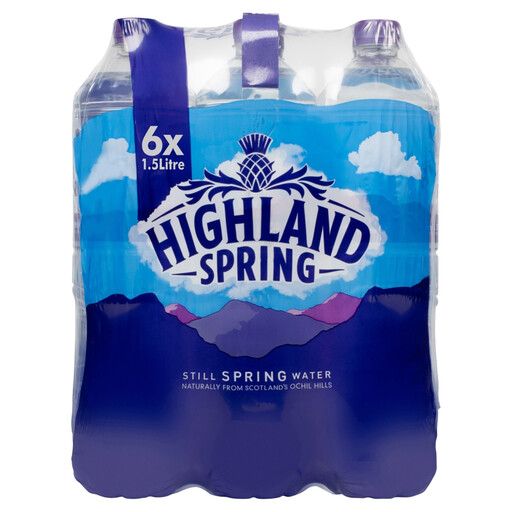
Why This Fits Their Persona: This multipack of 1.5L bottles is a practical and economical choice for families. The large bottles are ideal for keeping in the fridge for mealtimes and for refilling smaller, reusable bottles for school or work, balancing convenience with value.
This format directly addresses the packaging practicality trap. It provides a large volume of water without the excessive waste of many smaller bottles and its balanced mineral profile is suitable for all family members.
Sourced from protected organic land in Scotland, it has a naturally balanced pH of 7.8 and a crisp, refreshing taste. The bottles are 100% recyclable.
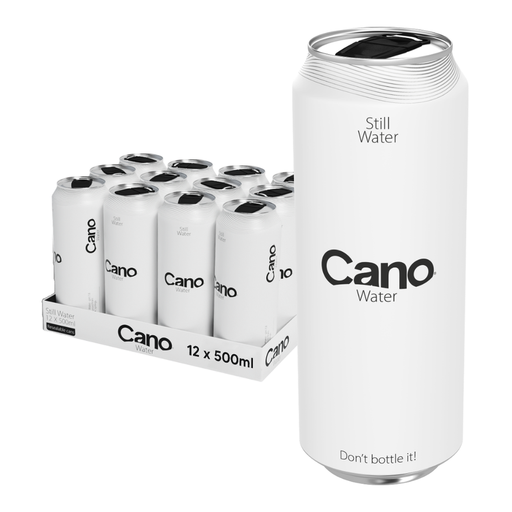
Why This Fits Their Persona: For those prioritising sustainability, Cano Water is a standout choice. It replaces single-use plastic with infinitely recyclable aluminium cans. The innovative resealable lid means you don't sacrifice the on-the-go convenience of a bottle.
This product directly solves the packaging waste pitfall. It provides a practical, portable and genuinely sustainable alternative to plastic, aligning with a circular economy model without compromising on quality.
Features the UK’s only resealable can design. The aluminium keeps water cooler for longer and the water itself is sourced from a UK spring with a balanced pH of 7.8.

Why This Fits Their Persona: For dinner parties, client meetings or simply elevating an everyday meal, San Pellegrino is a globally recognised symbol of quality. Its gentle carbonation and distinct mineral taste make it an excellent companion to food and a sophisticated choice for an office water supply.
This choice avoids the pitfall of overlooking the water's role in a dining or professional setting. Instead of a generic option, it provides a memorable taste experience that complements the occasion.
Sourced from the Italian Alps, it is celebrated for its fine bubbles and balanced mineral content. The 1L glass bottles are ideal for sharing and add a touch of style to any table.
We have compiled a complete, real-time list of products that fully satisfy these strict selection criteria and UK safety regulations.
Generally, buying bulk bottled water offers a lower cost per litre compared to purchasing single bottles. However, it is always wise to verify this. Check the price per litre or per 100ml, which is often displayed on the digital shelf, to ensure you are getting the best value, especially when comparing different pack sizes or sale items.
Once the seal is broken, it is best to consume the water within a few days to ensure freshness. For standard plastic bottles, most manufacturers recommend consumption within 3 days if refrigerated. For larger bag-in-box formats like the Highland Spring 10L, the water can stay fresh for up to 4-6 weeks due to the vacuum-sealed tap system.
Both must be from a specific underground source and bottled without modification. The key difference lies in consistency. Natural Mineral Water must demonstrate a stable and consistent mineral composition over time. Spring Water comes from a protected source but its mineral content can have slight natural fluctuations. Both are high-quality choices for natural hydration.