Regular snackers watching added salt or sugar
If nuts are a frequent snack, compare plain, salted and sweetened packs by their ingredients and nutrition panels. Unsalted describes salt, not fat content.


Do not treat plain or unsalted nuts as reduced fat: Sainsbury’s lists 58.2g fat per 100g for its Mixed Nuts, while M&S lists 51.3g per 100g for its Chopped Mixed Nuts. If fat content drives your choice, compare the exact packs’ nutrition panels rather than relying on words such as “unsalted” or “dry roasted”; for a larger purchase, also choose a format you can use and store as directed.
If nuts are a frequent snack, compare plain, salted and sweetened packs by their ingredients and nutrition panels. Unsalted describes salt, not fat content.
A larger pack can serve several recipes, but the nut mix, allergen wording, storage instructions and rate at which you will use it matter before you commit to the size.
Check the stated serving size alongside the pack weight. Sainsbury’s Mixed Nuts, for example, gives nutrition for a 30g serving as well as per 100g, making it possible to plan portions from its 300g pack.
Compare fat values on the same basis first, then consider ingredients, pack format and suitability for everyone who may eat the nuts.
| Priority | What to check | Your needs |
|---|---|---|
| Fat and energy | Compare total fat, saturated fat and kcal per 100g across the exact packs. Check per-serving figures against the stated serving size; do not infer reduced fat from “unsalted” or “dry roasted”. | I want to know what a normal portion contains, not assume a plain nut pack is reduced fat. |
| Added ingredients | Read the ingredient list for salt, sugar, coatings and flavourings. Compare salt and sugar values on the same per-100g basis when choosing between packs. | For frequent snacking, I would rather distinguish plain nuts from a seasoned or sweetened mix before buying a large quantity. |
| Pack and portions | Check total weight, serving size, packaging and instructions for storage after opening. Work out whether you will finish the pack within those instructions. | A larger bag suits me only if I can use it in meals or divide it into planned portions while keeping the remainder as directed. |
| Ingredients and allergens | Identify every nut in a mix and read its allergen and precautionary statements on the physical pack. Check any age-related warnings where children may have access. | Everyone eating from a shared supply needs a suitable product; “mixed nuts” does not identify the contents of every pack. |
| Preparation | Check whether the exact product is ready to eat or requires cooking. Match whole, raw or chopped nuts to the way you intend to use them. | If I need a snack straight from the pack, a product that must be cooked will not meet that need. |
Salt and fat are different measurements. The reviewed Sainsbury’s Mixed Nuts contain 58.2g fat per 100g, and M&S Chopped Mixed Nuts contain 51.3g per 100g.
Compare fat and energy per 100g on the precise packs you are considering. Check any reduced-fat wording against that product’s label and nutrition panel.
A large pack is less useful if you cannot finish it within its storage instructions. The reviewed M&S Chopped Mixed Nuts advise resealing and eating within one month of opening.
Check the instructions before choosing a pack size, and plan how you will portion and store the contents.
Nuts left beyond the period in which you can keep and use them as directed may go to waste.
Nut varieties and precautionary allergen wording differ between products, which matters when a pack will be shared at home.
Read the ingredients and allergen statements on the physical pack before serving, even if you have bought a similarly named mix before.
M&S lists sweetened and flavoured options alongside natural nut formats; their ingredients need not match those of plain nuts.
If added salt or sugar matters to your choice, compare ingredient lists and nutrition panels for the particular products, not just their pack weights.
These examples show label details worth comparing; the figures describe the named products, not every nut product from each retailer.
Its reviewed 300g Mixed Nuts pack lists almonds, walnuts, cashews and Brazil nuts, with nutrition per 30g serving and per 100g.
Its nut range includes smaller portions and sharing formats. The reviewed Chopped Mixed Nuts provide an ingredient and nutrition declaration for recipe shoppers.
Tesco groups plain nuts separately from fruit-and-nut mixes and roasted, salted or flavoured nuts.
These options include larger packs of whole nuts, raw peanuts for cooking, a smaller chopped-nut pack and a portioned nut-and-fruit mix. Compare their individual labels for fat content; this selection is not a list of reduced-fat products.
 No image available
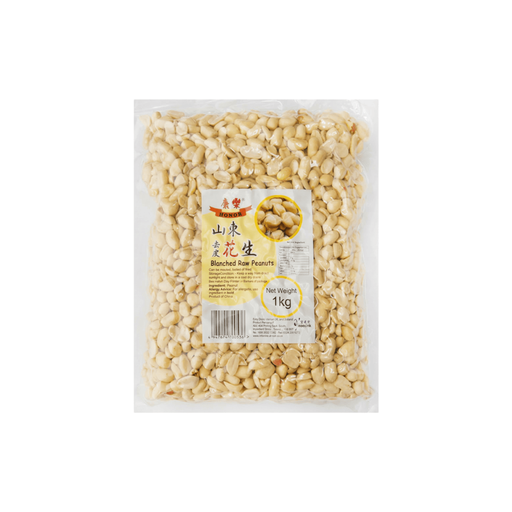
The 1kg pack is an option for households using peanuts in cooking. These kernels must be cooked before eating, so they are not a ready-to-eat snack.
 No image available
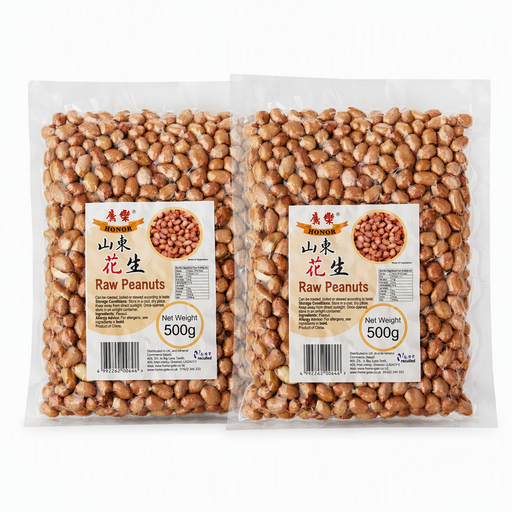
Two 500g packs provide a total of 1kg for cooking or baking. The peanuts are raw and must be cooked before eating.
 No image available
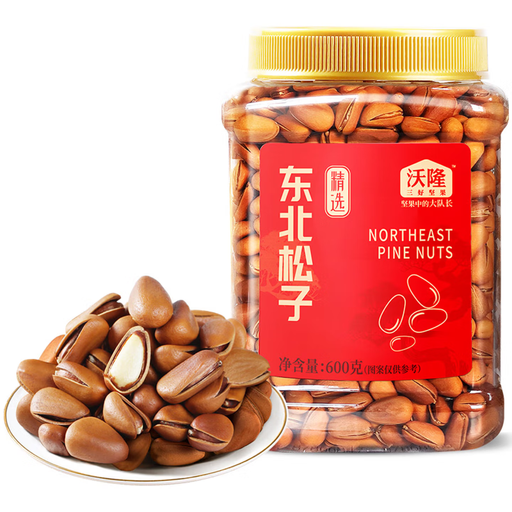
The 600g pack may suit repeated use in recipes. Check its ingredient list if added oil matters to your choice, and follow the pack’s storage instructions after opening.
 No image available
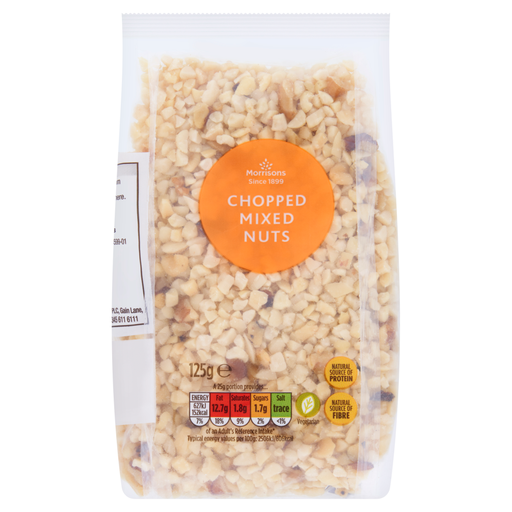
The chopped format is intended for recipe use, but the 125g pack is smaller than the other multi-use packs here. Check the pack warning about possible shell fragments.
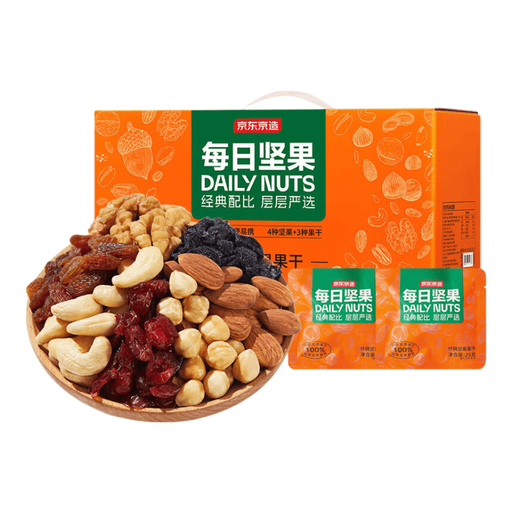 No image available
Thirty 25g sachets divide the 750g total into individual packs. This is a nut-and-dried-fruit mix rather than plain nuts; check the ingredients and nutrition panel if added sugar or fat content affects your choice.
Not necessarily: “unsalted” describes salt, not fat. Sainsbury’s Mixed Nuts list less than 0.01g salt and 17.5g fat per 30g serving, so compare the fat figures on the exact product label.
Use the stated serving size to measure and compare portions rather than judging by the bag. Sainsbury’s Mixed Nuts provide figures for a 30g serving and per 100g; those two measures let you check a planned portion against the larger pack.
Follow the instructions on the particular pack. The reviewed Sainsbury’s Mixed Nuts advise cool, dry storage and resealing after opening; the reviewed M&S Chopped Mixed Nuts also advise keeping them away from sunlight and eating them within one month of opening.
Yes. Read the physical pack’s ingredients and allergen wording each time, particularly for a mixed product or a pack shared with others. The Food Standards Agency’s guidance requires food businesses to provide allergen information, while the individual label tells you what applies to the product in hand.