For plain tinned tuna, a separate reduced-sugar claim is unlikely to distinguish the spring-water and brine products considered here: their labels declare 0g or less than 0.1g sugars per 100g drained. Check the exact tin, then choose its packing liquid and pack format around the meals you plan to make, paying attention to salt, drained quantity and what you can use after opening.
Who this helps
Pantry planners checking sugar labels
If you buy plain tuna for lunches or meal preparation, check the sugars declaration on the exact variant before seeking a reduced-sugar claim. Princes and Tesco spring-water products, along with the plain products considered elsewhere in this article, show why the label is more useful than the search term.
Frequent users comparing packing liquids
If tuna appears regularly in your planned meals, sugar alone will not show how water- and oil-packed versions differ. Princes lists different fat and energy values for its spring-water and sunflower-oil chunks, although both declare 0g sugars.
Shoppers checking product-specific sourcing
If a sourcing label or catch-method statement matters to your purchase, look for it on the particular tin. Tesco has MSC-labelled products, while Marks & Spencer makes a pole-and-line claim for its named spring-water chunks; neither detail applies automatically to every product from the brand.
What to check when buying
For a bulk purchase, start with the exact nutrition and ingredient labels, then match the quantity and packing liquid to meals you expect to use.
| Concern |
What to check |
Who this matters to |
| Sugars on the exact tin |
Read “of which sugars” and the ingredients for the chosen variant. Check flavoured or sauce-based products separately from plain tuna. |
If I am stocking up on plain tuna, I want to confirm its sugars declaration before committing to several tins; about 29% of consumers would make that confirmation their primary concern. |
| Usable quantity |
Compare the number of tins and their stated drained weights. For a large tin, check its instructions for storing unused contents. |
When I plan several meals, I need a pack size whose contents I can use rather than leave behind; roughly 36% of consumers would put usable quantity and avoiding leftovers first. |
| Packing liquid |
Compare fat, energy and salt on the same nutrition basis. Princes lists 99 kcal and 0.5g fat per 100g drained for its spring-water chunks, against 180 kcal and 9.5g fat for its sunflower-oil chunks. |
If I use tuna often, I may care more about the oil in the tin than a reduced-sugar claim; about 21% of consumers would prioritise the packing liquid and its nutrition values. |
| Sourcing and format |
Check the particular tin for an MSC label or catch-method statement, and confirm whether its format is no-drain or conventional. |
For meals that need quick preparation, or when a stated sourcing method matters to me, I want those details on the product I buy; approximately 14% of consumers would put sourcing or format first. |
Bulk-buying pitfalls
-
Treating “reduced sugar” as the main difference
Princes’ plain spring-water, brine and sunflower-oil chunks can all declare 0g sugars, while their other nutrition values differ. A sugar claim alone will not tell you which packing liquid fits your meals.
Confirm sugars on the exact label, then compare the ingredients and the nutrition values that matter to your choice.
-
Assuming a bigger pack means more usable tuna per tin
The weight of a filled tin and the weight of its drained contents describe different quantities. Tin count also affects how easily you can spread a multipack across planned meals.
Check drained weight and pack configuration, rather than relying on the largest number on the front of the pack.
-
Opening a large tin without a plan for the rest
A large tin may not suit a single meal if some tuna remains. Tesco’s instructions for the products considered here say to move unused contents to a non-metallic container, refrigerate them and consume them within two days.
Choose a tin size that fits planned portions, and follow the storage directions on the product you buy.
-
Extending a sourcing claim across a whole brand
An MSC label or a pole-and-line statement belongs to the product on which it appears. Marks & Spencer’s pole-and-line claim, for example, concerns its named spring-water chunks.
Check the exact tin for the certification or catch-method statement you want before buying several.
Brands for reference
Princes
Its plain tuna chunks include spring-water and brine variants in multipack formats, making the exact variant important when stocking up.
- Princes declares 0g or less than 0.1g sugars per 100g drained for the plain chunks considered here, including its sunflower-oil version.
- The sunflower-oil and spring-water versions differ in fat and energy, and salt also varies by variant. Compare the particular labels rather than treating the range as interchangeable.
John West
Its No Drain spring-water chunks offer a different format from a conventional tin; the named product comes as three 100g cans.
- John West lists 0g sugars per 100g for that No Drain product and names tuna, spring water and salt as ingredients.
- Those nutrition and format details describe the named No Drain product, not every John West tuna variant.
Tesco
Its range includes plain multipacks and a 400g spring-water tin, giving shoppers different quantities to match to planned meals.
- Tesco lists 0g sugars per 100g drained for the named 400g spring-water tin.
- Check the current label and storage instructions for the exact tin, particularly when choosing between a large tin and several smaller ones.
M&S
Its named 160g spring-water chunks combine a 0g sugars declaration with a product-specific pole-and-line statement.
- Marks & Spencer states that this product is pole-and-line caught under its Forever Fish policy.
- Check the individual product if that catch-method statement matters; it should not be assumed for other M&S tuna.
Joybuy tuna selections
These plain spring-water and brine packs offer different tin counts and formats for planned meals. Compare each pack’s label, stated quantity and storage instructions before choosing how much to stock.
 Image unavailable
Morrisons Fad Free Tuna Chunks in Spring Water, 6 × 145g
For meals planned across several days, this spring-water pack provides six separate 145g tins. Check the label on the delivered pack for the nutrition values and directions that apply to it.
View on Joybuy
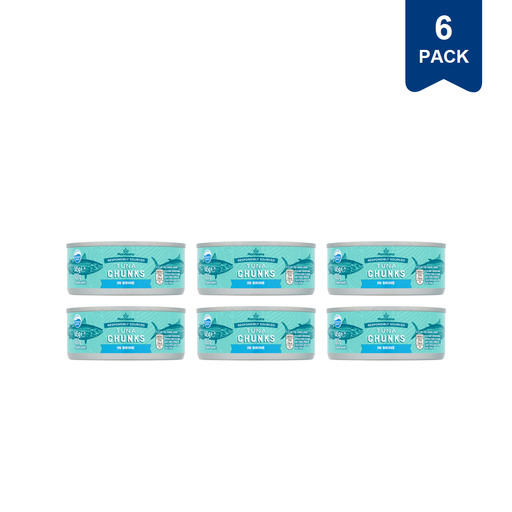 Image unavailable
Morrisons Fad Free Tuna Chunks in Brine, 6 × 145g
This six-tin brine pack can be divided across planned meals. If salt is an important comparison for you, read the declaration on the exact pack alongside its sugars label.
View on Joybuy
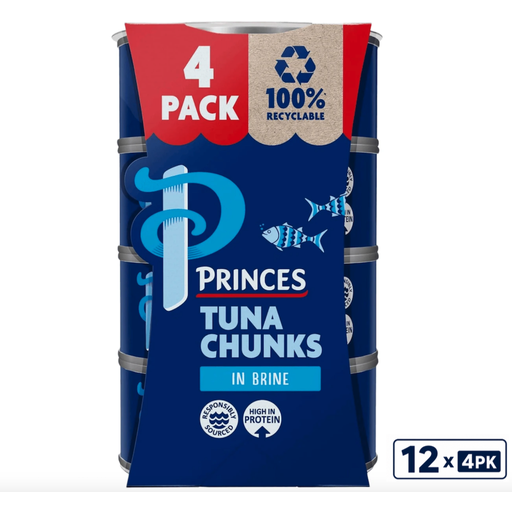 Image unavailable
Princes Tuna Chunks in Brine, 4 × 145g × 12 packs
This listing is for stocking a larger number of meals: its title specifies 12 packs, each containing four 145g tins. Confirm that configuration before ordering, and compare the exact brine label if salt matters to your choice.
View on Joybuy
 Image unavailable
John West Tuna Chunks in Springwater, 4 × 125g
Four separate 125g tins may fit a plan that uses tuna in smaller batches rather than opening one large tin. Check the pack’s sugars and salt declarations for this spring-water variant.
View on Joybuy
 Image unavailable
John West No Drain Tuna Chunks in Springwater, 3 × 100g
For meals where you prefer a no-drain format, this pack contains three 100g tins. John West declares 0g sugars per 100g for the named product; that nutrition basis is not explicitly stated as per 100g drained.
View on Joybuy
Questions about buying tinned tuna
Do I need to search specifically for reduced-sugar tinned tuna?
Not usually for the plain water- and brine-packed products considered here: their labels declare 0g or less than 0.1g sugars per 100g drained. Read the exact nutrition panel and ingredients, particularly if you switch to tuna with flavourings or sauce.
How do spring-water and oil-packed tuna differ?
The Princes chunks considered here both declare 0g sugars, but their fat and energy values differ. Per 100g drained, Princes lists 99 kcal and 0.5g fat for spring-water chunks, compared with 180 kcal and 9.5g fat for sunflower-oil chunks. Check salt separately and choose the packing liquid that fits the meal.
What should I compare across multipacks and large tins?
Compare tin count and drained quantity, then consider whether your planned meals will use the contents of each opened tin. A multipack of smaller tins and one large tin can create different amounts of leftover tuna even when their total stated weights look similar.
What should I do with tuna left in an opened tin?
Follow the directions on the tin you buy. For the Tesco products considered here, the instructions say to transfer unused tuna to a non-metallic container, refrigerate it and consume it within two days.


