What matters when buying in quantity?
Start with the number of desserts the shop expects to serve, then check whether staff will sell sealed packs or serve the custard themselves.
| Concern |
What to check |
Who this matters to |
| Portions and leftovers |
Compare labelled servings with the shop’s dessert portion, then check how long opened custard can be refrigerated and used. |
When daily orders vary, I need a pack I can finish without leaving opened custard unused; about 36% of consumers put portion and leftover control first. |
| Dietary choice |
Read the exact pack’s ingredients, milk-allergen statement, sugars and fat per 100 g; check any “may contain” warning. |
If the menu offers different recipes, I need to know which custard can be offered to each customer; about 29% of consumers primarily weigh dietary choice and label information. |
| Preparation workload |
Check whether the product is ready to serve or requires milk, sugar, heating and stirring, plus space to refrigerate prepared batches. |
On a busy dessert service, I need a method staff can prepare and serve within the time available; about 21% of consumers chiefly consider preparation workload. |
| Allergen communication |
Establish whether food is sold sealed or served as a dessert, and keep the relevant current allergen information available. |
When we serve custard rather than hand over a sealed pack, I need staff to communicate its allergens accurately; about 14% of consumers make that service responsibility their primary concern. |
Joybuy custard selections
These selections cover ready-to-serve 400 g custard cans and larger ready-to-serve packs for shops comparing portions, menu options and opened-pack use. The 1 kg Ambrosia and 500 g Morrisons products are pack alternatives, not tinned-custard choices.
 Image unavailable
Ambrosia Devon Custard 400 g
This ready-to-serve can suits smaller dessert services planning portions from a 400 g pack. The product information gives a 130 g labelled portion; refrigerate opened custard and use it within three days. It contains milk.
View on Joybuy
 Image unavailable
Ambrosia Low Fat Custard 400 g
This ready-to-serve can is a 400 g option when the menu calls for a low-fat-labelled custard. Check portions against the shop’s serving size, refrigerate opened custard and use it within three days. It contains milk.
View on Joybuy
 Image unavailable
Ambrosia Strawberry Flavour Devon Custard 400 g
This 400 g ready-to-eat can offers a strawberry-flavour menu choice and can be served hot or cold. Set portions to suit the shop’s desserts; refrigerate opened custard and use it within three days. It contains milk.
View on Joybuy
 Image unavailable
Ambrosia Light Devon Custard 1 kg
This larger ready-to-serve pack is for a shop that can use its contents within three days of opening while keeping them refrigerated. It is not identified as a tin. Check the current pack’s ingredients and allergen statement before serving.
View on Joybuy
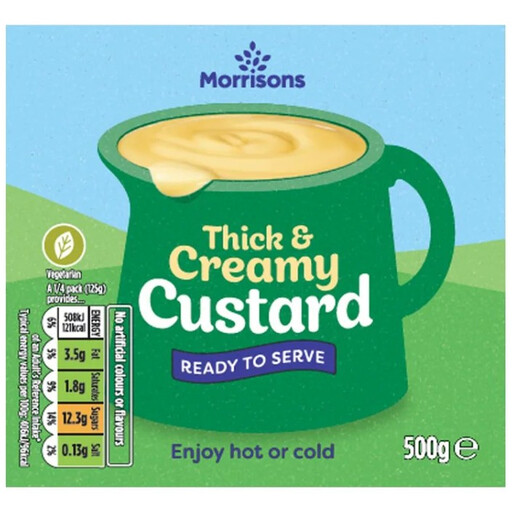 Image unavailable
Morrisons Ready To Serve Custard 500 g
This 500 g ready-to-serve tub is an alternative for a shop considering more custard per opened pack than a 400 g can. Plan portions around actual demand, refrigerate opened custard and use it within three days. It contains milk and is not a tin.
View on Joybuy
Questions before ordering or serving
Should a retirement shop buy 400 g tins or larger packs?
Choose 400 g tins when dessert demand is uncertain and a smaller opened pack is easier to finish. A larger ready-to-serve pack needs enough demand to use it within its own refrigerated-use instruction; Sainsbury’s cited 400 g and 500 g products, for example, specify different periods after opening.
Can ready-to-serve custard be heated in its tin?
Empty it into suitable cookware before heating. Follow the exact product’s instructions for the container, heating method and whether boiling must be avoided.
Is vegan-recipe custard suitable for someone with a milk allergy?
A vegan-recipe description does not establish that. Ambrosia’s plant-based custard says “May contain Milk”, so check the current label and follow the shop’s allergen procedure for the intended customer.
What allergen information is needed when the shop serves custard?
Food Standards Agency guidance says retail and catering food businesses must provide allergen information for prepacked and non-prepacked food and drink. Keep information for the exact custard and any other dessert ingredients available, and establish how staff will communicate it when serving unpackaged food.
Does a new shop selling or serving food need to register?
Yes. Food Standards Agency registration guidance says a new food business, or someone taking over an existing one, must register with the local authority at least 28 days before trading. This concerns the food business, not a particular custard pack.


