Households making frequent instant cups
If decaf is a regular kettle-made drink, an instant jar keeps preparation simple. Choose a blend people already enjoy before committing cupboard space to several jars.


For quick, frequent cups, start with an instant decaf blend your household already enjoys; buy several jars only if you can use and store them comfortably. Whole beans make sense when grinding and brewing are already part of your routine, but a large bag commits you to one flavour profile. If the blend is unfamiliar, try a smaller pack before buying more.
If decaf is a regular kettle-made drink, an instant jar keeps preparation simple. Choose a blend people already enjoy before committing cupboard space to several jars.
Whole beans fit a routine that already includes grinding and brewing. Taylors of Harrogate offers Decaffé beans in 200g and 1kg packs; the smaller size gives you a way to try the stated caramel-and-malt profile before taking on a larger bag.
Nescafé says that most caffeine is removed from Original Decaf. If the amount of caffeine matters to your choice, check the current pack rather than treating the word “decaf” as a claim of zero caffeine.
Settle the preparation method and blend first, then decide how much coffee your household is likely to use and store.
| Priority | What to check | Your needs |
|---|---|---|
| Preparation format | Choose between instant coffee, ground coffee and whole beans. For ground coffee, check that the grind suits your brewing method; beans require grinding equipment. | I want a quick cup made with a kettle, or I already have the equipment and routine to brew ground or freshly ground coffee. |
| Blend character | Read the stated roast, intensity or flavour description for the exact product. Kenco describes its Decaf instant coffee as medium roast with intensity 7; Taylors describes its Decaffé beans with caramel-and-malt notes. | Before I buy several packs, I want to know whether I enjoy this particular coffee, not just its format. |
| Pack quantity | Compare the stated weight with how often you make decaf. Nescafé lists Original Decaf instant coffee in 100g, 190g and 300g sizes; Taylors lists Decaffé beans in 200g and 1kg sizes. | A larger pack suits my routine only if I can use it without being left with a lot of a blend I rarely make. |
| Storage and dates | Follow the storage directions on each pack and check its best-before date. GOV.UK explains that a best-before date indicates when food may start to decline in quality. | Can I store every jar or bag as directed and use the quantity while its quality still suits me? |
Taylors Decaffé beans come in a 1kg format with stated caramel-and-malt notes. That is a substantial quantity of one coffee, and it still requires a grinder and brewing setup.
If the blend or bean-making routine is new to you, consider the 200g bean pack before moving to 1kg.
Nescafé describes Original Decaf as having most of its caffeine removed, rather than none.
Check the current label if caffeine content is important to your choice. If you need to avoid caffeine for a medical reason, seek advice from an appropriate clinician or dietitian.
Storage instructions vary by product, and GOV.UK describes a best-before date as a guide to when quality may begin to decline.
Check the date on each pack in a larger order, follow its storage directions and choose a quantity you expect to use.
These ranges illustrate different decaf formats and stated blend styles; the brand name alone will not tell you whether a particular pack suits your routine.
Original Decaf is an instant coffee sold in several jar sizes.
Kenco Decaf is an instant option for shoppers comparing stated roast styles.
Decaffé beans offer a whole-bean route for people who regularly grind and brew coffee.
Tesco Classic Decaffeinated Coffee is an own-brand instant option in a 200g jar.
Its own-brand decaf range includes instant coffee as well as ground and whole-bean formats.
Gold Decaf Instant Coffee is a 200g option described by M&S as medium-roasted Arabica from Fairtrade farms.
These options include instant coffee for quick cups, plus ground coffee and whole beans for brewing routines. The ground-coffee and bean packs shown here are 200g or 250g options, rather than the 1kg Taylors bean format discussed above.
 No image available
A 300g instant option for households making decaf regularly. If this blend is new to you, decide whether you want to commit to the larger jar before buying several.
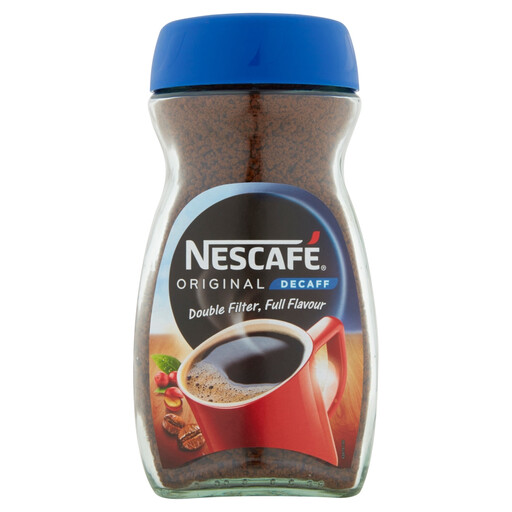 No image available
A 200g decaf jar for repeated, low-effort cups. Check its current label if the blend description or caffeine information affects your choice.
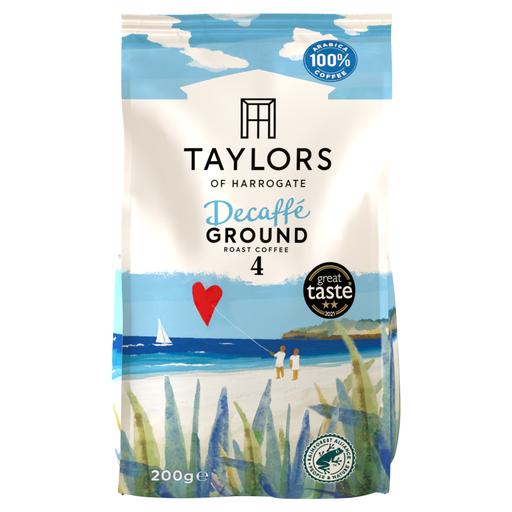 No image available
A 200g ground-coffee option if you brew rather than make instant coffee. Check that the grind suits your brewing method before ordering several packs.
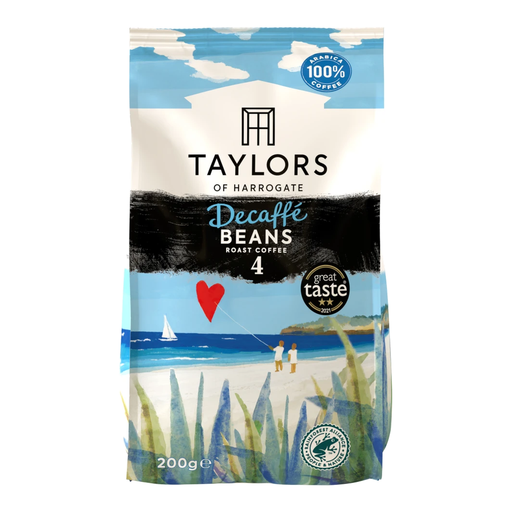 No image available
A 200g whole-bean option for a household with a grinder and brewing setup. Taylors describes Decaffé beans with caramel-and-malt notes; this smaller pack lets you consider that profile before committing to more.
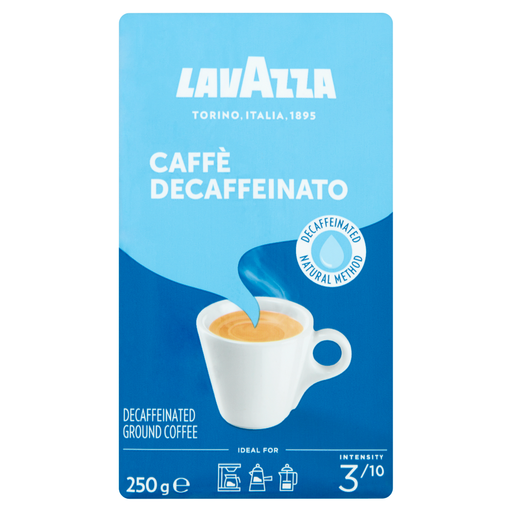 No image available
A 250g ground-coffee pack for shoppers who use a brewer rather than instant coffee. Confirm that its grind is suitable for your brewing method before buying in quantity.
Choose instant decaf for quick kettle-made cups; choose whole beans if you regularly grind and brew coffee. Taylors offers Decaffé beans in 200g and 1kg sizes, so you can consider the smaller pack if the blend is unfamiliar.
Do not assume so. Nescafé says most caffeine is removed from Original Decaf. Check the current product label if caffeine content matters to you, and seek clinical or dietetic advice if you need to avoid caffeine for a medical reason.
Follow each pack’s instructions and check its best-before date. Tesco and M&S specify cool, dry storage for their decaf instant coffees; GOV.UK explains that a best-before date concerns quality, not the use-by date used for food safety.
No. A larger pack means more of one blend to use and store. Check that you enjoy its flavour, have the right preparation equipment and expect to use the quantity before ordering more.