Office lunch planners with microwave access
Plain wholegrain sachets or a larger self-portioned oat pack can work well when you can bring a bowl and choose your own toppings. This gives you more control over what is added to the meal.


For regular workday lunches, plain oats in a larger pack or pre-portioned plain sachets give you the most control over ingredients and toppings. Choose a hot-water pot when you need its included container, and consider protein-enriched sachets only when their ingredients and added protein suit the rest of your meal; check each pack for milk, soya, sugar and allergen information.
Plain wholegrain sachets or a larger self-portioned oat pack can work well when you can bring a bowl and choose your own toppings. This gives you more control over what is added to the meal.
A contained porridge pot can suit a workplace or site with boiling water but no microwave. Check the ingredients, allergen statement and preparation instructions before relying on it for lunch.
Compare the exact pack label rather than treating all oat products alike. Protein versions can contain soya, ordinary oats may carry cereal cross-contact warnings, and gluten-free status needs to be stated on the individual product where required.
Start with the equipment available at lunch, then compare the serving basis, ingredients and dietary information on the exact format you plan to buy.
| Priority | What to check | Your needs |
|---|---|---|
| Wholegrain and fibre | Check whether wholegrain oats are identified in the ingredients. Compare fibre using the stated serving basis and whether values are for the dry product or a prepared portion. | I want an oat-based lunch that fits alongside a varied meal, with toppings chosen separately where useful. |
| Lunch-time preparation | Confirm whether you have a microwave, boiling water and a suitable bowl. Check the exact product instructions, as some pots are not suitable for microwave cooking. | I need a format I can actually prepare at my workplace, rather than one that depends on equipment I do not have. |
| Ingredients and protein | Read the ingredient list for added sugar, milk powder, flavourings and added protein ingredients. Compare protein only on matching serving and preparation bases. | I want to decide how sweet my lunch is and whether extra protein in the dry mix suits my wider meal. |
| Allergens and gluten-free status | Read ingredients, allergens and may-contain statements for the exact variety and pack size. If gluten-free status is required, choose a pack explicitly labelled gluten-free. | I need to avoid a product that conflicts with an allergy, intolerance or medically required gluten-free diet. |
UK oat ranges also include larger bags, cartons, multipacks and drums. Focusing only on a tin can rule out a format that better matches your storage space and lunch routine.
Compare the usable format first: a large pack or drum for self-portioning, sachets for microwave lunches, and pots for boiling-water-only sites. Confirm pack size and preparation on the label or product page.
Original pots can contain milk powder, gluten-free pots can contain milk and sugar, and plain oat sachets can carry may-contain warnings.
Read the ingredients, allergen declaration and may-contain statement for the exact flavour, format and pack size, especially after a reformulation.
A sachet may list values for the dry portion, while a pot may be described after preparation. Adding milk also changes the finished meal's nutrition values.
Compare products per 100g as sold, then review the stated serving size and preparation basis. Include the liquid and toppings you intend to use in your own comparison.
A 27g sachet or 50–55g pot can be a modest meal base. NHS guidance advises getting fibre from a variety of foods rather than relying on one source.
Plan the portion alongside the rest of your lunch. If you need a more substantial meal, choose a suitable portion or add compatible foods instead of assuming a flavoured or protein-labelled pot will meet every need.
A mainstream UK option for microwaveable wholegrain oat sachets, including plain Original multipacks and an added-soya-protein line.
A supermarket-own-brand route with instant oats, larger plain oat packs and a gluten-free instant porridge pot.
A supermarket-own-brand option for an Original Porridge Pot prepared with hot water.
An oats-focused brand offering quick-oat sachets, pots and a Quick Oats Drum alongside other porridge formats.
A premium-supermarket route with traditional oats, gluten-free options, sachets, tubs and selected higher-protein or Eat Well-labelled variants.
These Joybuy options cover self-portioned bags, microwave sachets and protein-focused sachets for workday oat lunches.
 No image available
For self-portioned lunches where a bowl and hot water are available.
Requires a separate container and measured portions. Check the physical pack if gluten or other allergen avoidance is required.
 No image available
A pre-portioned option for microwave-equipped lunches when you can bring a suitable bowl and choose additions separately.
Requires water or milk and a microwave-safe bowl. Check the exact pack allergen statement if managing gluten avoidance or another allergy.
 No image available
A protein-focused sachet option for lunches where added protein in the oat mix suits your meal plan.
Contains soya and oats, and may contain milk, peanuts and nuts. It also contains sugar and needs a bowl with microwave or hob preparation.
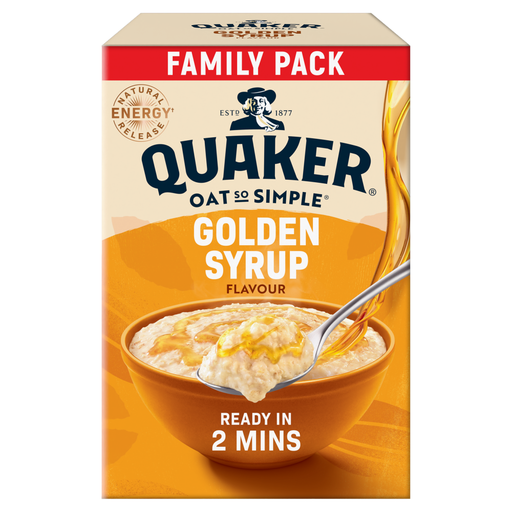 No image available
A larger pre-portioned sachet pack for repeated microwave lunches with a bowl and suitable liquid.
Contains sugar and natural flavourings, so it gives less control over sweetness than plain oats. It may contain barley, wheat and soya.
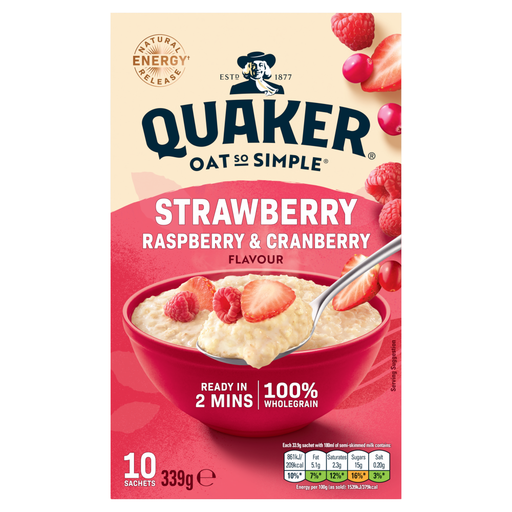 No image available
A fruity, pre-portioned microwave option for lunches where measuring portions is inconvenient.
Contains sugar and flavourings and requires a microwaveable bowl and milk under the stated method. It is not confirmed gluten-free.
Instant oats can be a wholegrain, fibre-containing lunch base, but one sachet or pot may not suit every appetite. Build the meal around the label and your needs: plain oats let you choose toppings, while fruit, yoghurt, milk, nuts, seeds or another suitable protein-containing food change the meal's energy, protein, fibre and allergen profile. NHS guidance recommends getting fibre from a variety of foods.
Choose a drum, bag or larger oat pack if you regularly eat oats where you have a bowl and can portion servings. Sachets suit predictable portions and microwave preparation, while pots suit situations where you only have boiling water and need the container included. Search by pack format and verified preparation method rather than treating a tin as essential.
No. If you need gluten-free food, choose a product explicitly labelled gluten-free and read the exact pack. The Food Standards Agency states that food labelled gluten-free must contain no more than 20mg/kg gluten, and oats must still be emphasised because oats are allergens in their own right. The checked plain Quaker sachet also states that it may contain wheat, barley and soya.
Check the ingredients and allergen statement on every exact variety. The checked Sainsbury's Original pot contains skimmed cows' milk powder, Tesco's Free From Original pot contains dried skimmed milk, and Quaker Protein Original contains soya protein and soya lecithin. A gluten-free claim does not mean dairy-free or soya-free.
No. Follow the directions on the exact pack. The checked Sainsbury's Original and Tesco Free From pots state that they are not suitable for microwave cooking, while the checked Flahavan's Original Quick Oats Pot can be made with boiling water or microwaved in two minutes.