Families planning packed food or sharing
If you are buying for older children or household occasions, distinguish a bag you portion yourself from a pack with separate portions. Check the school or childcare setting’s food policy before packing it.


A larger marshmallow bag can suit planned family sharing or recipes, but do not assume it contains separate lunchbox portions: check the pack format and how you will store it after opening. For babies and young children, NHS guidance identifies marshmallows as a choking hazard; for other eaters, compare the exact ingredients, allergy information and intended use before buying several bags.
If you are buying for older children or household occasions, distinguish a bag you portion yourself from a pack with separate portions. Check the school or childcare setting’s food policy before packing it.
Gelatine sources differ between products. Check the exact pack for ingredients and allergy statements rather than assuming that a marshmallow is vegetarian, vegan or suitable for a particular allergy.
Mini marshmallows may fit a recipe or hot-chocolate use, while larger pieces may be intended for toasting. Consider the quantity you will use and follow the storage instructions once a bag is open.
Decide who will eat the marshmallows and how they will be used before comparing bag sizes.
| Priority | What to check | Your needs |
|---|---|---|
| Age and setting | NHS guidance identifies marshmallows as a choking hazard for babies and young children. Check the individual nursery or school food policy for packed food. | I’m packing for a child, so their age and the setting’s rules matter more than the convenience of buying several bags. |
| Pack format | Check the pack weight, whether portions are individually wrapped, and the instructions for storing an opened bag. A sharing pouch is not necessarily a multipack. | If I need ready-separated lunchbox portions, a larger bag that I must divide myself may not meet that need. |
| Ingredients and allergies | Read the current ingredient list for the gelatine source or a vegan label, then check the product’s separate allergy statement. Do not treat vegan labelling as an allergy guarantee. | Someone eating these needs ingredients that fit their dietary requirements, so I’ll check the exact variant rather than the brand alone. |
| Planned use | Match mini or larger marshmallows to the recipe, drink or sharing occasion. Compare nutrition on the same per 100g basis, then consider the amount you plan to use. | For baking or hot chocolate, I can choose a format for that use instead of assuming it will also be convenient for lunchboxes. |
The Tesco and Waitrose examples are sold as bags or sharing pouches. Their pack weights do not establish that they contain individually wrapped lunchbox portions.
Check the inner pack format before buying for lunchboxes, and plan how you will close and store an opened bag.
Softness does not remove the choking risk: NHS guidance says babies and young children should not have marshmallows.
Choose an age-appropriate alternative for a young child and check the childcare setting’s food policy.
Named conventional products contain beef or pork gelatine. M&S labels its Plant Kitchen marshmallows vegan, but its product information also carries separate allergy suitability warnings.
Read the current ingredients and allergy statement on the exact pack each time you buy it.
A larger quantity still needs a plan for portions and storage. Waitrose lists 62.3g sugars per 100g for its Cooks Ingredients mini marshmallows, so pack weight alone does not describe a serving.
Work out the quantity needed for the intended recipes or occasions, and use the pack’s nutrition and storage information when deciding how much to buy.
Tesco lists its own-label 200g Marshmallows alongside Haribo Chamallows 140g and Epic Giant Toastin' Marsh-Mallows 300g.
Waitrose lists a 150g Cooks Ingredients mini-marshmallow pouch for recipes and a 300g Epic Giant Toastin' Mallows pouch.
M&S lists conventional Soft Marshmallows and a separate Plant Kitchen Vegan Marshmallows product.
These Joybuy bags offer 140g and 200g quantities to consider for planned household use. If separate lunchbox portions are essential, confirm the contents of the exact pack before ordering.
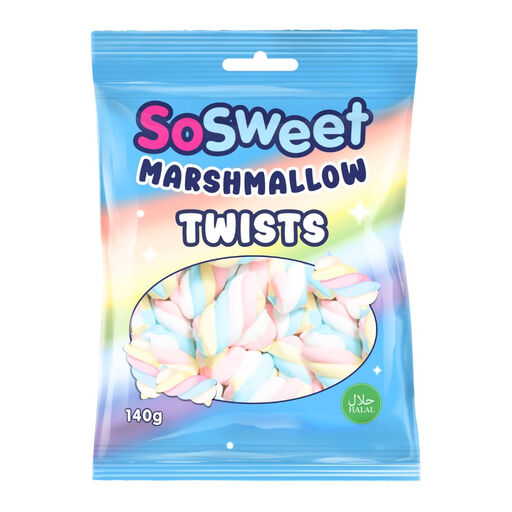 Image unavailable
For planned sharing or use with hot chocolate, consider whether a 140g bag is the quantity you need. Check the pack for separate portions, current ingredients and storage instructions if you intend to use it over several occasions.
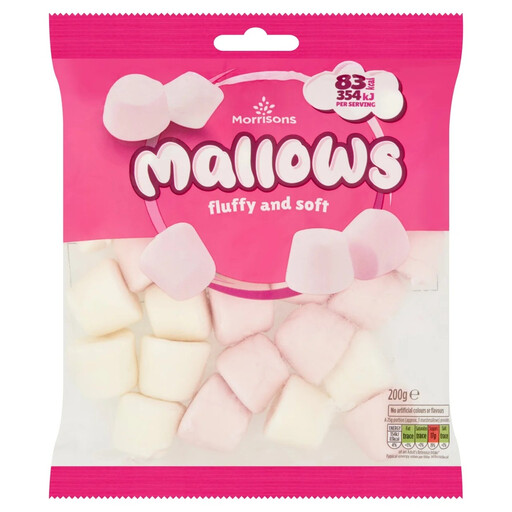 Image unavailable
A 200g quantity to consider when planning baking, hot chocolate or household sharing. Confirm whether the contents are separately portioned, and check the current label for the gelatine source if that affects your choice.
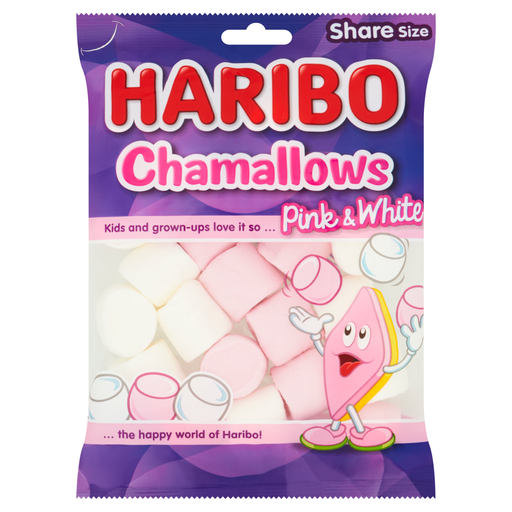 Image unavailable
Consider this 140g quantity for a planned recipe or sharing occasion rather than assuming it provides ready-separated lunchbox portions. Read the exact pack’s ingredient and allergy information, particularly if the gelatine source or milk matters.
No. The named Tesco and Waitrose examples are bags or sharing pouches, not described as separate lunchbox portions. Check the exact pack’s contents if you need individually wrapped servings.
No for babies and young children: NHS guidance identifies marshmallows as a choking hazard for them. The NHS also advises checking the individual nursery’s food policy when packing a lunchbox.
Do not assume they are. Tesco Marshmallows 200g and M&S Soft Marshmallows list beef gelatine, while the named Waitrose mini and Epic products list pork gelatine. M&S Plant Kitchen Vegan Marshmallows are labelled vegan, but their separate allergy information still needs checking.
Check the current pack for ingredients, allergy information, nutrition and storage instructions before buying. For an opened bag, follow its specific storage directions: Waitrose advises keeping its mini marshmallows closed in a cool, dry place and sealing the Epic bag tightly after opening.