Older adults eating porridge regularly at home
For people who can safely eat standard porridge and want an adaptable breakfast. A larger plain-oat pack allows portions and milk or topping choices to be adjusted rather than relying on sachets.


For an older person who can safely manage the finished texture, plain rolled oats in a larger pack allow flexible portions and preparation with milk or suitable additions. Choose quick oats or portions when preparation is the main barrier, but do not assume any oat type is suitable for swallowing difficulty or that plain oats alone provide a complete response to poor appetite.
For people who can safely eat standard porridge and want an adaptable breakfast. A larger plain-oat pack allows portions and milk or topping choices to be adjusted rather than relying on sachets.
For carers supporting someone with a poor appetite, unintended weight loss concerns or a need to make small meals more nourishing. The NHS and Norfolk and Norwich University Hospitals NHS Foundation Trust note that fortified milk can be used in porridge where appropriate for the person’s diet.
For people who can eat porridge safely but find cooking, measuring or handling larger packs difficult. Quick oats, sachets and pots can reduce preparation work, while the exact ingredients still need checking.
Start with safe finished texture, then choose a pack format that matches preparation ability, storage space and any dietary requirements.
| Priority | What to check | Your needs |
|---|---|---|
| Finished texture | Check chewing and swallowing needs before choosing rolled, quick, jumbo or pinhead oats. Follow any clinically prescribed texture advice rather than changing texture at home without guidance. | If coughing, choking, chewing problems or dysphagia are concerns, I need porridge prepared to the texture advised by the clinical team. NHS and South Tees Hospitals NHS Foundation Trust guidance makes this the first check. |
| Energy and protein | Compare the prepared bowl, not only the dry oats. Check whether milk or suitable additions fit the person’s wider diet. | When appetite is poor, I need a small breakfast that can contribute more nourishment without assuming oats alone meet every nutritional need. |
| Preparation and storage | Consider cooking time, microwave access, pack weight, opening, measuring and dry storage. Check the portion size on sachets and the resealing instructions on larger packs. | I need a format that the older person or carer can prepare and store reliably. Quick oats and sachets reduce measuring, while larger packs suit regular home use when storage is manageable. |
| Allergens and gluten | Read the ingredients and allergen panel on the exact pack every time. Check for wheat or barley cross-contact statements and choose an explicitly gluten-free-labelled product only where required. | If gluten, wheat, barley or another allergen matters, I need the current pack label to match the individual dietary requirement rather than assuming ordinary oats are suitable. |
Jumbo oats, pinhead oatmeal and standard rolled oats do not produce the same result for every eater. Swallowing difficulties may require a clinically specified texture-modified diet.
If there is coughing, choking, difficulty chewing or a dysphagia diagnosis, seek and follow advice from a GP, dietitian or speech and language therapist before choosing an oat type or changing its texture at home.
Oats can form a useful breakfast base, but the energy and protein in the prepared bowl and the wider diet matter more when appetite is poor or weight is falling.
Where suitable for the individual’s diet, make porridge with whole or fortified milk. Seek professional advice for persistent poor appetite or weight loss rather than relying on a bulk cereal purchase alone.
Sachets and pots can be practical when measuring or cooking is difficult, but they are a different format from a large plain-oat pack and may not suit frequent use.
Choose convenience portions when they solve a genuine preparation barrier. Otherwise, consider a manageable larger pack with a lightweight storage container.
Several standard oat products carry wheat or barley cross-contact warnings, and manufacturing methods can affect suitability for people with allergies.
Read the current ingredient and allergen panel on the exact pack. Select an explicitly gluten-free-labelled product only when it matches the person’s medical dietary requirement.
A widely stocked option for standard rolled oats and convenience porridge formats in the UK.
An oat specialist offering standard and jumbo formats, including packs up to 4kg.
An Irish oat brand offering standard, organic, jumbo and quick-oat options in UK grocery retail.
A retailer own-label range covering basic porridge oats, Scottish oats, gluten-free oats and convenience formats, alongside branded alternatives.
A branded organic jumbo-oat option listed in a 750g porridge-oat pack.
Joybuy product options for regular home porridge, gluten-free-labelled oats and pre-portioned preparation.
 No image available
A plain-oat option for regular home use where flexible portions and additions are useful.
2 x 1kg packs of 100% organic wholegrain oat flakes. The stated 40g serving provides 4.5g protein and 1.4mg iron.
Not a substitute for an explicitly gluten-free-labelled product where that is required. Follow clinical texture advice where chewing or swallowing is a concern.
 No image available
A plain porridge base for regular home preparation where gluten-free labelling is needed.
The listing identifies 100% gluten-free oat flakes, 25 portions and a resealable pack. A 40g portion is stated to provide 4.5g protein and 3.4g fibre.
The pack still requires opening, measuring and resealing. Follow clinical advice for any chewing or swallowing difficulty.
 No image available
A pre-portioned route for someone who finds measuring oats difficult and can use a microwave safely.
Eight 43g sachets with a stated 2½-minute microwave preparation time. The listing states 9g protein per serving and allows preparation with milk.
Contains oats and soya and may contain milk, peanuts and nuts. It is a convenience pack rather than a bulk oat tin or case.
 No image available
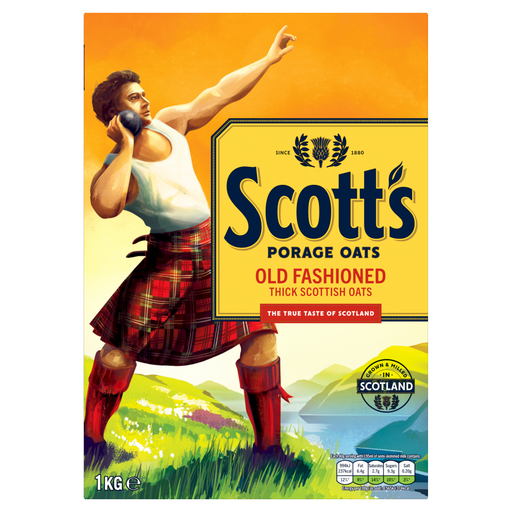
A plain rolled-oat choice for households able to measure and cook porridge with water or milk.
1kg of 100% rolled oats, with stated hob preparation of 4–5 minutes or microwave preparation of 2–3 minutes. The listing advises airtight storage after opening.
May contain wheat and barley. The thicker rolled texture should be checked against any chewing or swallowing requirement.
 No image available
A single-portion option when measuring dry oats is the main preparation barrier.
Six 38.5g sachets of 100% wholegrain rolled oats, with stated microwave preparation in 2½ minutes using water or milk.
This is not a bulk tin, bulk case or large plain-oat format. Check the current allergen statement where wheat, barley or gluten is relevant.
Usually not on their own. Plain oats can be a useful breakfast base, but the NHS advises energy- and protein-rich foods for people at risk of poor intake; fortified milk can be used in porridge where appropriate for the person’s diet. If weight is falling, appetite is persistently poor or dietary needs are uncertain, ask a GP or registered dietitian for individual advice.
Do not make that choice from the product name or packaging alone. NHS guidance advises contacting a GP when someone has swallowing difficulty, and anyone prescribed a texture-modified or IDDSI diet should follow guidance from their speech and language therapist or clinical team.
Not necessarily. The identified tinned case is Hamlyns Pinhead Oatmeal, while its standard porridge oats are sold in bagged cases. Choose a tin only when the household wants that oatmeal type, the finished texture is suitable and delivery arrangements work; choose rolled oats when they are the preferred preparation route.
Follow the pack’s storage instructions and keep oats cool and dry; a Quaker listing specifically gives this instruction. GOV.UK explains that a best-before date concerns quality rather than safety, so after that date assess food using sight, smell and taste where appropriate while following pack instructions.
Do not assume so. Product information for standard Quaker, Scott's and Mornflake oats includes wheat or barley cross-contact warnings or suitability limitations. Buy a product explicitly labelled gluten-free when that is the individual requirement, and check the exact pack each time.