Who each format suits

Occasional second-home visitors

Choose a dependable cupboard staple without opening an impractically large quantity. Manageable packs, a dry storage spot and the on-pack best-before guidance matter more than buying a bulk tin by default. Quaker UK, GOV.UK and Waitrose & Partners provide the relevant pack and date-label guidance.

Shared holiday-home households

If several family members or guests use the property regularly, a resealable 4kg tub or separately packed bulk format can reduce restocking. This works best where there is suitable storage and enough turnover; Flahavan’s and Mornflake describe these larger-format options.

Fast-breakfast and texture-focused buyers

Match the oats to how the property is used: smaller flakes for faster preparation, or jumbo oats for a firmer texture and baking. Mornflake and Quaker UK describe these as different oat formats rather than interchangeable pack sizes.

What to check before buying

Priority What to check Your needs
Opened-pack storage Check whether the pack is resealable; keep oats cool and dry; follow any instruction to use an airtight container after opening. I want an opened supply that can stay protected in a cupboard between visits. Flahavan’s describes its 4kg tub as resealable, while Waitrose & Partners advises airtight storage after opening its 1kg oats.
Pack capacity Match the quantity to likely occupancy; compare separate inner packs as well as total weight; avoid opening more than you expect to use. A smaller pack suits irregular stays, while a shared property may get through separate 1kg packs or a larger format more steadily. Quaker UK lists 500g, 1kg and 1.5kg traditional packs, and Mornflake lists several multipack configurations.
Breakfast style Check flake type; look for preparation instructions; consider whether baking is part of the plan. For hurried arrivals, I may prefer oats designed to absorb liquid faster. For slower breakfasts or flapjacks, I may value rolled or jumbo oats with a more substantial texture. Mornflake and Quaker UK describe these differences.
Allergen information Read the exact current ingredient and allergen declaration; look for an explicit gluten-free label where required; remember that gluten-free does not make oats suitable for an oat allergy. If a guest needs gluten-free oats, I should not rely on wording such as “100% oats”, “pure oats” or “organic”. Coeliac UK notes that standard oats can be contaminated with wheat, barley or rye.

Common stocking mistakes

  • Treating a bulk tin as automatically better for long gaps between visits

    A large format only helps when oats are used regularly and stored correctly. Flahavan’s 4kg tub is intended for foodservice settings, while Mornflake multipacks can total up to 12kg.

    Estimate likely servings per stay and choose the smallest format that avoids emergency restocking. Use a large resealable tub only where regular use and dry storage justify it.

  • Decanting oats into a tin but losing date and allergen information

    The original pack carries the best-before date, storage directions and ingredient information. This matters especially where guests have coeliac disease, cereal allergies or nut allergies.

    Keep the original pack or retain a labelled note with the product name, best-before date, ingredients and allergen statement. Check the current pack before serving.

  • Choosing oat type by pack size alone

    Quick-cook and jumbo oats serve different breakfast needs. Mornflake says its smaller flakes absorb liquid faster, while Quaker UK describes jumbo oats as whole, uncut flakes for a heartier texture and baking.

    For hurried arrivals, stock quick-cook oats. For relaxed breakfasts, overnight oats or flapjacks, consider rolled or jumbo oats even when the pack is smaller.

  • Assuming plain or organic oats are automatically gluten free

    Coeliac UK states that standard oats may be contaminated with wheat, barley or rye, and that “100% oats”, “pure oats” and “organic” do not establish gluten-free status.

    Where gluten-free suitability is needed, choose oats explicitly labelled gluten free and check the exact pack. Oats remain unsuitable for someone with an oat allergy.

Relevant brand references

Flahavan’s

Relevant for high-volume storage because its porridge-oat range includes a resealable 4kg tub positioned for foodservice environments.

  • Flahavan’s describes the 4kg tub as resealable, recyclable and neat for storage.
  • Check household suitability and retail availability before treating this foodservice format as a second-home default.

Mornflake

Relevant for bulk quantities and quicker preparation through its Superfast Oats multipack formats.

  • Mornflake says its smaller flakes absorb water or milk faster and lists formats up to 4 x 3kg.
  • Its Superfast Oats are not suitable for wheat or barley allergy sufferers according to the brand’s allergen statement.

Quaker

Relevant for standard household pack sizes and a choice between traditional rolled and jumbo oats.

  • Quaker UK lists Traditional Rolled Oats in 500g, 1kg and 1.5kg packs.
  • The cited Jumbo Oats product may contain barley and wheat, so check the pack where allergen suitability matters.

Jordans

Relevant for shoppers seeking a traditional wholegrain rolled-oat porridge option rather than a very large storage format.

  • Jordans describes Chunky Traditional Porridge as wholegrain rolled oat flakes.
  • Its product page says it may contain other gluten sources and nuts; check the current pack information.

Waitrose

Relevant as a retailer own-label route for a modest 1kg cupboard pack of basic porridge oats.

  • Waitrose’s Essential Porridge Oats are supplied in a 1kg pack with cool, dry storage guidance.
  • Waitrose advises shoppers to check pack labels because product information can change.

Joybuy product options

These Joybuy options focus on manageable porridge-oat packs, separate units and quick breakfast formats for intermittent second-home use.

Morrisons Free From Gluten Free Oats 1kg

Morrisons Free From Gluten Free Oats 1kg

A manageable option for intermittent stays when you want to limit the quantity opened at once.

1kg of gluten-free oat flakes with 25 portions; described for porridge or baking. Store in a cool, dry place and seal tightly after opening.

Contains oats and is not suitable for an oat allergy; check the current pack before serving guests.

Joybuy

Scotts Porage Oats Old Fashioned Porridge Oats 1kg

Scotts Porage Old Fashioned Porridge Oats 1kg

This 1kg rolled-oat format suits a second home used for slower breakfasts or baking.

The listing describes a thicker texture, hob and microwave preparation, cool and dry storage, and an airtight container after opening.

May contain wheat and barley. The listing advises use within two months after opening for best quality.

Joybuy
Scotts Porage Oats Original Porridge Oats 1kg

Scotts Porage Original Porridge Oats 1kg

A controlled 1kg cupboard option for a property that is not occupied continuously.

The listing describes a thicker oatmeal texture, cool and dry storage, and use of an airtight container after opening.

May contain wheat and barley. Check the current pack for preparation instructions and dietary information.

Joybuy

Flahavan’s Organic Porridge Oats 2kg, 2 x 1kg

Flahavan’s Organic Porridge Oats 2kg (2 x 1kg)

Two separate 1kg packs can suit a shared second home while leaving one unit unopened.

The listing specifies 100% organic wholegrain oat flakes and cool, dry storage.

Check the current pack for post-opening storage instructions. Organic wording is not proof of gluten-free suitability.

Joybuy
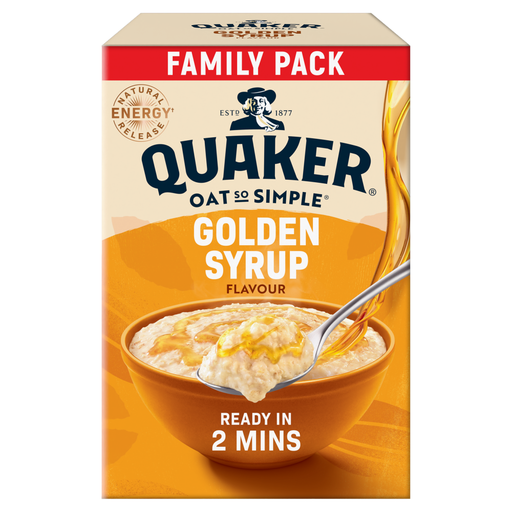
Quaker Oat So Simple Golden Syrup Family Pack, 20 sachets

Quaker Oat So Simple Golden Syrup Family Pack, 20 Sachets

A portioned option for hurried arrivals when a microwave is available at the property.

Contains 20 individually portioned 36g sachets with a stated two-minute microwave method; keep the box sealed in a cool, dry place.

This is golden-syrup flavoured porridge with sugar rather than plain oats, and it may contain barley, wheat and soy.

Joybuy

Frequently asked questions

Should I buy a bulk tin of porridge oats for a second home?

Not automatically. A 4kg resealable tub and bulk multipacks can work for regular use, but a metal tin is not necessary for storage; choose the quantity around occupancy and follow the pack instructions after opening.

How should oats be stored after opening at a second property?

Follow the specific pack label. Waitrose & Partners advises storing its 1kg porridge oats in a cool, dry place and in an airtight container once opened; keep the best-before date visible if you decant the oats.

Can I use porridge oats after the best-before date?

A best-before date concerns quality rather than food safety. GOV.UK says food may still be safe after that date but may not be at the same quality; follow storage guidance and do not confuse a best-before date with a use-by date.

Are ordinary porridge oats suitable for someone with coeliac disease?

Do not assume so. Coeliac UK says standard oats may be contaminated with wheat, barley or rye, and descriptions such as “100% oats”, “pure oats” or “organic” do not show that a product is gluten free. Choose an explicitly labelled gluten-free oat product where required.

Will jumbo oats cook as quickly as superfast oats?

They are different practical choices. Mornflake says its smaller Superfast flakes absorb water or milk faster, while Quaker UK describes Jumbo Oats as whole, uncut flakes for a heartier texture; choose quick-cook oats for speed and jumbo oats for texture or baking.