Regular weekend porridge households
Suitable for households that make porridge or bake with oats often enough to use a multi-kilogram order, with space to keep refills sealed, cool and dry. Mornflake provides the relevant pack and storage guidance.


Choose a bulk porridge-oat multipack only when your household will use it regularly and you have sealed, cool, dry storage for the refill. Smaller bags reduce the storage commitment, while jumbo and quick oats are mainly a choice between texture and preparation time; for a gluten-free requirement, choose oats explicitly labelled gluten-free and check the current pack label.
Suitable for households that make porridge or bake with oats often enough to use a multi-kilogram order, with space to keep refills sealed, cool and dry. Mornflake provides the relevant pack and storage guidance.
Useful for people deciding between thick, chewy jumbo flakes for a slower bowl or flapjacks, and finer oats for faster preparation. Mornflake and the British Heart Foundation distinguish these formats by texture and cooking time.
For shoppers who need an explicitly gluten-free oat product and cannot assume that standard, organic or “100% oats” products are suitable. Food Standards Agency guidance and Coeliac UK both stress checking the product label.
Start with how much oats your household will realistically use, then choose the oat cut and pack format that fit your breakfast routine and storage space.
| Priority | What to check | Your needs |
|---|---|---|
| Pack size and storage | Compare total pack weight with regular use; keep opened oats sealed in a cool, dry place; check whether a tin is sold empty or filled. | A large reserve makes sense when we eat porridge or bake with oats often enough to finish it and have room for a sealed refill. |
| Cooking time and texture | Choose jumbo flakes for a thicker texture; choose finer or quick oats when preparation needs to take only minutes; compare the cooking instructions. | I may prefer a slower, textured weekend bowl, or I may need breakfast ready quickly before leaving home. |
| Plain ingredients | Read the ingredient list; distinguish plain oats from flavoured sachets or pots; check the label when comparing serving formats. | I want a plain oat base so I can choose my own milk, fruit, nuts or sweeteners. |
| Gluten-free suitability | Look for an explicit gluten-free claim; read the current allergen statement; do not rely on organic, pure-oat or 100% oat wording alone. | When gluten-free oats are required, I need a pack labelled for that purpose rather than ordinary oats. |
| Like-for-like value | Compare equivalent plain oats by current unit price; include delivery where relevant; allow for storage capacity and possible leftovers. | A larger pack only works for me if the quantity is practical to use, not simply because it contains more oats. |
Mornflake describes its 350 Years Metal Oat Tin as storage for oats, while its oat multipacks are listed separately.
Check the net weight, ingredient panel and product description before checkout. Buy a tin only when you also want a reusable storage container.
A storage-only tin may still require a separate oat purchase.
Mornflake lists 4 x 3kg oat packs and advises sealed, cool, dry storage, so a large order needs both cupboard space and regular use.
Estimate how many portions your household uses each weekend, make sure opened oats can be kept sealed, and compare the delivered total with smaller packs.
An oversized order can leave unused food or add delivery costs.
Coeliac UK explains that standard oats may be contaminated where wheat, barley or rye are handled. The Food Standards Agency defines the conditions for a gluten-free claim in the UK.
For coeliac disease or a medically necessary gluten-free diet, choose an explicitly labelled gluten-free oat product and check its current pack label and allergen statement.
Jumbo and finer oats differ mainly in texture and cooking speed; the British Heart Foundation notes that the oat forms offer the same nutritional benefits.
Choose jumbo flakes for a slower, chewy bowl or quick oats for a rapid breakfast. Only pay for convenience when the shorter preparation time matters to your routine.
A relevant option for bulk weekend breakfasts: Mornflake lists 4 x 3kg packs of Creamy Superfast Oats and Jumbo Oats alongside other multipacks.
A reference point for a straightforward plain-oat option in a smaller pack rather than a bulk shipment.
Relevant for shoppers seeking organic wholegrain rolled oats in a standard bag.
Relevant for organic plain rolled oats, particularly where shoppers need to examine allergen information closely.
Relevant when comparing standard rolled oats, jumbo oats and portioned convenience formats rather than a verified oat tin.
Joybuy product options for weekend porridge breakfasts, including standard packs, a gluten-free route, a quick-cook option and a separate storage container.
 No image available
A split-pack plain-oat option for repeat porridge or baking without opening the full quantity at once.
Contains 2 x 1kg packs of 100% organic wholegrain oat flakes. Store cool and dry. This is not a filled tin or a 4 x 3kg bulk multipack, and it is not for an explicitly gluten-free requirement.
 No image available
A standard-size option for a textured bowl without the storage commitment of a multipack.
States 100% rolled oats, with 4–5 minute hob cooking and 2–3 minute microwave cooking instructions. The listing advises an airtight container after opening and states that it may contain wheat and barley.
 No image available
A plain 1kg oat option for porridge and baking where an explicitly gluten-free route is needed.
The listing describes 100% gluten-free oat flakes and 25 stated portions, with sealed-after-opening storage advice. Check the delivered pack label and allergen statement for a coeliac or medically necessary gluten-free diet.
 No image available
A portioned quick-breakfast alternative when preparation time matters more than maintaining a large oat reserve.
Contains six 38.5g sachets and states 2½-minute microwave preparation. The ingredient list states wholegrain rolled oats only; it has no explicit gluten-free claim.
 No image available
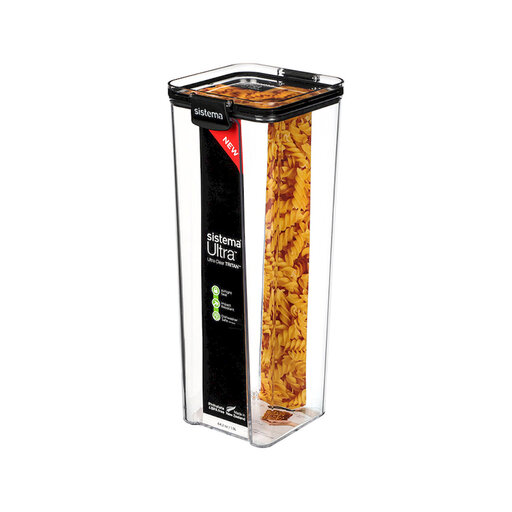
A separate storage accessory for organising opened oat refills and other pantry foods.
The listing states a 1.9L capacity, locking clips, a square stackable form and an airtight seal. It is an empty canister rather than an oat-filled tin; check usable capacity against the oat refill you plan to store.
Do not assume so. Mornflake describes its 350 Years Metal Oat Tin as suitable for storing oats and lists oat multipacks separately. Check the exact product title, weight and ingredient panel before treating a tin as a food purchase.
Mornflake states that its creamy porridge oats have a shelf life of around 12 months when kept in a sealed container in a dry, cool place. Use the exact pack’s best-before date as the controlling information, especially after buying a multipack.
Choose jumbo oats for a thicker, more textured bowl and for flapjacks; choose finer or Superfast oats when speed matters. The British Heart Foundation says the oat forms offer the same nutritional benefits, while processing changes texture and cooking time.
Not automatically. Coeliac UK says many standard oats are made alongside wheat, barley or rye and can be contaminated. For a gluten-free requirement, select a product explicitly labelled gluten-free and check the current pack label; the Food Standards Agency states that the claim applies to food containing no more than 20mg/kg of gluten as sold.
No. Coeliac UK specifically states that “100% oats”, “pure oats” and “organic” do not indicate whether a product is gluten-free. Look for an explicit gluten-free claim and review the current label.