Families using a self-catering kitchen
Unopened tins can be planned into several lunches or light suppers without taking up fridge space. Check the storage instructions for the soups you choose and plan for refrigeration after opening.


Choose a multipack for a self-catering holiday if the group expects to use several cans of the same soup and has a cool, dry place to keep them unopened. Compare price per kilogram and check stock before relying on a bulk pack; if dietary needs differ, individually checked flavours may be more useful than six cans of one recipe.
Unopened tins can be planned into several lunches or light suppers without taking up fridge space. Check the storage instructions for the soups you choose and plan for refrigeration after opening.
A multipack makes sense when people will eat the same flavour more than once. Compare pack sizes and price per kilogram, then check that the chosen pack can be obtained for the trip.
Choose each flavour against the people who will eat it. A vegan or vegetarian description does not replace a check of the ingredients and allergen information on the current tin.
Start with the number of cans and flavours the group is likely to use, then compare labels and pack value before committing to a multipack.
| Priority | What to check | Your needs |
|---|---|---|
| Storage and portions | Check the unopened storage instructions, cans per pack and serving size. Follow the particular tin’s directions for opened leftovers. | I need enough soup for planned meals, but somewhere suitable to keep unopened cans and refrigerate any leftovers. |
| Pack value | Compare price per kilogram for comparable soups, not just the pack total. Confirm the pack is in stock for your shop. | A multipack is useful to me only if we will use its cans and can obtain it before leaving. |
| Ingredients and allergens | Read the current ingredients, dietary description and allergen statements for each flavour. Check precautionary statements separately. | Different people may eat the soup, so I cannot choose for everyone from a flavour name alone. |
| Salt | Compare salt per 100 g and per stated serving, taking account of how much soup will be served. NHS guidance sets an adult maximum of 6 g of salt a day. | If soup appears in several meals, I want to understand its contribution alongside the rest of each meal. |
Pack size and offers can change the comparison. A listed lower unit price is of little use if that pack is out of stock.
Compare price per kilogram for similar soups and check availability for your delivery or collection date.
Dietary descriptions do not cover every ingredient or allergen. Marks & Spencer lists its minestrone as vegan, but its ingredient information includes wheat and celery.
For a mixed group, check each proposed flavour’s current label before deciding between a multipack and individual tins.
Marks & Spencer’s cited cream of tomato soup instructs shoppers to transfer opened contents to an airtight container, refrigerate them and eat them within two days.
Estimate portions before opening tins and follow the storage directions on the product actually bought.
Tesco’s listing for Heinz Cream Of Tomato Soup gives 1.1 g of salt per half-can serving. The amount served matters when comparing it with other foods in the meal.
Read both per-serving and per-100 g figures on the chosen tin rather than comparing differently sized servings as though they were equal.
These examples illustrate different ways to build a holiday soup shop; suitability depends on the specific flavour and pack.
Tesco lists a Heinz Cream Of Tomato Soup 4 x 400 g pack for shoppers considering one tomato-soup flavour across several meals.
Tesco has listed both a single 400 g Cream Of Tomato Soup tin and a 4 x 400 g pack.
Campbell’s UK describes its Cream of Tomato Soup as suitable for use in recipes as well as serving as soup.
Marks & Spencer lists individual soup flavours, including minestrone and Mexican-style chilli and bean soup described as vegan.
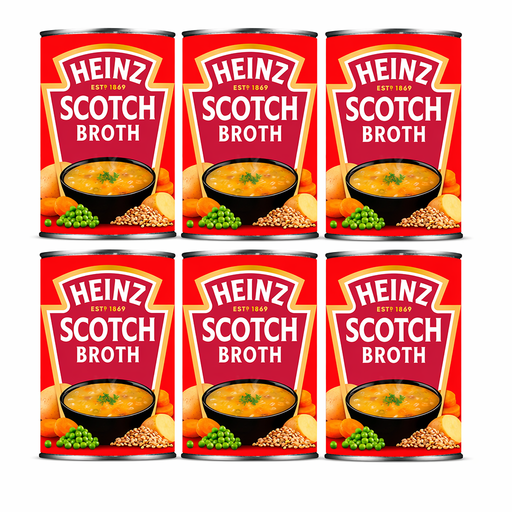
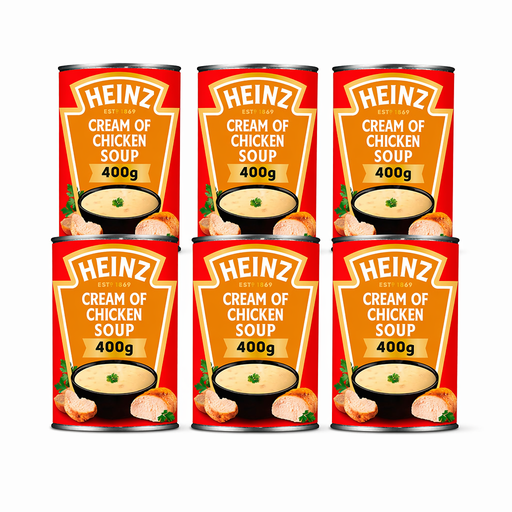
These six-can Heinz packs are options for a group expecting to use one flavour across several holiday meals. They are Scotch broth and cream of chicken, rather than the tomato soups used in the brand examples above.
 No image available
Consider the six-can format if the group plans several Scotch broth meals. The product information identifies mutton, barley and wheat gluten, and gives a salt figure of 1.2 g per half-can; check the current label against the group’s requirements.
 No image available
Consider this six-can pack when cream of chicken is a flavour the group expects to use repeatedly. Its product information identifies milk and wheat and lists possible presence of celery, other gluten-containing cereals, eggs, mustard or soya. Check the current pack’s allergen and salt labels before buying.
It can be if the group expects to use several cans of the same flavour and can follow the unopened storage instructions. Plan portions before opening tins: Marks & Spencer’s cited cream of tomato soup instructs shoppers to transfer leftovers to an airtight container, refrigerate them and eat them within two days.
Compare price per kilogram for the same type of soup, then consider whether you will use the full pack. Check availability for the planned shop too; Tesco’s cited 4 x 400 g own-brand tomato soup listing was marked out of stock.
No. Check the exact tin’s dietary description, ingredients and allergen statements. Marks & Spencer describes its minestrone as vegan, while its ingredient information also lists wheat and celery.
The Food Standards Agency explains that precautionary allergen labelling communicates possible unintended allergen presence. It is not a guarantee that a product is suitable for someone with an allergy; assess the wording for the particular person and product.
Read the salt figures per 100 g and per stated serving, then account for the amount actually served and the rest of the meal. Tesco lists 1.1 g per half-can serving for Heinz Cream Of Tomato Soup; NHS guidance sets an adult maximum of 6 g of salt a day.