Organisers making savoury food in batches
Work from a tested recipe to calculate how many tins you need. Keep the packaging so you can check ingredients while preparing food for the event.


For a school bake sale, start with the quantity of tomatoes in a tested recipe, then choose a pack size that covers the batches you plan to make. Napolina describes its chopped tomatoes as chunky, while Mutti describes Polpa as finely chopped: choose according to the texture the finished dish needs, and keep the ingredient labels for event checks.
Work from a tested recipe to calculate how many tins you need. Keep the packaging so you can check ingredients while preparing food for the event.
If the tomatoes will be blended or mixed with other ingredients, check the required quantity before deciding whether a four-pack or a larger case fits the batch plan.
For pizza-style bakes, pasta sauces or savoury fillings, decide whether visible tomato pieces or a finer pulp suits the finished recipe.
Calculate the tomato quantity from a tested recipe before selecting the pack format; then check texture, labels and opened-tin instructions.
| Priority | What to check | Your needs |
|---|---|---|
| Batch quantity | Check the number of 400g tins in each pack and calculate the total required from the tested recipe. A 4 x 400g pack contains 1.6kg. | I need enough tomatoes for the planned batches, rather than assuming one multipack will cover the event. |
| Tomato texture | Check whether the recipe calls for visible pieces or a finer pulp. Napolina describes its chopped tomatoes as chunky; Mutti describes Polpa as especially finely chopped. Test the intended format in the recipe. | For a filling, I may want tomato pieces; for a more even pizza-style base, I may prefer finely chopped tomatoes. |
| Ingredients and allergens | Read the labels on the tins you use and keep a record of all recipe ingredients. Confirm with the school or local authority how allergen information must be provided for the event and the way the food is packaged. | People need accurate information about the prepared food, including ingredients added alongside the tomatoes. |
| Opened-tin storage | Check the purchased tin’s instructions for transferring, refrigerating and using any unused contents. Listed instructions differ between ASDA, Sainsbury’s and M&S products. | If I prepare batches ahead of the sale, I need a plan for any tomatoes left after opening a tin. |
Chunky chopped tomatoes and fine pulp produce different textures in a sauce or filling. The other ingredients and cooking method also affect the finished dish.
Make a small batch with the intended tomato format before calculating how many tins the event requires.
Without the packaging, it is harder to check the ingredients in the tomatoes when compiling information about the prepared food. Other recipe ingredients also need checking.
Keep the tin labels and a recipe-and-ingredient record, then confirm the event’s allergen-information arrangements with the school or local authority.
The tins available for the event may carry different ingredient or storage information from an earlier listing.
Check the product you purchase and read its physical label before preparing the food.
These references describe particular tinned-tomato products and formats, not every product made by each brand.
Tesco Italian Chopped Tomatoes are listed in a 4 x 400g multipack.
ASDA Chopped Tomatoes in Tomato Juice are listed as 4 x 400g tins.
Napolina offers chopped tomatoes in a 4 x 400g format and describes them as chunky.
Mutti Polpa is a finely chopped tomato format also listed in a 4 x 400g pack.
Sainsbury’s lists a 400g can of chopped tomatoes for recipes using individual tins.
M&S lists a single 400g can of chopped Italian tomatoes in tomato juice.
These chopped-tomato multipacks offer different tin counts for batch planning, including Napolina packs in several sizes and a finely chopped Mutti option. Choose the quantity and tomato format against your tested recipe.
 No image available
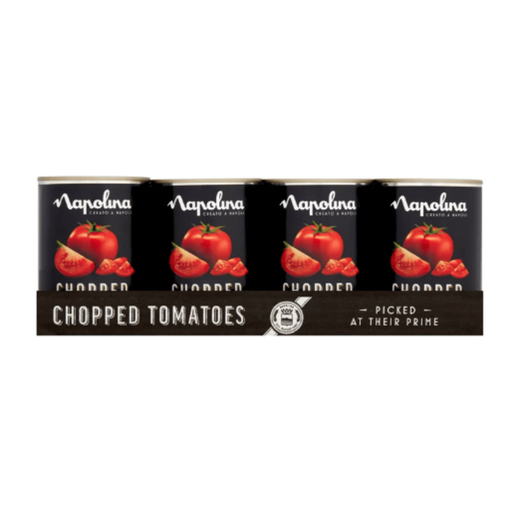
The 24-tin format is an option when a tested batch plan calls for several 400g tins. Napolina describes its chopped tomatoes as chunky; check the purchased tins’ ingredients and opened-storage instructions.
 No image available
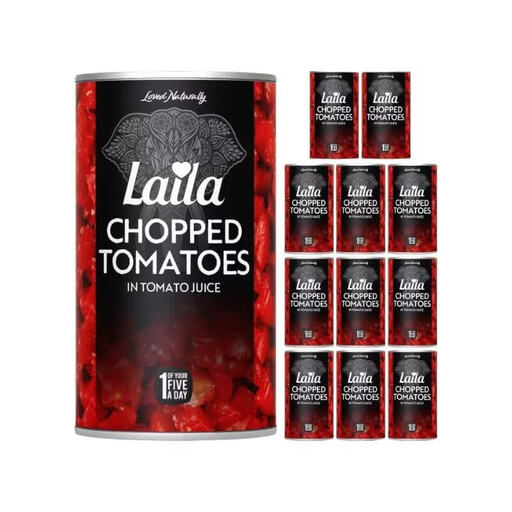
This 12-tin chopped-tomato pack provides a countable quantity for a multi-batch recipe. Check the tin label for its ingredients and instructions for unused contents.
 No image available
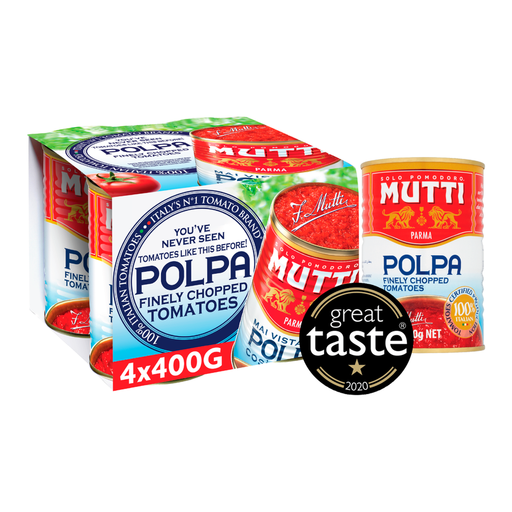
Consider this four-tin format when the tested recipe calls for finely chopped tomatoes rather than larger pieces. Mutti suggests Polpa for pizza and oven-cooked dishes; check the tin label for ingredients and storage instructions.
 No image available
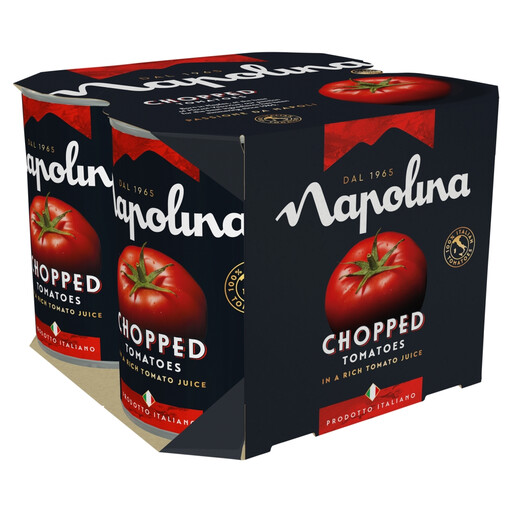
The four-tin pack suits a batch plan that calls for this number of 400g tins. Napolina describes the tomatoes as chunky; test that texture in the finished recipe and check the purchased label.
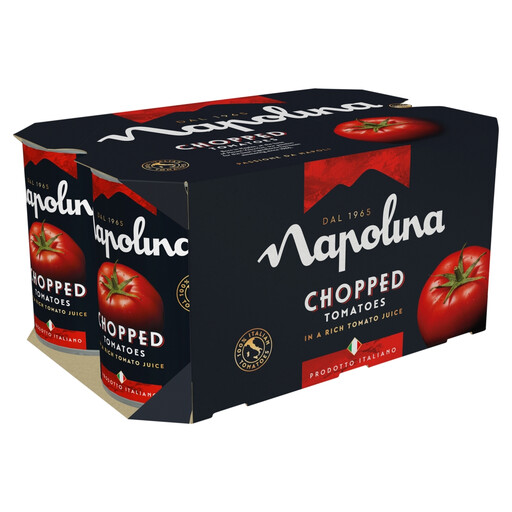 No image available
This six-tin chopped-tomato pack provides a different quantity from the four- and 24-tin options. Calculate the tins needed from the tested recipe, then check the label for ingredients and opened-storage instructions.
A 4 x 400g pack contains 1.6kg, but whether that is enough depends on the tested recipe and number of batches. Calculate the tomatoes required for the planned portions before deciding how many packs to buy.
Choose according to the texture you want in the tested recipe. Mutti describes Polpa as especially finely chopped and suggests it for pizza and oven cooking; Napolina describes its chopped tomatoes as chunky and suggests them for thick sauces.
Follow the instructions on the specific tin and transfer any unused contents as directed. ASDA’s listed instructions say to use a covered, non-metallic container, refrigerate and use within four days; the listed Sainsbury’s product specifies two days and M&S specifies three days.
Keep the ingredient labels for the tomatoes and every other recipe ingredient, and confirm with the school or local authority what information the event must provide. GOV.UK’s community-event guidance says food supplied at school fetes and fundraisers must comply with food law and be safe to eat; it specifies a food name and full ingredients list with the 14 mandated allergens emphasised for prepacked food and food prepacked for direct sale. For food businesses in Scotland, Food Standards Scotland says allergen information must be provided for prepacked and non-prepacked food.