
24/7 Customer Support

Free returns

Same-day & Next-day Delivery

Quality Guaranteed

Unlock Your Welcome Offers: FREE Delivery | Up to 80% OFF | Free 30-day JoyPlus trial
Download the APP
If you've invested in high-quality coffee beans, you're only halfway to a truly great cup of coffee. The single most significant upgrade you can make to your home brewing setup is a quality burr coffee grinder. Yet, the market is filled with models that promise perfection but deliver frustration. Many UK coffee lovers find themselves with a grinder that produces inconsistent results, is a hassle to use or simply stops working after a few months.
As a Joybuy Product Recommendation Officer, my role is to help you navigate these choices. Before you spend your money, let's look at the common pitfalls that lead to buyer's remorse.
To avoid these traps, focus on the mechanics of the grinder. Understanding these three core parameters will empower you to select a machine that delivers consistent results for years.
The burrs are two revolving abrasive surfaces that crush coffee beans into uniform particles. The material and design are critical for performance and longevity.
The ability to fine-tune your grind size is what separates a good grinder from a great one. The mechanism for this is either stepped or stepless.
Your lifestyle and brewing habits will determine whether a manual or electric grinder is right for you.
Based on these practical criteria, here are a few grinders that align with different user needs, helping you avoid the common purchasing traps.
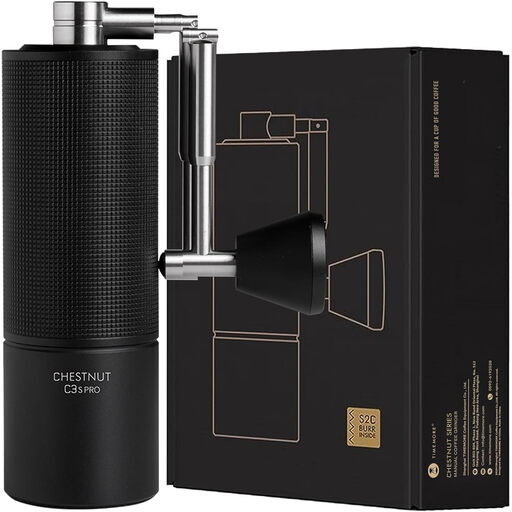
Why This Fits Their Persona: This user is ready to move beyond a blade grinder and wants tangible quality without a huge initial investment. The TIMEMORE C3S Pro offers the precision and consistency of a true burr grinder in a durable, all-metal body, perfect for exploring different brew methods like pour-over and French press.
It directly counters the "wobbly burr" pitfall with a dual-bearing central axis for stability and uses hardened stainless steel burrs, not cheap ceramic. Its ~36 stepped adjustments provide meaningful control, avoiding the "one-size-fits-all" myth.
Durable All-Metal Construction: The aluminium alloy body and stainless steel burrs ensure long-term reliability.
Portable Design: Features a compact body and folding handle, making it ideal for home, office or travel.

Why This Fits Their Persona: This home barista owns an espresso machine and is frustrated with inconsistent shots. They need a reliable electric grinder that offers fine control and repeatable results without the complexity of a commercial machine. The Sage coffee grinder is a popular choice in UK kitchens for this reason.
With 60 distinct grind settings, it provides the necessary resolution for dialling in espresso, solving the "one-size-fits-all" problem. The Dosing iQ technology allows for programmable, timed grinding, ensuring you get the exact same amount of coffee for every shot.
High-Resolution Control: 60 grind settings and programmable dosing time in 0.2-second increments give you total control.
Direct-to-Portafilter Grinding: Comes with cradles for 50-54mm and 58mm portafilters for a streamlined workflow.

Why This Fits Their Persona: This user values convenience and a modern aesthetic. They want fresh-ground coffee at the office, while travelling or camping, but without the effort of a manual grinder. The one-touch operation and rechargeable battery make it a practical, portable solution.
It combines the consistency of a true stainless steel burr grinder with the convenience of electric power. The precision coaxial structure reduces burr wobble, ensuring a uniform grind that cheap portable grinders can't match.
One-Touch Electric Grinding: Provides the consistency of a burr grinder with minimal effort.
USB-C Rechargeable: The 1000mAh battery and modern Type-C charging port make it easy to power up anywhere.
We have compiled a complete, real-time list of products that fully satisfy these strict selection criteria and UK safety regulations.
The lifespan of a burr coffee grinder depends on the quality of its components and how it's maintained. The burrs themselves are wear items. For a typical home user, a set of quality stainless steel burrs can last for several years (or around 200-500kg of coffee) before performance noticeably degrades. The motor in an electric grinder is another factor. To prolong its life, avoid running it continuously for long periods to prevent overheating and clean the grinding chamber regularly to prevent coffee oils from building up.
For many users, yes. The extra investment often buys you greater precision, durability and better features. More expensive grinders typically have larger, higher-quality burrs, more powerful motors, a greater number of grind settings (or a stepless mechanism) and more robust construction. This translates to more consistent grounds, better-tasting coffee and a machine that can withstand daily use for many years. While a good entry-level burr grinder is a huge step up from a blade grinder, a more premium model offers a higher ceiling for quality and control.
Yes, but with a caveat. Many grinders can technically produce grounds for both, but switching between the two extremes can be inconvenient. A grinder with a wide range and stepped adjustments is great for easily moving between filter coffee and French press settings. However, for espresso, you need very fine adjustments. If you frequently switch between espresso and a very coarse setting, you may spend a lot of time "dialling in" your espresso shot again each time. Some users prefer having a dedicated espresso grinder and a separate, less expensive grinder for other brew methods.