
24/7 Customer Support

Free returns

Same-day & Next-day Delivery

Quality Guaranteed

Unlock Your Welcome Offers: FREE Delivery | Up to 80% OFF | Free 30-day JoyPlus trial
Download the APP
By Joybuy Product Recommendation Officer
Freshly ground coffee can improve the consistency of a morning brew, but choosing among manual, electric and rechargeable coffee grinders is not always straightforward. Product pages often focus on burr size, grind settings or motor power without explaining how those features affect everyday use.
The most expensive coffee grinder is not automatically the right choice. A compact manual coffee grinder may suit a flat-dweller with limited worktop space, while a café-style electric model could be unnecessary for occasional French press coffee. Before buying, consider the following common pitfalls.
A high number of settings sounds impressive, but the useful question is whether the adjustment range matches your brewing method. Espresso needs a fine, controllable grind, while French press requires a much coarser texture. A grinder with many settings but noticeable gaps between them may be less practical than one with fewer, clearly defined steps.
For espresso, check whether the grinder offers fine adjustment or stepless control. For pour-over coffee, moka pot and French press, a reliable coarse-to-fine range is usually more important than the headline number.
Coffee grounds can remain inside the burr chamber, chute or collection cup. This may lead to stale residue being mixed into a later brew. Removable parts and dry-brush cleaning are useful features, but buyers should also check whether the grinder can be opened without complicated tools.
Do not assume that every electric coffee grinder is washable. Electrical bases, motors and burr assemblies commonly require dry cleaning only. Always follow the supplied instructions.
A large hopper can be useful for several cups, but it also takes up more worktop space. A 20g manual grinder may be suitable for a single espresso or filter serving, whereas a household making several cups may prefer a larger electric model. Capacity should be matched to your routine rather than treated as a quality indicator.
A burr coffee grinder crushes beans between two grinding surfaces instead of chopping them with a blade. Burrs generally provide more control over particle size, which matters when adjusting extraction.
Stainless steel burrs are common in portable and manual models. Some larger electric grinders use conical burrs, which are designed to guide beans through the grinding path while taking up less space than some flat-burr arrangements. Titanium-alloy burrs may appear in larger models, but the burr material alone does not guarantee a suitable cup. Alignment, adjustment design and maintenance also affect performance.
A coffee grinder for French press should reach a coarse setting without excessive fines, while a coffee grinder for pour-over benefits from controlled medium settings. Espresso drinkers should look for fine settings and, where possible, small adjustment increments.
A manual grinder with click-based adjustment can be easy to repeat once you find a suitable setting. A stepless electric grinder gives more continuous control, which may appeal to espresso users who regularly fine-tune a recipe.
A manual coffee grinder needs no electricity, making it practical for travel, camping or offices without a suitable socket. It does require physical effort, particularly with dense light-roasted beans.
A rechargeable coffee grinder offers one-touch operation without a mains cable, but remember to check battery capacity, charging time and safe cleaning instructions. A mains-powered electric coffee grinder is generally more suitable for repeated household use, provided there is enough room and ventilation around the motor.
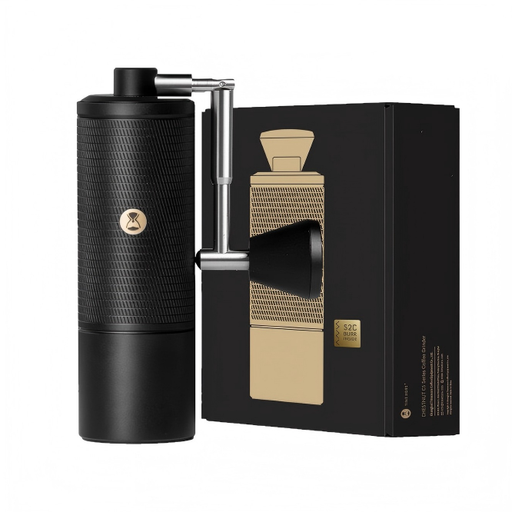
Why This Fits Their Persona: A manual format avoids electricity costs and is suitable for single-cup preparation at home, in an office or while travelling around the UK.
It keeps the design simple, so buyers are not paying for a motor or display they may not need. Check the included adjustment range before ordering.
Manual operation requires no socket; its compact format is convenient for small kitchens and travel.

Why This Fits Their Persona: Suitable for home users who switch between espresso, filter and French press and want repeatable programmed dosing.
Its stated 60 grind settings and 0.2-second dosing adjustments are specific features to compare, rather than vague claims about precision.
LCD display; direct grinding into a portafilter, filter basket or airtight container.

Why This Fits Their Persona: A compact rechargeable coffee grinder can suit commuters, campers and office users who want one-touch grinding without carrying a mains adapter.
The product information specifies a 1000mAh battery, Type-C charging and approximately 2.5-hour charging time, making power requirements clearer.
One-touch operation; stainless steel burr; settings listed for espresso, moka pot, pour-over and French press.
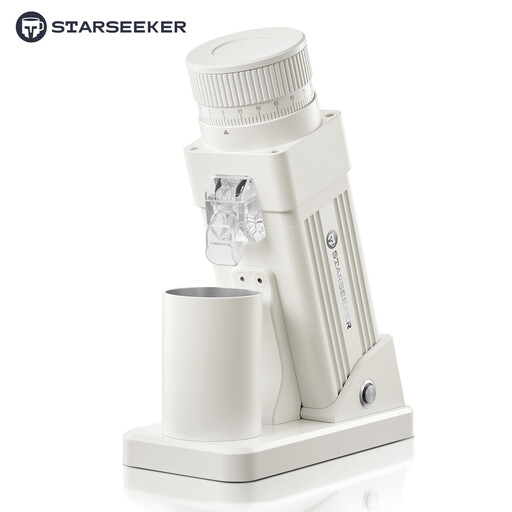
Why This Fits Their Persona: Its larger 55mm titanium-alloy conical burrs and 72W AC motor are aimed at users preparing coffee frequently at home or in a small café environment.
Stepless adjustment is a clearly stated feature for espresso users, while the safety information advises cooling between extended grinding sessions.
55mm conical burrs; 72W motor; stepless adjustment; anti-powder-flying design.
We have compiled a complete, real-time list of products that fully satisfy these strict selection criteria and UK safety regulations.
It can be, provided it offers a fine setting and the burr mechanism can be adjusted consistently. Manual grinding takes longer and requires more effort, so frequent espresso preparation may be more convenient with an electric espresso coffee grinder.
Lifespan depends on bean volume, cleaning and the construction of the burr and drive system. Regularly removing retained grounds, avoiding foreign objects and following duty-cycle instructions can help reduce unnecessary wear. Burrs may eventually need replacement, so check whether spares are available before buying.
A mains-powered grinder normally runs for a short period per dose, so its direct electricity use is limited. A rechargeable model draws power while charging rather than during every grinding session. The larger running consideration is usually convenience, noise, storage space and maintenance rather than electricity alone.