
24/7 Customer Support

Free returns

Same-day & Next-day Delivery

Quality Guaranteed

Unlock Your Welcome Offers: FREE Delivery | Up to 80% OFF | Free 30-day JoyPlus trial
Download the APP
For anyone serious about their coffee, the journey from bean to cup is a ritual. You select your beans with care, perfect your water temperature and time your brew. Yet, one of the most critical steps—the grind—is often overlooked. Using pre-ground coffee or an inconsistent blade grinder can stand between you and a truly exceptional cup. A quality burr coffee grinder is not a luxury; it is the key to unlocking the full flavour potential of your coffee beans.
As the Joybuy Product Recommendation Officer, my role is to help you navigate the market and find equipment that genuinely enhances your daily routine. This guide is designed to provide clear, practical advice on choosing the right coffee bean grinder for your needs in the UK, followed by a few of our top recommendations for 2026.
Before diving into specific models, let's consider a few key factors that will help you narrow down your options.
The first major decision is whether to choose a manual coffee grinder or an electric coffee grinder.
The primary advantage of a burr grinder is its ability to produce a uniform grind. This is achieved by two revolving abrasive surfaces (burrs) that crush the beans between them. The distance between the burrs determines the final particle size.
An adjustable burr grinder is essential for anyone who enjoys multiple brewing methods. A coarse grind is needed for a French press to avoid sediment, while a very fine, consistent grind is non-negotiable for a quality espresso grinder. The more grind settings a machine offers, the more precisely you can dial in the perfect extraction for any coffee bean or brew method.
Burrs are typically made from either stainless steel or ceramic. Steel burrs are known for their sharpness and ability to produce a very consistent grind, especially at finer settings. They are durable and common in high-performance grinders. Ceramic burrs are also very hard, do not conduct as much heat and are resistant to rust, though they can be more brittle. The shape of the burrs (conical or flat) also influences the grind profile, with conical burrs often being favoured in home grinders for their low retention and ease of use.
Here are a few standout burr grinders that cater to different needs, from the hands-on enthusiast to the home barista seeking ultimate convenience.
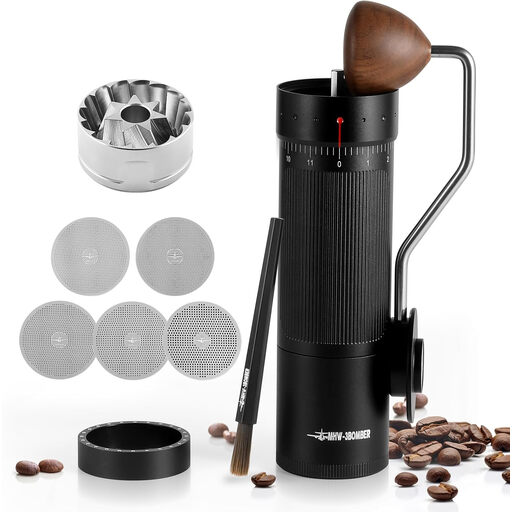
Why It Stands Out: This grinder is built for the coffee purist who demands precision. Its most notable feature is the inclusion of five interchangeable sieves (from 300um to 850um), which allow you to filter out fine particles for an exceptionally clean and flavourful cup. The external adjustment dial offers 60 distinct settings, making it simple to switch between brew methods.
Pros:
Who is it for? The coffee enthusiast who enjoys the ritual of manual grinding and seeks ultimate control over grind uniformity. It is an excellent choice for travel, camping or as a dedicated single-dosing grinder at home.
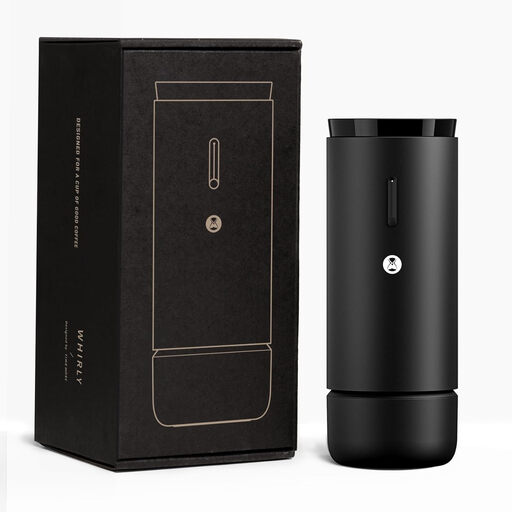
Why It Stands Out: This model bridges the gap between manual portability and electric convenience. It is a compact, battery-powered electric coffee grinder that doesn't compromise on grind quality. According to the brand, its patented S2C-420-EI stainless steel burrs are designed to enhance sweetness and crema.
Pros:
Who is it for? The modern coffee drinker who values both quality and convenience. It is ideal for those with limited counter space, frequent travellers or anyone wanting to upgrade from a manual grinder without committing to a large countertop machine.
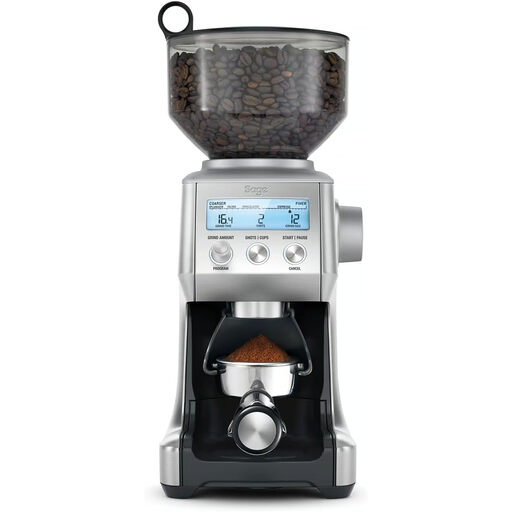
Why It Stands Out: For the home barista seeking automation and repeatability, the Sage Smart Grinder Pro is a formidable countertop option. Its standout feature is the Dosing iQ technology, which allows you to program the grind time in 0.2-second increments for a perfect dose every time. The clear LCD screen makes operation intuitive and straightforward.
Pros:
Who is it for? The dedicated home barista, particularly those with a home espresso machine. It is built for users who prioritise precision, consistency and a streamlined workflow for their daily coffee preparation.
While these three models represent excellent choices for different users, the world of coffee grinders is vast. If you are looking for different features, aesthetics or price points, there are many other quality machines to consider.
? Explore our full collection of Bean Grinding Coffee Machines to find the perfect match for your setup.
1. Is a burr coffee grinder really worth it? Yes. Unlike blade grinders that chop beans inconsistently, burr grinders crush them to a uniform size. This allows for a much more even extraction of flavour and aroma, resulting in a noticeably better-tasting cup of coffee with less bitterness and sediment.
2. How long do the burrs in a grinder last? The lifespan of a set of burrs depends on the material and how much coffee you grind. For an average home user, a quality set of stainless steel burrs can last for several years, often rated to grind hundreds of kilograms of coffee before needing replacement. Regular cleaning will also help maintain their performance.
3. What is a good starting grind size for a French press? For a French press, you should aim for a coarse and uniform grind, similar in texture to coarse sea salt. This prevents the plunger's mesh filter from getting clogged and minimises the amount of fine sediment (or 'sludge') at the bottom of your cup, leading to a cleaner brew.