
24/7 Customer Support

Free returns

Same-day & Next-day Delivery

Quality Guaranteed

Unlock Your Welcome Offers: FREE Delivery | Up to 80% OFF | Free 30-day JoyPlus trial
Download the APP
For anyone serious about improving their daily brew, the journey starts not with the coffee machine, but with the coffee bean grinder. Grinding beans just before brewing is the single most impactful step you can take for a more flavourful cup. However, the market is filled with models that promise much but deliver little. As the Joybuy Product Recommendation Officer, my role is to help you navigate the options and find a machine that genuinely suits your needs, without falling for common marketing traps.
Before you invest, be aware of these frequent pitfalls:
To avoid disappointment, focus on the mechanics of the grinder. These three parameters are non-negotiable for achieving a quality grind at home.
The heart of any coffee bean grinder is its burrs. These are two revolving abrasive surfaces that crush beans into a uniform size.
The ability to fine-tune your grind size is critical. An adjustable coffee grinder should offer genuine control.
Your lifestyle will dictate whether an electric or manual model is more suitable.
Based on these practical criteria, here are a few models suited to different types of UK coffee drinkers.

Why This Fits Their Persona: This set is ideal for campers, hikers and commuters who refuse to compromise on coffee quality. Its manual operation requires no electricity, and the entire kit packs neatly into a carrying bag for ultimate portability.
It avoids the flimsy build trap with a durable stainless steel construction. As a dedicated manual grinder, its 12-step adjustment is designed for consistency on the move, not for competing with high-end electric models.
Features CNC-machined stainless steel conical burrs for consistent grinding. The all-in-one set includes a portable espresso maker, providing a complete coffee solution anywhere.
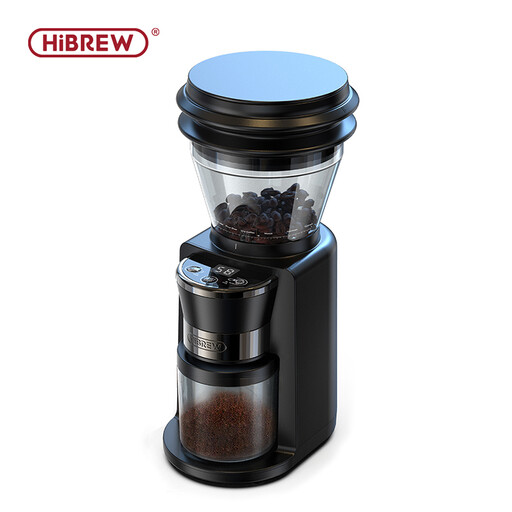
Why This Fits Their Persona: For those ready to upgrade from a blade grinder, the G3 offers a significant step up in quality without a prohibitive price tag. It provides the convenience of electric grinding and enough control for experimenting with different brew methods.
This model sidesteps the blade grinder deception by offering a genuine high-precision conical burr. With 34 distinct grind settings, it provides meaningful control, avoiding the "universal grind" myth of cheaper alternatives.
Features a large 210g bean container and an anti-static function to reduce mess. The quantitative powder discharge helps ensure consistent dosing for single or double cups.

Why This Fits Their Persona: This user has likely invested in a quality espresso machine and needs a grinder that can keep up. The Smart Grinder Pro is a popular choice in the UK for its precision, control and features designed specifically for home espresso enthusiasts.
It directly counters the "universal grind" myth by offering 60 distinct settings and programmable digital timing (Dosing iQ). This allows for precise, repeatable doses and the micro-adjustments needed for a perfect espresso shot.
The clear LCD screen provides instant feedback on settings and time. It allows grinding directly into a portafilter, an airtight container or a filter basket, offering excellent workflow flexibility.
We have compiled a complete, real-time list of products that fully satisfy these strict selection criteria and UK safety regulations.
1. How long do the burrs last on a coffee grinder? For a typical home coffee grinder, steel burrs can last for around 200-300 kg of coffee, while ceramic burrs may last longer, up to 450-650 kg. For the average person drinking two coffees a day, this translates to many years of use before a replacement might be needed. You'll notice it's time for a change when your grind becomes inconsistent or you have to set the grinder much finer than usual to get the same result.
2. Can I use a burr grinder for spices? It is strongly advised not to. Grinding oily spices can leave residues on the burrs that will taint the flavour of your coffee and are difficult to clean. Hard spices can also damage the burr set or motor. It is best to use a dedicated grinder for spices.
3. What is the right grind setting for a French press? A grinder for French press requires a coarse and uniform grind. The grounds should resemble the texture of coarse sea salt. This allows for proper extraction over the 4-minute brew time without passing through the metal filter, which would result in a silty, muddy cup. On most grinders, this will be one of the highest numbered or coarsest settings.