Regular-and-decaf switchers
If both beans go through one grinder, consider how you will empty it and reach the burrs for cleaning. Easier access can help with that routine, but it does not establish that no regular coffee remains.


Choose an afternoon-decaf grinder for the coffee you make: espresso calls for an explicitly suitable fine-adjustment range, while filter coffee and cafetière need settings that cover their brewing methods. If you also grind regular beans, look for a workable empty-hopper and cleaning routine, but do not assume that accessible burrs or a single-dose accessory eliminate carryover.
If both beans go through one grinder, consider how you will empty it and reach the burrs for cleaning. Easier access can help with that routine, but it does not establish that no regular coffee remains.
If your break usually means pour-over, filter coffee, AeroPress-style coffee or cafetière, check that the grinder covers your brewing method. An espresso-oriented dosing routine need not drive the choice.
If you make espresso or milk drinks, prioritise a stated espresso grind range and check how grounds are delivered to your portafilter. Baratza and Sage describe espresso-capable adjustment on their respective UK product pages.
Start with your brewer, then decide how much bean-switching, clean-up or repeated dosing shapes your afternoon routine.
| Concern | What to check | Who this matters to |
|---|---|---|
| Switching beans | Check how the hopper empties and whether the manual explains access to the burrs for cleaning. | If I use regular beans in the morning and decaf later, I need a cleaning routine I can manage without assuming it removes every trace. Roughly 36% of consumers would put switching first. |
| Brew-method fit | Confirm an espresso-focused adjustment range for espresso, or stated filter and cafetière coverage for those methods. | My afternoon drink has to work with the brewer I actually use, rather than a setting count alone. For around 29% of consumers, brew-method fit would be the primary concern. |
| Simple clean-up | Check the included grounds receptacle, portafilter fit where relevant, and whether convenience features apply to the exact model. | For one occasional cup, I want to collect the grounds without turning a short break into a lengthy tidy-up. That would be the leading concern for roughly 21% of consumers. |
| Repeated dosing | Check the timer controls and whether storing beans in the hopper suits your switching routine. | If I make the same recipe regularly, a repeatable grinding routine matters more to me than changing beans quickly. Around 14% of consumers would make dosing their first priority. |
A quick-release burr or optional single-dose hopper makes parts of a switching routine more accessible; neither establishes complete separation between coffees.
Decide whether you are trying to limit flavour mixing or need to avoid caffeine exposure. If strict avoidance matters, check the exact manual and do not rely on an unproven zero-carryover assumption.
Baratza specifies separate espresso and coarser ranges for the Encore ESP, while Sage and Wilfa describe ranges spanning several brew methods. The counts alone do not establish how a setting will work with your brewer.
Check the manufacturer’s guidance for your brewing method before comparing setting counts.
Wilfa announced in July 2026 that its older Svart and original Uniform lines were being discontinued. A review of one of those models does not describe a Zense or Uniform Evo variant.
Match the full model name before comparing features, and check the warranty and service arrangements for the model you intend to buy.
Baratza describes a dosing cup with a 54 mm portafilter fit and a 58 mm adaptor for the Encore ESP. Other portafilter and holder arrangements may differ.
Identify your machine’s portafilter size and confirm the cup, holder or adaptor supplied with the exact grinder variant.
Baratza’s UK Encore ESP is relevant if your decaf routine includes espresso as well as filter-style coffee.
Wilfa positions its UK Zense and Zense Alux grinders for several home-brewing methods, including filter coffee and cafetière.
Sage’s UK Dose Control Pro suits consideration when timed grinding into a portafilter or filter is part of a regular recipe.
These choices cover portable manual and electric grinding as well as countertop dosing routines. Match the stated brew range and cleaning approach to your afternoon drink; none should be assumed to prevent regular-coffee carryover into decaf.
 No image available
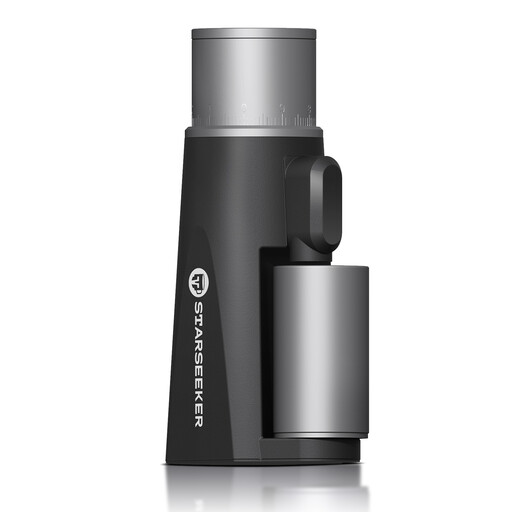
Consider this portable, cordless option if you want to grind an individual afternoon drink away from a fixed countertop setup.
Its stated uses include espresso and pour-over. The product description says the burr assembly and outlet can be disassembled for cleaning, but that does not establish complete separation when switching beans.
The description favours medium-to-dark roasts and warns that very light roasts may jam at fine espresso settings. It also notes that the grinder has no static elimination, so scattering or clumping may occur.
 No image available
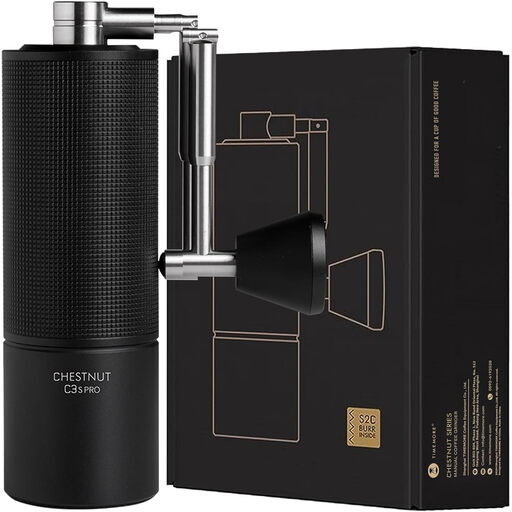
This manual grinder may suit an occasional decaf when a folding handle and a compact, hand-operated routine appeal to you.
The stated bean-container capacity is 25 g, and the product description covers brewing from espresso to French press. Its maintenance instructions describe disassembling the burr set for brush cleaning.
Allow for the effort of hand grinding, and do not treat brush cleaning as proof that no regular coffee remains after a bean change.
 No image available
Choose this style of cordless grinding if you want an electric routine that can move between home and an afternoon break elsewhere.
The listing describes 30 settings covering espresso to French press and a maximum bean capacity of 50 g. It recommends 30 g for light-roast or espresso use.
The described brush-cleaning routine does not require disassembly; check whether that routine meets your needs when changing between regular and decaf beans.
 No image available
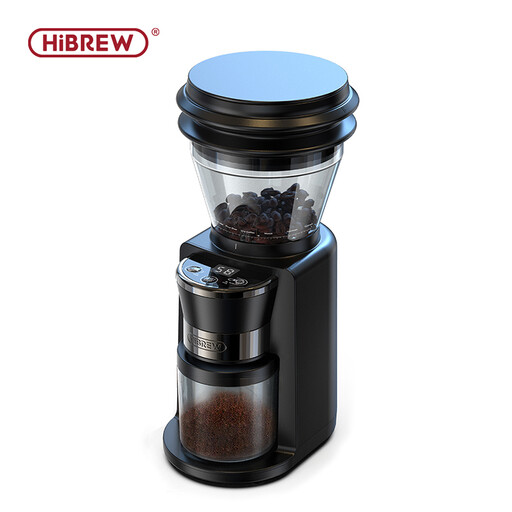
Consider the G3 if you prefer a countertop grinder with single- and double-cup dosing options over a portable one.
Its stated configuration includes a 210 g bean container, a 100 g grounds container and a 48 mm conical burr; the listing describes a 34-setting range from espresso to French press.
Consider whether storing beans in the larger container suits frequent changes to decaf. The described air blower should not be treated as proof of complete separation.
 No image available
This countertop model may suit a familiar afternoon recipe when programmable grind time matters more to you than a portable setup.
The listing specifies 60 settings and Dosing iQ timing adjustable in 0.2-second increments, with grinding into a portafilter or filter basket. Its stated brew range extends from espresso to French press.
If you change between regular and decaf beans, check the product instructions for a cleaning routine rather than assuming timed dosing clears remaining coffee.
No such guarantee follows from the stated cleaning features. If avoiding caffeine exposure is essential, do not rely on an assumption about a shared grinder; check the exact product instructions and seek appropriate professional advice for your circumstances.
Start with guidance for your grinder and brewing method, then adjust by taste. Wilfa’s Zense guide places filter coffee around the middle of that model’s range and cafetière towards the coarse end; its setting numbers should not be transferred to a different grinder.
No: check that the adjustment range suits your brewer and that the cleaning routine suits any bean switching. Sage states that the Dose Control Pro’s 60 settings span espresso to French press, while Baratza assigns distinct espresso and coarser ranges to the Encore ESP; the counts do not establish lower carryover or better results in the cup.
Check the warranty terms for the exact model and seller, along with the availability of replacement parts and a suitable service route. Coffee Hit describes itself as a UK authorised Baratza retailer and warranty service partner and says it stocks genuine spare parts; confirm the arrangements applicable to your purchase.