What matters when choosing
For a short espresso break, settle the question of fine grind adjustment first. Then decide whether repeatable dosing, switching brew methods or fitting the grinder into a shared space will shape your daily routine.
| Concern | What to check | Who this matters to |
|---|
| Fine espresso adjustment |
Check whether the exact model has an espresso-focused stepped range or stepless control, and how you can return to a setting. |
If I change beans or recipes, I want small grind changes without losing track of what worked. Around 36% of consumers put espresso adjustment first. |
| A repeatable short routine |
Check for a suitable direct-to-portafilter setup and either a dose timer or a single-dose routine. |
With only a short break, I want to prepare my dose without rebuilding the routine each time. Around 29% of consumers make dosing convenience their main concern. |
| Espresso and other brews |
Confirm that the model covers espresso and your other brew method; note how settings are marked and allow for retained grounds. |
If I also make filter coffee, I want to switch settings and find my way back to espresso. Around 21% of consumers put mixed-brew flexibility first. |
| Shared-space use |
Measure available bench space and check portafilter-fork fit; treat noise descriptions as manufacturer claims, not measured comparisons. |
When others are working or resting nearby, I care most about where the grinder fits and how disruptive the routine feels. Around 14% of consumers prioritise shared-space convenience. |
Joybuy product choices
These grinders offer different ways to approach an afternoon espresso: marked settings and dosing controls on some models, or portable and stepless designs on others. Check the exact version against your espresso setup and routine.
 No image available
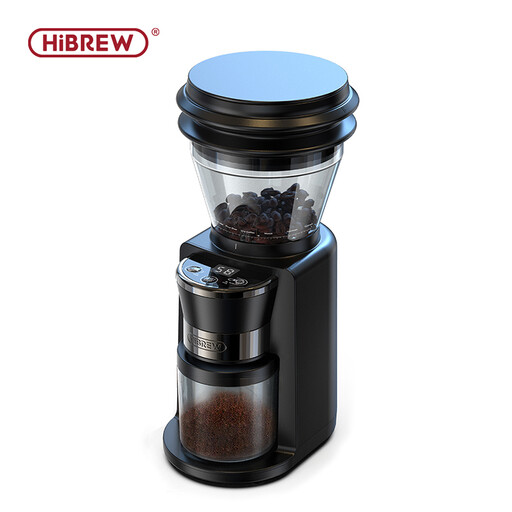
HiBREW G3 electric coffee grinder
Consider this model if you want marked settings and manual or automatic operation for your coffee routine.
Its title specifies a 34-gear scale, 48 mm conical burr, 210 g bean container and 100 g grounds container. Check whether its steps give you the adjustment your espresso recipe needs.
Confirm the plug and electrical version of the exact listing before purchase.
View on Joybuy
 No image available
Sage the Smart Grinder Pro BCG820BSSUK, brushed stainless steel
This model suits a routine built around marked settings and programmable dose time. Sage specifies 0.2-second programming increments for the Smart Grinder Pro.
The title specifies 60 grind settings and a conical burr. Check that your portafilter fits the grinding setup and confirm the electrical details of the exact listing.
View on Joybuy
 No image available
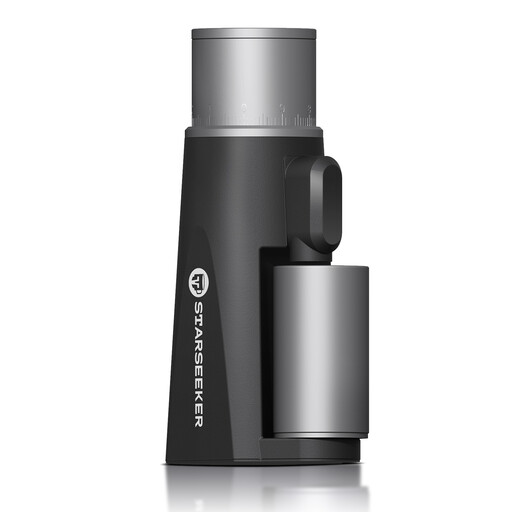
STARSEEKER EDGEmini portable wireless electric coffee grinder
Its portable, wireless design may suit a routine away from a mains socket; the title lists espresso and pour-over among its intended uses.
The listing cautions that very light-roast beans may jam when ground fine for espresso and that static can still cause scattering or clumping. Check the charging arrangement for the exact version.
View on Joybuy
 No image available
TIMEMORE portable electric burr coffee grinder, black
This cordless model is worth considering if you also want to grind away from a mains socket and switch between espresso and coarser brews.
The title specifies 30 settings, auto-stop and clog protection. The listing gives a 50 g maximum bean capacity and recommends 30 g for light-roast or espresso use; check that this suits your dose and confirm the charging arrangement.
View on Joybuy
 No image available
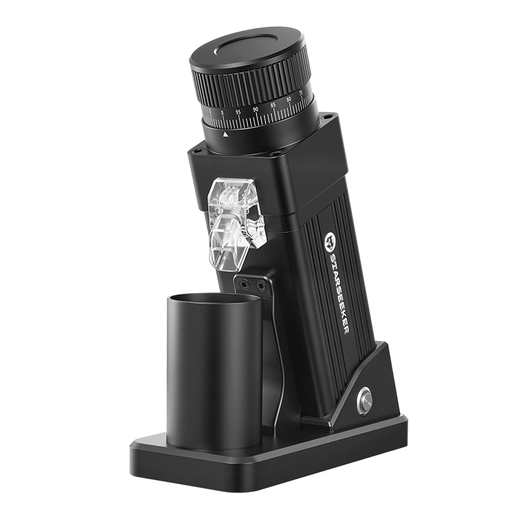
Starseeker E55 Pro electric coffee grinder, black
Consider this espresso-oriented model if you want stepless adjustment rather than fixed positions.
The title specifies a 55 mm titanium-alloy conical burr and a 72 W AC motor. Check portafilter fit, voltage and plug details for the exact version before buying.
View on Joybuy
Questions about choosing and using a grinder
Should I choose stepped or stepless adjustment for espresso?
Choose espresso-focused stepped adjustment if returning to a marked position matters most; consider stepless adjustment if you want to make changes between fixed clicks. Baratza’s guidance distinguishes the precision of an espresso-focused range from the wider spacing of a general-purpose stepped grinder, so judge the exact model rather than the adjustment type alone.
What should I do when switching from espresso to filter coffee?
Record your preferred settings and allow for grounds retained from the previous grind. Baratza notes that coffee remains in the chamber and chute, which can affect the next brew after a setting change.
How should I handle cleaning and everyday use?
Follow the instructions for your exact grinder before cleaning or moving it. Sage’s grinder guidance calls for switching off and unplugging as directed in its manuals and using the appliance on a clean, dry, level surface; do not transfer another model’s maintenance instructions to yours.
What electrical details should I check before buying a grinder?
Check the exact grinder’s voltage label, plug, instructions and seller details against where you intend to use it. GOV.UK’s electrical-equipment guidance describes requirements for relevant products placed on the Great Britain market, while Business Companion identifies plug requirements for applicable domestic lead-and-plug assemblies; Northern Ireland has separate provisions, so confirm that the listing is suitable for use there if relevant.


