
24/7 Customer Support

Free returns

Same-day & Next-day Delivery

Quality Guaranteed

Unlock Your Welcome Offers: FREE Delivery | Up to 80% OFF | Free 30-day JoyPlus trial
Download the APP
Selecting the right business envelopes might seem like a minor administrative task, but it has a significant impact on your company's professionalism, security and operational efficiency. The wrong choice can lead to damaged documents, compromised confidentiality, or simply a poor first impression.
This guide is designed to help UK businesses, home office professionals and administrative staff navigate the options. We will break down the key features to consider—from size and security to closure types—to help you find the most suitable mailing envelopes for your specific needs.
Making an informed decision comes down to understanding a few key characteristics. Here are three practical points to consider before you purchase.
Using the correct envelope size not only looks more professional but can also help protect the contents. The most common sizes in the UK follow the 'C' series, designed to accommodate 'A' series paper.
The way an envelope seals affects both security and the speed of your mailing process. The two main types are self-seal and peel and seal.
For sensitive or fragile contents, standard envelopes may not be sufficient. Look for specialised features to ensure your mail arrives safely.
Based on common business needs for security, protection and efficiency, here are our recommendations.
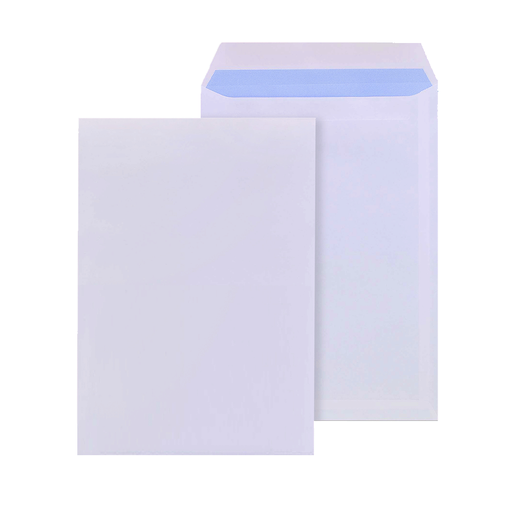
Why It Stands Out: These C5 envelopes combine everyday practicality with enhanced privacy. The integrated blue high-security tint makes them a reliable choice for sending sensitive documents like invoices or personal correspondence. The self-seal closure allows for quick and efficient packing in a busy office environment, while the 90gsm paper provides a good balance of durability and weight.
Pros:
Who is it for?: Businesses and individuals who regularly mail A5 documents or folded A4 letters and require an added layer of confidentiality without sacrificing speed.
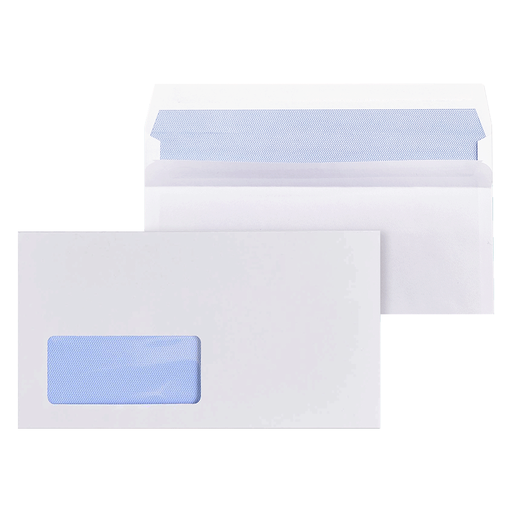
Why It Stands Out: These DL envelopes are built for efficiency. The clear window is perfectly positioned to display recipient addresses from folded A4 letters, eliminating the need for separate labels and saving valuable time. Like the C5 version, these window envelopes include a blue security tint for privacy and a quick self-seal closure, making them a workhorse for high-volume mailings of invoices, statements and official notices.
Pros:
Who is it for?: Offices, accounts departments and businesses that send large quantities of transactional mail and want to streamline their dispatch process.
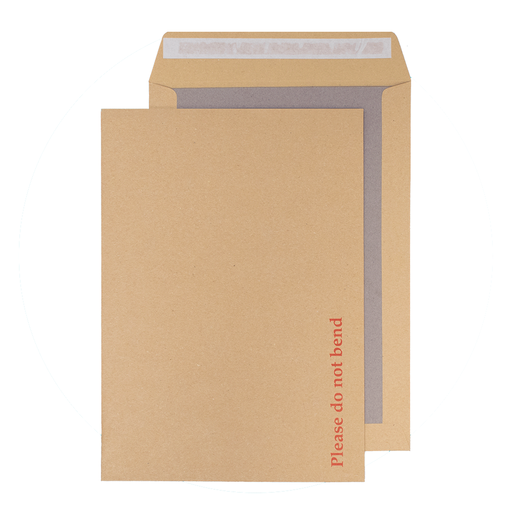
Why It Stands Out: When documents must arrive flat and undamaged, these board backed envelopes are the solution. The combination of a 120gsm kraft paper front and a rigid 1000-micron board back provides excellent protection against bending and creasing. The prominent "Please Do Not Bend" warning helps ensure careful handling, while the strong peel and seal strip creates a secure closure. Being made from 100% recycled material makes them a sound environmental choice.
Pros:
Who is it for?: Anyone mailing important A4 documents, certificates, photographs or flat products that must be kept in pristine condition during transit.
Our recommendations cover some of the most common business mailing needs, but every organisation is different. If you require a different size, material or feature, our full collection offers a wider variety of options to suit any requirement.
Explore our complete range of mail envelopes to find the perfect fit for your tasks.
1. What is the most common business envelope size in the UK? The most frequently used size for business correspondence is the DL envelope (110mm x 220mm). It is designed to hold a standard A4 sheet of paper folded into three equal sections, making it perfect for letters, invoices and marketing flyers.
2. Are manilla and board backed envelopes recyclable? Yes, in most cases. Envelopes made from paper, like manilla envelopes, are widely recyclable. Board backed envelopes, such as the Triplast A4 recommendation, are often made from recycled materials and are also suitable for kerbside recycling. However, it is always good practice to check with your local council's guidelines, especially for envelopes with plastic windows.
3. What is the difference between self-seal and peel and seal?Self-seal envelopes have two pre-glued flaps that seal when pressed together, making them very fast for bulk mailings. Peel and seal envelopes have a single flap with an adhesive strip covered by protective paper. Removing the strip reveals a stronger adhesive, which generally provides a more secure, long-lasting seal.