What should you check before choosing?
Start with how you will use the product, then check the exact label and choose a weight you can store and use.
| Priority | What to check | Your needs |
|---|
| Product type |
Read the product name and ingredients: a butter block differs from a blend containing butter, rapeseed oil and water. If a recipe specifies butter, check that the product type fits. |
For baking, I want the butter the recipe calls for. For toast straight from the fridge, I may prefer a spreadable blend. |
| Salt |
Check salted or unsalted on the exact pack and read the salt figure per 100g. ASDA Groceries lists 1.8g salt per 100g for its Kerrygold salted 200g block and 0g for the unsalted 200g block. |
If I am adding salt while cooking, an unsalted block gives me control. For eating as it is, I may want a salted flavour. |
| Saturated fat |
Compare saturated fat per 100g on the nutrition panels of the products you are considering; also consider the amount you expect to use. Do not assume two spreadable blends have the same composition. |
When saturated fat matters to my choice, I want to compare the actual products, not decide by whether the pack says “spreadable”. The NHS identifies butter as a food high in saturated fat. |
| Milk |
Read the current ingredient list and allergen declaration. The checked butter blocks and butter-and-oil blends contain milk; the Food Standards Agency’s UK allergen guidance identifies milk as an allergen. |
If I need to avoid milk, I cannot assume a butter-and-oil spread is milk-free. |
| Pack and storage |
Check the net weight in grams, best-before date and storage instructions on the exact pack. Tesco Groceries and Sainsbury’s list butter products in differing gram weights. |
For a first shop, I want a pack that fits in my fridge and that I expect to use within its stated date. |
Joybuy product options
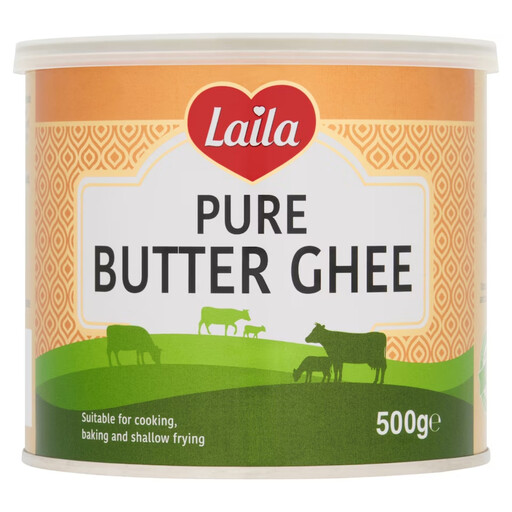
This option is ghee for cooking with butter oil. Ghee is distinct from both a standard butter block and a spreadable butter-and-oil blend, so check your recipe before choosing it for a first shop.
 No image available
Laila Pure Butter Ghee 500g
This 500g ghee is an option when you plan to cook with ghee rather than use a butter block or a spreadable blend. If a recipe calls for butter, check whether ghee is suitable; read the current pack for milk information and storage instructions.
Joybuy
Butter buying questions
Is “6 pint” a butter pack size?
Use grams when choosing butter. The checked listings from Tesco Groceries, Sainsbury’s and ASDA Groceries give butter and spread weights such as 200g, 250g, 400g, 500g and 750g; “6 pint” does not identify the butter quantity you need.
Can I use a spreadable blend instead of block butter?
Check the recipe before substituting it. The checked Anchor and Kerrygold spreadables contain butter, rapeseed oil and water, unlike the checked butter blocks, so a tub should not be assumed to give the same result when a recipe specifies butter.
Should I buy salted or unsalted butter first?
Choose unsalted if you expect to bake or want to add salt separately; choose salted if its flavour suits what you plan to eat. Check the exact pack: ASDA Groceries lists 1.8g salt per 100g for its Kerrygold salted block and 0g for the unsalted block.
Does a butter-and-oil spread contain milk?
The checked butter-and-oil spreads contain milk because they include butter. The Food Standards Agency’s UK allergen guidance identifies milk as an allergen, so read the current pack’s ingredients and allergen declaration if you need to avoid it.
How should I store butter or a spreadable blend?
Follow the instructions and best-before date on the exact pack. The checked Lurpak and Kerrygold butter blocks and the ASDA own-label spreadable say to keep them refrigerated; do not assume every product has identical storage instructions.


