For one-person cooking or baking, start with a 200g to 250g unsalted butter block if you want to control the salt in each recipe. If you mainly make toast or sandwiches, a 250g spreadable option may be more convenient; check its ingredients and nutrition panel, as spreadable blends are not the same formulation as plain butter blocks.
Who is each format for?
The most useful distinction is whether butter goes into a measured recipe or straight onto food from the fridge.
Solo cooks making one-pan meals
If you use butter for a single serving of eggs, vegetables, pasta or a small baking recipe, a compact unsalted block lets you measure what you need and season the dish separately. Anchor lists its 200g unsalted block for cooking and baking; Tesco offers a 250g unsalted block.
Single diners who spread butter cold
For toast, sandwiches or crackers, consider a compact spreadable tub. Lurpak says its 250g Spreadable Slightly Salted can be spread straight from the fridge; its ingredient list shows that it is a butter-and-rapeseed-oil blend.
Shoppers comparing ingredients and nutrition
If salt, fat or ingredients matter to your choice, compare the exact products rather than relying on the words “butter” or “lighter” alone. Blocks and spreadable blends have different formulations, and their nutrition panels give values you can compare on the same per-100g basis.
What should you check?
Choose the format for its main use, then check the pack size, formulation and label before settling on a product.
| Priority |
What to check |
Your needs |
| Pack size |
Compare 200g to 250g blocks or tubs with larger packs. Check the date and storage instructions on the pack against how often you expect to use it. |
I cook for one and use butter occasionally, so I would rather choose an amount that fits my usual meals. |
| Cooking or spreading |
Check whether the product is a plain butter block or a spreadable blend. Anchor describes its 200g unsalted block as suitable for cooking and baking; Lurpak describes its 250g Slightly Salted spreadable as ready to spread from the fridge. |
For measured recipes, I want a block I can portion out. For toast straight from the fridge, spreading convenience matters more. |
| Salt and formulation |
Read the ingredients and compare salt, fat and saturates per 100g on the exact labels. Lurpak lists butter and rapeseed oil in its Slightly Salted spreadable; Anchor lists 57g fat and 21g saturates per 100g for its Lighter Spreadable. |
If I am seasoning a small recipe myself, unsalted butter gives me control over the added salt. For a spread, I want to compare the finished product’s label. |
| Allergens and dates |
Check the milk allergen declaration and follow the pack’s storage instructions. The Food Standards Agency distinguishes a safety-related use-by date from a quality-related best-before date. |
I need to identify milk-containing products before buying and know which date and storage instructions apply after opening. |
Common buying mistakes
-
Using a spreadable blend as though it were plain block butter
Lurpak and Anchor list rapeseed oil in the spreadable products discussed here. Their formulations differ from an unsalted butter block, which matters when following a recipe or comparing salt and nutrition labels.
If a recipe calls for butter, check which formulation it needs. Choose for cold spreading separately from choosing an ingredient for cooking or baking.
-
Choosing a large tub without considering how often it will be used
UK ranges include compact 200g to 250g products as well as substantially larger spreadable packs. A larger pack leaves more to store and use according to its label.
Start with your likely use, then check the pack’s date and storage instructions before choosing its size.
-
Assuming “lighter” settles the nutrition comparison
Anchor’s Lighter Spreadable lists 57g fat and 21g saturates per 100g. The word on the front of a pack does not replace the nutrition panel for the particular product you are considering.
Compare calories, fat, saturates and salt using the same per-100g basis, and consider how much you will use in a meal.
-
Overlooking milk on the allergen label
The Food Standards Agency identifies milk as a common ingredient in butter. A different butter format does not make it a non-dairy alternative.
If you need to avoid milk, check the ingredients and allergen declaration of the exact alternative before buying it.
Brand and range references
These ranges illustrate the differences between compact blocks, butter tubs and spreadable blends; check the label of the particular product you choose.
Lurpak
Lurpak lists Spreadable Slightly Salted in a 250g pack alongside larger formats.
- Lurpak says this spreadable product can be used straight from the fridge.
- Its ingredient list includes butter and rapeseed oil, so check the recipe and label before using it in place of plain unsalted butter.
Anchor
Anchor lists a 200g Original Unsalted Block Butter for cooking and baking and a 250g Original Spreadable among its other formats.
- The unsalted block is a compact option when a recipe calls for measured butter.
- Anchor describes Original Spreadable as butter blended with rapeseed oil; compare its formulation with the block rather than treating them as identical.
Kerrygold
Kerrygold’s UK range lists 200g salted and unsalted butter and a 250g Pure Irish Butter Tub.
- The 250g tub offers a compact container format for someone who prefers it to a wrapped block.
- A tub format alone does not establish that the butter spreads straight from the fridge; check the exact product description for that use.
Tesco
Tesco lists a 250g British Unsalted Butter block and a larger British Salted Spreadable blend.
- Tesco describes the unsalted block as containing at least 82% milk fat.
- Tesco describes its 500g salted spreadable as a blend with 41% milk fat and 29% rapeseed oil. Check which formulation your meal calls for.
Joybuy product options
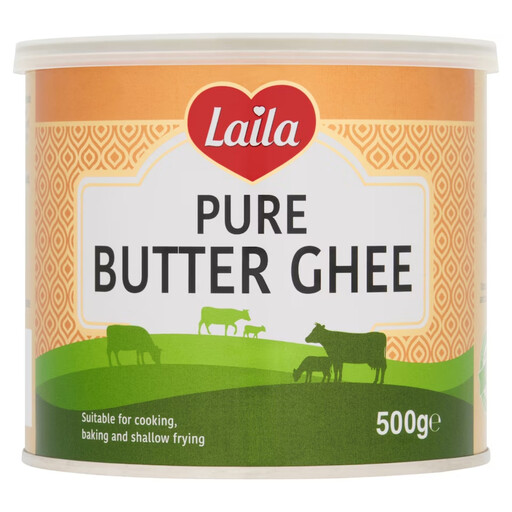
The option shown here is a 500g butter ghee product for shoppers considering ghee for cooking. It serves a different purpose from choosing a compact block for a recipe or a tub to spread on toast.
 No image available
Laila Pure Butter Ghee 500g
A butter ghee option to consider for cooking a single meal if ghee is the ingredient you want. The 500g pack is larger than the compact 200g to 250g butter formats discussed above, so consider how often you will use it. Check the pack’s ingredients, allergen declaration and storage instructions; do not assume it is a substitute for a plain butter block or a fridge-ready spread.
View on Joybuy
Questions about butter for one-person meals
What butter pack size is practical for one person?
A 200g to 250g pack is a starting point if you use butter occasionally for one-person meals. Anchor, Tesco, Lurpak and Kerrygold list products in those sizes; choose a larger pack according to how often you use it and the date and storage instructions on its label.
Should I use salted or unsalted butter in a single-portion recipe?
Use unsalted butter when you want to decide how much salt to add to a small recipe, particularly for baking or a dish with other salty ingredients. Salted butter or a slightly salted spread may suit toast or finishing food when you want that flavour; compare the salt values on the exact products.
Can someone with a milk allergy choose ordinary butter?
No. The Food Standards Agency identifies milk as a common ingredient in butter. Check the ingredients and allergen declaration of any proposed non-dairy alternative before choosing it.
What does the date on a butter pack mean?
Read whether the pack says “use by” or “best before”, and follow its storage instructions. The Food Standards Agency says a use-by date relates to food safety and food should not be eaten after it; a best-before date relates to quality.


