Families making tea-time snacks regularly
If toast, crumpets, sandwiches or baking use butter throughout the week, a larger pack may be practical. Compare likely use with the pack’s opening and freezing instructions before choosing its size.


For toast and sandwiches straight from the fridge, consider a spreadable butter blend; for cooking or baking, a block may better suit recipes that call for butter. A 500g or larger pack makes sense only if your household can use or store it as the label directs. These dairy-butter options contain milk, so check ingredients carefully when serving a child with a milk allergy.
If toast, crumpets, sandwiches or baking use butter throughout the week, a larger pack may be practical. Compare likely use with the pack’s opening and freezing instructions before choosing its size.
A spreadable tub is worth considering when the main task is making toast or sandwiches straight from the fridge. Check the ingredients: the cited spreadable blends are different formulations from block butter.
Butter contains milk, as the Food Standards Agency notes. If food is going to school, check the child’s allergy plan and the individual school’s food policy rather than assuming the same arrangements apply everywhere.
Choose the format for the food you make most often, then check whether the pack size, ingredients and storage instructions work for your household.
| Priority | What to check | Your needs |
|---|---|---|
| Pack size and storage | Compare pack size with likely use. Sainsbury’s says its 500g salted block is best within 28 days of opening; Asda gives freezing instructions for its 500g salted block. | We use butter regularly enough to finish a larger pack, or can follow its freezing instructions for the portion we will not use soon. |
| Spreading or baking | Check whether the product is a block or a spreadable blend, and whether the recipe calls for butter. Lurpak describes its Spreadable Slightly Salted as spreading straight from the fridge; Tesco Butterpak lists butter, rapeseed oil and water. | For quick toast or sandwiches, I want something workable from the fridge. If we also bake, I need to check what the recipe calls for rather than assume a spreadable blend is interchangeable with a block. |
| Milk ingredients | Read the current pack’s ingredients and allergen declaration. The Food Standards Agency identifies butter as a food that commonly contains milk; a lighter or unsalted name does not mean dairy-free. | When a child has a milk allergy, I need to check the food itself and follow their allergy plan, including for anything taken to school. |
| Salt and nutrition | Distinguish salted from unsalted and compare the exact products’ nutrition on the same per-100g basis. Check whether figures describe a block or a butter-and-oil blend. | I want to know which formulation I am serving, rather than assume that standard and lighter spreadables or salted and unsalted blocks are the same. |
The cited Anchor block lists butter and salt, while Tesco Butterpak lists butter, rapeseed oil and water. Their different ingredients matter when a recipe specifies butter.
Choose for the main job—cooking, baking or spreading—and check the exact product before substituting one format for another.
Sainsbury’s says its 500g salted block is best within 28 days of opening. Asda gives specific freezing instructions for its 500g block, so the same storage plan should not be assumed for every product.
Consider how much you use each week, follow the chosen pack’s instructions and defrost as directed.
An unfinished pack may be wasted if it cannot be used or stored as directed.
Lurpak Lighter Spreadable lists butter made from milk. Removing added salt or choosing a lighter spreadable does not remove that milk ingredient.
For a child with a milk allergy, check a genuinely non-dairy alternative against its current label and the child’s allergy plan.
Tesco, Asda and Sainsbury’s advise shoppers to check product labels because details can change.
Read the physical pack’s ingredients and allergen declaration each time, especially for food intended for a child with an allergy.
Its range includes blocks and spreadable butter blends, with listed spreadable sizes reaching 750g.
Anchor’s cited Original Block Butter is a 200g butter-and-salt product.
The UK range includes salted, unsalted and spreadable formats.
Tesco Butterpak Spreadable Slightly Salted is listed as a 500g butter-and-rapeseed-oil blend.
Its cited British Butter Salted is a 500g block.
Its cited British Salted Butter is a 500g block made from butter containing milk and salt.
This ghee option is relevant to a larger pack for cooking or baking, rather than choosing a conventional butter block or a fridge-spreadable tub for tea-time toast.
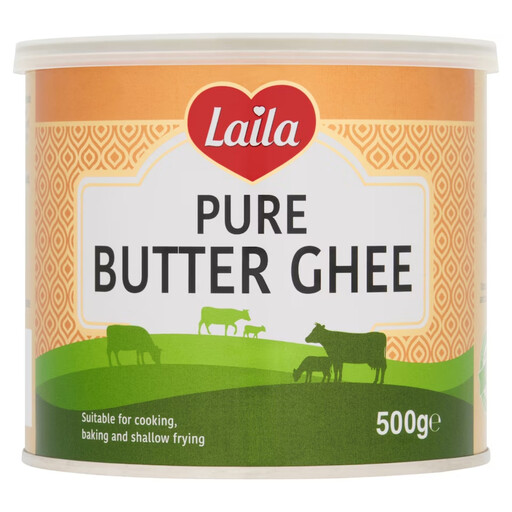 No image available
A 500g ghee option for household cooking or baking, not a conventional block or a confirmed spread for toast. Its product description lists 100% butter oil (milk) and says to refrigerate after opening. Check the pack’s storage directions and whether ghee suits the food you intend to make; it contains milk.
Butter should not be treated as milk-free: the Food Standards Agency identifies milk as a common ingredient in butter. Check the current product label and follow the child’s agreed allergy plan when choosing food.
Check the individual school’s food and allergy policy before sending it. Department for Education guidance for England addresses schools’ support for pupils with allergies, but it does not establish a single permission or ban for every buttered packed lunch.
A 500g pack is worth considering if regular household use fits its storage instructions. Sainsbury’s says its 500g salted block is best within 28 days of opening, while Asda gives freezing instructions for its 500g salted block; follow the directions on the pack you buy.
Consider a spreadable tub for toast or sandwiches straight from the fridge, or a block if you also need butter for recipes that call for it. Check ingredients before substituting: the cited spreadable blends contain rapeseed oil and water as well as butter.
Follow the product’s refrigeration, opening and freezing instructions. UK government food-safety guidance advises keeping the fridge between 0°C and 5°C and storing dairy products in it.