Cooks seasoning sauces and sides
An unsalted block lets you add salt separately, particularly when stock, cheese or cured ingredients already contribute to a dish.


Choose unsalted block butter when you want to control seasoning in sauces, baking or dishes that already contain salty ingredients. Salted block butter suits bread and other dishes where its salt is welcome; a spreadable blend is a different format for easier table service, so check the recipe before using it in place of a block.
An unsalted block lets you add salt separately, particularly when stock, cheese or cured ingredients already contribute to a dish.
A salted block can suit bread, potatoes or vegetables when its salt fits the rest of the menu. Compare labels if you are using it in a recipe too.
A spreadable butter-and-rapeseed-oil blend is an option for bread service, but its ingredients differ from those of block butter.
Decide whether the butter is going into a recipe or being served directly, then compare the relevant labels before planning how to store and serve it.
| Priority | What to check | Your needs |
|---|---|---|
| Salt control | Compare salt per 100g. Lurpak lists 0.01g for its unsalted block; Anchor lists 1.7g for its Original Block. | If my sauce or sides already contain salty ingredients, I want to season them to taste rather than account for salt in the butter. |
| Cooking or serving | Check whether the recipe calls for block butter. Anchor’s spreadable blend contains 50% butter and 29% rapeseed oil, according to its Asda product listing, so it has a different composition. | For bread at the table, spreading matters to me; for a recipe specifying butter, I need the right format. |
| Ingredients and allergens | Read the current ingredient and allergen label. The cited Lurpak and Anchor block products and Anchor spreadable blend contain milk. | Before serving guests, I need to check whether the butter and any butter-based sauce contain an ingredient they cannot eat. |
| Saturates | Compare like-for-like figures per 100g. Anchor lists 52g saturates for its salted block and its Asda spreadable listing gives 28g for the blend; the NHS identifies more than 5g per 100g as high. | If the menu includes other foods with substantial saturated fat, I want to see how the butter I use contributes to it. |
Salt in the butter contributes to the finished recipe: Anchor lists 1.7g salt per 100g for its Original Block, while Lurpak lists 0.01g for its unsalted block.
For sauces or dishes containing stock, cheese or cured ingredients, use unsalted butter if you want to add salt gradually after tasting.
Anchor’s spreadable product contains butter, rapeseed oil and water; its Original Block contains butter and salt. That difference matters when a recipe specifies butter.
Check the recipe before substituting a spreadable blend. Choose the format separately for cooking and for bread service if those tasks differ.
The cited Lurpak and Anchor products contain milk, which matters when serving someone with a milk allergy.
Read the current pack’s ingredients and allergen information before preparing butter-based food for guests.
Lurpak lists 53g saturates per 100g for its unsalted block and Anchor lists 52g for its salted block. Both exceed the NHS threshold of 5g per 100g for a high-saturates label.
Check the per-100g figure and consider the quantity the recipe uses alongside the rest of the menu.
Its unsalted block is an option when a dinner recipe needs separately controlled seasoning.
The cited range includes block butter and a spreadable butter-and-rapeseed-oil blend for different cooking and serving tasks.
Kerrygold describes its 200g Pure Irish Salted Butter block for cooking, baking and direct serving.
Tesco describes its West Country Butter & Sea Salt as salted butter made using British milk by Wyke Farms in Somerset.
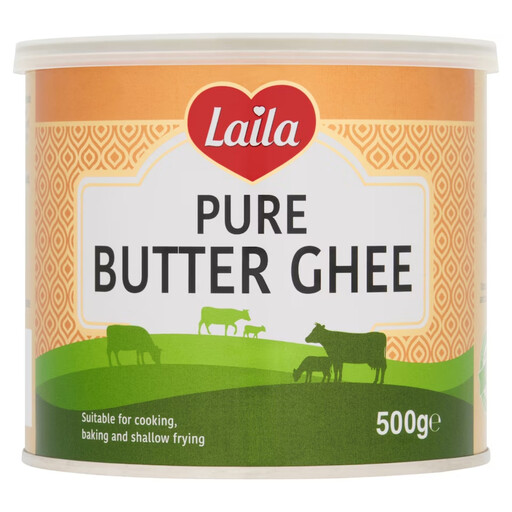
The Joybuy option below is ghee for cooking. It is a different format from the block butters and spreadable blend discussed above, so check that it suits your recipe.
 No image available
Consider this ghee for a dinner recipe that calls for, or can use, ghee rather than block butter. Its product information identifies milk and instructs refrigeration after opening; check the current pack before serving guests with a milk allergy.
Choose unsalted block butter for sauces, baking or sides when you want to add salt to taste. Salted block butter can suit bread or a finishing use if its salt fits the rest of the menu; compare the pack labels before using it in a recipe.
Check the recipe rather than assuming the two formats are interchangeable. Anchor’s spreadable blend contains 50% butter, 29% rapeseed oil and water according to its Asda listing, whereas Anchor Original Block contains butter and salt.
Follow the instructions on the specific pack. Anchor says its unsalted block butter and spreadable butter should be kept refrigerated, so account for their storage instructions when planning table service.
Read the current ingredient and allergen label before cooking or serving. The cited Lurpak unsalted block, Anchor Original Block and Anchor spreadable blend all identify milk in their ingredients.