Home cooks making meals and bakes
For mash, sauces, pastry, cakes or roast vegetables, decide how much control you need over added salt. Tesco Groceries and Sainsbury's list unsalted and salted blocks with different salt declarations.


Choose unsalted block butter when you want to add salt separately to pastry, sauces or mash. Salted block butter suits dishes where its seasoning is welcome, while a spreadable product suits toast or crumpets; check its ingredients before using it in a recipe written for block butter. Whichever format you choose, compare the exact pack’s salt, saturates, milk-allergen information and storage directions.
The intended use matters: butter for pastry calls for different checks from a product kept for toast.
For mash, sauces, pastry, cakes or roast vegetables, decide how much control you need over added salt. Tesco Groceries and Sainsbury's list unsalted and salted blocks with different salt declarations.
If spreading is the main use, compare block and spreadable formats rather than assuming similarly named products have the same ingredients. Tesco Groceries and Waitrose & Partners list these as distinct product types.
Read the exact pack’s milk-allergen declaration and its saturates and salt figures per 100g. The Food Standards Agency identifies milk as a common ingredient in butter, while the NHS explains how to interpret per-100g nutrition labels.
Start with what the butter will do in the dish, then compare the label on the particular variant and pack size you plan to buy.
Choose it when: you want to season pastry, sauces or mash separately.
Bear in mind: it will not provide the salt you might want when serving it on toast.
Choose it when: you want butter that already contributes salt to toast or a finished dish.
Bear in mind: salt levels differ between products, so a recipe may need less added salt.
Choose it when: spreading on toast or crumpets matters more than following a block-butter recipe.
Bear in mind: spreadable butter and butter-and-oil blends can have different ingredients from a block.
| Priority | What to check | Your needs |
|---|---|---|
| Recipe seasoning | Read the ingredient list and salt figure per 100g. Tesco Groceries lists below 0.01g for Lurpak Unsalted 200g; Sainsbury's lists 1.2g for Lurpak Slightly Salted 200g and 1.7g for Anchor Salted 200g. | For pastry, sauces or mash, I want to know how much salt the butter contributes before seasoning the dish. |
| Product format | Identify whether the pack is block butter, spreadable butter or a butter-and-oil blend. Check its ingredients before using it instead of block butter in a recipe. | If it is mainly for toast, I care about spreading it; if it is for baking, I need the product type the recipe calls for. |
| Nutrition label | Compare saturates and salt on the same per-100g basis. The NHS describes more than 5g saturates or 1.5g salt per 100g as high; Sainsbury's lists 1.7g salt per 100g for Anchor Salted 200g. | I want to compare exact variants using the nutrition panel, not just a brand name or the front of the pack. |
| Milk ingredients | Read the current pack’s ingredients and allergen statement. The Food Standards Agency identifies milk as a common ingredient in butter. | When someone eating the food has a milk allergy, I need to establish what the particular product contains before serving it. |
| Pack and storage | Match the pack size to likely use and follow its refrigeration and freezing directions. Sainsbury's says its Anchor Salted 200g listing permits freezing for up to three months; do not apply that direction to a different pack. | For occasional cooking, I would rather choose a quantity I expect to use and check how that pack must be stored. |
The salt difference can change the seasoning of pastry, sauces or mash. Tesco Groceries lists below 0.01g salt per 100g for Lurpak Unsalted 200g, while Sainsbury's lists 1.7g for Anchor Salted 200g.
Use the salt figure on the exact pack and adjust separately added salt where the recipe allows.
Tesco Groceries and Waitrose & Partners distinguish blocks from spreadable products and butter-and-rapeseed-oil blends. A shared brand name does not establish identical ingredients.
For baking or sauces, check the product type and ingredient list against what the recipe specifies.
The Food Standards Agency identifies milk as a common butter ingredient. Salt also varies between variants, and the NHS advises comparing nutrition figures per 100g.
Read the current pack’s milk-allergen declaration, saturates and salt figures rather than relying on a previous purchase or a product image.
Retail listings include different block and spreadable pack sizes, which may suit different rates of use.
Choose a size that fits your planned meals and follow that pack’s refrigeration, date-label and freezing directions.
These examples show why the precise product and variant matter more than the brand name alone.
Tesco Groceries and Sainsbury's list 200g unsalted and slightly salted blocks; Waitrose & Partners also lists Lurpak spreadable products.
Sainsbury's lists Anchor Salted Butter 200g as made with British milk; Waitrose & Partners also lists Anchor spreadable products.
Tesco Groceries lists Kerrygold block-butter products in 200g and 500g sizes.
Tesco Groceries lists British Salted and British Unsalted block butter in 250g packs.
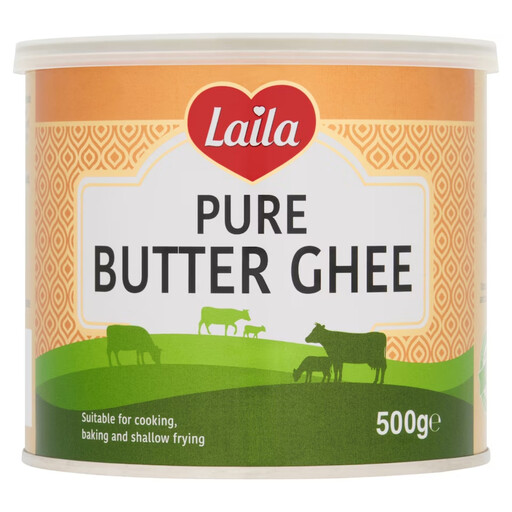
This ghee is an option for cooking with a butter-derived ingredient. It is distinct from the salted, unsalted and spreadable butter formats discussed above, so check the recipe before making a substitution.
 No image available
For cooking or baking with ghee rather than a conventional block of butter. This is a 500G pack; check whether ghee suits your recipe before substituting it for block butter, and read the pack’s milk-allergen information.
Choose unsalted block butter when you want to add salt separately; use salted butter when its seasoning fits the recipe. Tesco Groceries lists below 0.01g salt per 100g for Lurpak Unsalted 200g, while Sainsbury's lists 1.2g for Lurpak Slightly Salted 200g and 1.7g for Anchor Salted 200g, so check the exact pack.
Not automatically. Tesco Groceries and Waitrose & Partners list block butter, spreadable butter and butter-and-oil blends as different product types; compare the ingredients and the recipe requirements before substituting one for another.
Check the ingredients and allergen declaration on the exact product before serving it. The Food Standards Agency identifies milk as a common ingredient in butter; a familiar product name is not a substitute for reading the current pack.
Follow the directions on the particular pack. Sainsbury's says its Anchor Salted Butter 200g may be frozen for up to three months, defrosted thoroughly in the fridge and not refrozen; those directions should not be assumed for another product.
GOV.UK explains that a use-by date concerns food safety, while a best-before date concerns quality. Follow the date and storage instructions printed on the butter pack you buy.