Home cooks seasoning a main course
If you are making a sauce, risotto, fish or vegetables and adjusting the salt yourself, an unsalted block gives you a starting point without added seasoning from the butter.


Choose an unsalted butter block when a recipe calls for butter and you want to control the final seasoning. For bread or a finishing pat, salted or flavoured butter can contribute to the dish’s flavour, while a spreadable blend is convenient for serving cold; check its ingredients rather than assuming it will work like a block in cooking.
If you are making a sauce, risotto, fish or vegetables and adjusting the salt yourself, an unsalted block gives you a starting point without added seasoning from the butter.
When butter is part of the final flavour, consider whether you want it salted, flavoured or easy to spread straight from the fridge. Check the ingredients against the rest of your menu.
Ask about dietary requirements before planning the meal. The Food Standards Agency identifies milk as a common ingredient in butter; check the current pack’s allergen information, date mark and storage instructions.
Choose it for: Recipes that call for butter when you plan to add and adjust the seasoning yourself.
Bear in mind: A block may need softening or melting as the recipe directs and will not add the ready-seasoned flavour of a salted or flavoured product.
Choose it for: Bread or a finishing pat when its seasoning is meant to be part of the dish.
Bear in mind: Its seasoning makes it harder to follow a recipe that specifies unsalted butter.
Choose it for: Cold serving when spreading straight from the fridge matters.
Bear in mind: Lurpak’s Spreadable Unsalted contains butter, rapeseed oil and water, so do not assume it is interchangeable with a butter block in a recipe.
| Priority | What to check | Your needs |
|---|---|---|
| Seasoning | Read the recipe’s butter specification and the pack’s salt information. Check whether other ingredients already contribute salt. | I want to adjust the seasoning of a sauce or vegetable side as I cook, rather than start with a seasoned butter. |
| Cooking format | Check whether the recipe calls for a butter block or allows another format. Lurpak lists butter and lactic culture in its Unsalted Butter block, but butter, rapeseed oil and water in its Spreadable Unsalted blend. | If I am baking or making a recipe written for block butter, I want the ingredient and format the recipe specifies. |
| Serving format | Decide whether the butter will be served with bread or added as a finishing flavour. Check the ingredients of any flavoured or spreadable option. | For a bread basket, being able to spread the butter when it reaches the table matters more to me than using it in the pan. |
| Guest requirements | Check the current ingredient and allergen label. The Food Standards Agency identifies milk as a common ingredient in butter. | Before serving guests, I need to know whether anyone must avoid milk and choose an appropriate alternative if they do. |
| Pack dates | Read the actual date mark and storage instructions. The Food Standards Agency says use-by dates concern food safety, while best-before dates concern quality. | I want to follow the instructions on the pack I serve, rather than treat every date label in the same way. |
Lurpak’s Spreadable Unsalted contains 64% butter alongside rapeseed oil and water; its Unsalted Butter block lists butter and lactic culture. Their ingredients are not the same.
When a sauce or baking recipe specifies a butter block, use that format unless the recipe explicitly allows a blend.
Ingredients and nutrition information can change. The Anchor Unsalted Block Butter product page also shows differing salt figures in its rendered information.
Check the physical pack’s ingredients, allergens, salt value and storage instructions before cooking for guests.
The Food Standards Agency identifies milk as a common ingredient in butter and a concern for people with a milk allergy or intolerance.
Ask guests about dietary requirements and check the full label of any alternative you plan to serve.
According to the Food Standards Agency, a use-by date relates to food safety; a best-before date relates to food quality.
Follow the date marking and storage instructions on the butter you buy.
These product examples show formats and label details worth comparing; a brand’s range does not tell you which individual pack suits your recipe.
Its UK range includes unsalted and slightly salted blocks, an unsalted spreadable blend and flavoured butter sticks.
Anchor describes its Unsalted Block Butter 200 g as made in the UK from British milk and intended for cooking and baking.
Kerrygold offers an Unsalted Butter 200 g block that it presents for cooking, baking and spreading on bread.
Tesco lists a British Unsalted Butter 250 g block.
Sainsbury's lists a British Butter, Unsalted 250 g block.
Asda lists a British Unsalted Butter 250 g block in its grocery range.
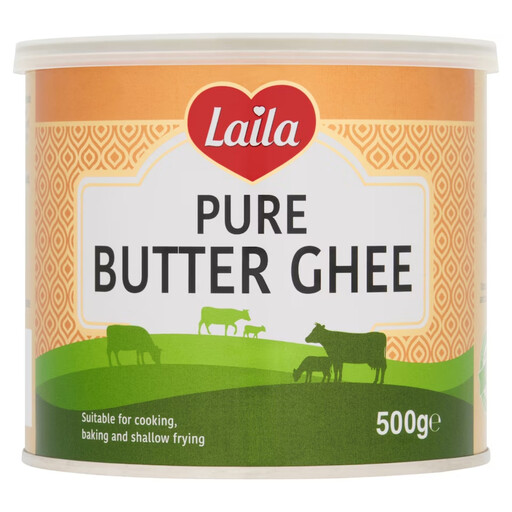
The Joybuy option here is ghee for cooking, rather than a conventional butter block or a spreadable butter for bread.
 No image available
Consider this ghee for a dinner recipe that calls for ghee, including sautéing or shallow-frying. The 500G product is not a conventional butter block: check the recipe before substituting it, and check the pack’s milk allergen information before serving guests.
Choose unsalted butter when a recipe calls for it or when you want to control the seasoning of a sauce or other cooked dish. Salted or flavoured butter can suit bread or a finishing pat when that seasoning is intended to contribute to the final flavour; check the recipe and pack first.
Do not assume they are interchangeable in a recipe. Lurpak’s Spreadable Unsalted contains 64% butter, rapeseed oil and water, while its Unsalted Butter block lists butter and lactic culture. If the recipe specifies a block, choose that format unless it explicitly allows a blend.
Check the full label and choose an appropriate alternative rather than serving dairy butter. The Food Standards Agency identifies milk as a common ingredient in butter and a possible risk for people with a milk allergy or intolerance.
The Food Standards Agency says a use-by date relates to food safety, while a best-before date relates to food quality. Follow the date mark and storage instructions on the pack you buy.
Yes, especially when serving someone with dietary requirements. Tesco notes that ingredients, nutrition and allergen information can change, so check the label on the product you use.