What matters when choosing butter?
Check whether milk is appropriate for your baby, then look at the salt declaration and choose a format you can use in the meal.
| Priority |
What to check |
Your needs |
| Milk allergen |
Read the current pack’s ingredients and allergen declaration. The Food Standards Agency identifies milk as an ingredient in butter; cow’s-milk-free diet advice from Royal United Hospitals Bath NHS Foundation Trust excludes dairy foods for babies with cow’s-milk allergy. |
If my baby must avoid cow’s milk, I need to leave butter out rather than assume an unsalted product is suitable. |
| Salt |
Choose an unsalted product and check its salt value per 100g. The NHS advises not adding salt to a baby’s food or cooking water. |
For a portion prepared for my baby, I want to avoid adding salt through the butter. |
| Starting solids |
Follow NHS guidance on starting solids at around 6 months when readiness signs appear together. Use butter, if appropriate, as an ingredient in a meal rather than a food on its own. |
I’m preparing meals for a baby beginning weaning, alongside their usual milk feeds. |
| Format and pack |
Choose a form that works for the recipe; butter does not need to be pre-grated. Check the current pack for ingredients, salt and storage instructions, as retailer product details can change. |
I need a product I can use in cooking, not a grated format borrowed from cheese shopping. |
Which butter labels offer useful reference points?
These named products illustrate the label details worth checking; their inclusion does not establish suitability for a particular baby or availability on Joybuy.
Lurpak
Tesco lists Lurpak Unsalted Butter 200g as a butter product for cooking and baking.
- Tesco declares butter and lactic culture, both containing milk, and salt below 0.01g per 100g.
- Check the pack you buy for its current ingredients and allergen information.
Anchor
Anchor lists an Original Unsalted Block Butter 200g for cooking and baking.
- Anchor’s product page declares butter containing milk and 0.02g salt per 100g.
- Its unsalted label does not remove the need to check whether milk is appropriate for the baby.
Kerrygold
Kerrygold’s UK range includes Unsalted Butter 200g, which the brand describes for cooking and baking.
- The brand identifies the product as unsalted butter made with milk from Irish cows.
- Use the retail pack for the salt value, full ingredients and allergen declaration before preparing a baby’s meal.
ASDA
ASDA lists its own British Unsalted Butter 250g.
- ASDA declares butter containing milk, at least 80% milk fat and 0.02g salt per 100g.
- Check the current pack before use, particularly if ingredients or labelling have changed.
Joybuy product options
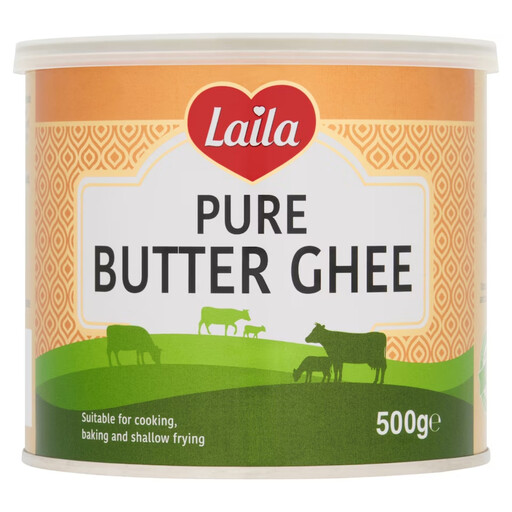
This option is ghee for cooking, rather than an unsalted butter block or pre-grated product. Apply the same milk-allergen and current-pack salt checks when considering it for a weaning meal.
 No image available
Laila Pure Butter Ghee 500g
If you are considering ghee for cooking a weaning meal, this is a different format from a standard butter block. Treat it as a milk-containing choice: check the current pack’s milk declaration and salt value, and do not use it where cow’s-milk avoidance applies.
View on Joybuy
Questions about butter and weaning
Can butter be part of a baby’s first meals?
Butter can be used as an ingredient in a meal once a baby is ready for solids, provided milk is appropriate for them and the butter does not add salt to their food. The NHS advises starting solids at around 6 months when readiness signs appear together, alongside usual milk feeds.
Should I choose salted or unsalted butter?
Choose unsalted butter for food prepared specifically for a baby. The NHS advises against adding salt to babies’ food or cooking water; check the current pack’s salt value and ingredients before use.
What if my baby has a cow’s-milk allergy?
Do not give butter to a baby who has been advised to avoid cow’s milk. Cow’s-milk-free diet advice from Royal United Hospitals Bath NHS Foundation Trust excludes dairy foods; speak to a GP or health visitor if you are concerned about a suspected reaction or introducing milk-containing food.
Do I need pre-grated butter for weaning?
No. Pre-grated is a cheese format, not a butter requirement. For butter used in a recipe, focus on the salt and milk-allergen declarations, then cut, soften or melt the amount the recipe needs.
How should I store butter after opening?
Follow the instructions on the specific pack. For example, ASDA’s listing for Anchor Unsalted Butter says to keep it refrigerated; its freezing directions specify up to three months, thorough defrosting in the fridge and no refreezing.


