What should you check?
Start with who will eat the food and how you will use the butter, then compare the ingredients and nutrition panels of the specific packs.
| Priority |
What to check |
Your needs |
| Salt in shared meals |
Check whether the block is unsalted and compare salt per 100g on the current label. The NHS advises against adding salt to babies’ food. |
I may set aside part of a family meal for a baby, then season the adult portions separately. |
| Milk ingredients |
Read the ingredients and allergen information on the exact pack. For a new allergen exposure from around six months, the NHS advises introducing potentially allergenic foods one at a time and in very small amounts. |
I need to know whether a meal contains milk before offering it to my baby. |
| Spreading and cooking |
Distinguish a plain block from a butter-and-oil blend. Anchor lists milk butter for its unsalted block and describes its Original Spreadable as a butter-and-rapeseed-oil blend. |
Some mornings I want to spread butter straight from the fridge; for cooking or baking, I want to know which formulation I am using. |
| Saturated fat |
Compare saturated fat per 100g on like-for-like nutrition panels. The NHS identifies butter as a food high in saturated fat; do not assume a spreadable blend has the same values as a block. |
I want to compare packs on the same basis when deciding how often and how much to use. |
| Storage and pack size |
Read the pack’s refrigeration, date and freezing instructions. Check whether the amount suits how you expect to use it. |
A larger pack only works for my household if I can store and use it as its label directs. |
Joybuy product options
This option is ghee for cooking or baking, not one of the unsalted, salted or spreadable butter formats compared above. Check its own label before considering it for a meal that a baby may eat.
 No image available
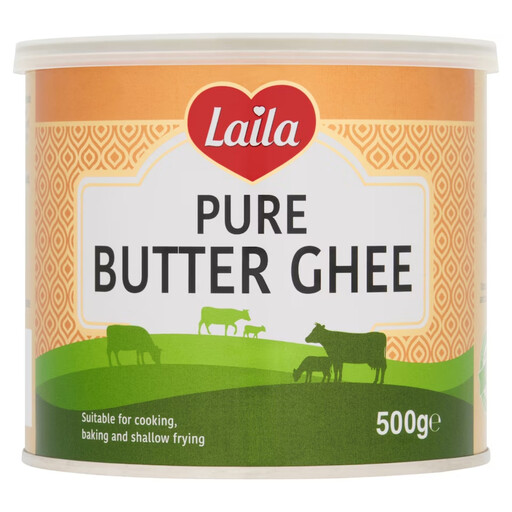
Laila Pure Butter Ghee 500G
This 500G butter-derived ghee is an option for cooking or baking, not for spreading like a butter blend. It contains milk; check the current pack’s ingredients and salt declaration before considering it for food intended for a baby. Do not assume ghee is suitable for introducing milk as a new allergen.
View on Joybuy
Common questions
Should I use salted or unsalted butter in food a baby may eat?
Choose unsalted butter when adapting a family dish for a baby. The NHS advises against adding salt to babies’ food; you can season adult portions separately where practical. Check the pack because a product’s salt content cannot be determined from its format alone.
Can butter be used when my baby starts solid foods?
A milk-containing food can be considered during weaning, but it needs the same care as other potential allergens. From around six months, the NHS advises introducing foods that may trigger an allergy one at a time and in very small amounts. If your baby has a diagnosed food allergy or you have concerns about introducing an allergen, speak to a GP or health visitor.
Is butter suitable for a baby with cow’s-milk allergy?
No. Butter contains milk and should not be given to a child with diagnosed cow’s-milk allergy. Read the exact pack’s ingredients and allergen information, including when changing brands or formats.
Do breastfeeding parents need a special type of butter?
Breastfeeding alone does not require a special butter: the NHS says a special diet is not generally needed while breastfeeding. If you have your own milk allergy or have been advised to avoid milk for a specific reason, follow the advice relevant to you and check product labels.
How should butter be stored or frozen?
Follow the instructions on the individual pack rather than assuming every butter product has the same storage period. Anchor advises keeping its spreadable butter in the fridge; check your chosen product’s date, refrigeration and freezing directions before storing it.


