Home cooks making sauces, risotto or pasta
If cheese, stock or cured meat will contribute salt, an unsalted block leaves you room to season the finished dish. Check the salt declaration on the butter you buy.


For a sauce or risotto made with salty cheese, stock or cured meat, an unsalted butter block lets you control the final seasoning. A salted block may suit bread or finishing a dish when you want salt in the butter itself; choose a spreadable product for easy spreading rather than assuming it will behave like block butter in a recipe.
If cheese, stock or cured meat will contribute salt, an unsalted block leaves you room to season the finished dish. Check the salt declaration on the butter you buy.
A salted block puts salt into the butter served at the table. If easy spreading straight from the fridge matters more, compare spreadable products separately rather than treating them as the same format.
The Food Standards Agency identifies milk as a common ingredient in butter. Ask guests about their requirements and check the exact pack before serving dairy butter.
Decide how the butter will be used, then compare salt, format and storage on the exact pack. Settle the quantity only once you know what each item on your shopping list measures.
| Priority | What to check | Your needs |
|---|---|---|
| Salt | Compare the salt figure per 100 g on the exact pack. Anchor lists 0.02 g per 100 g for its unsalted block and 1.7 g per 100 g for its Original salted block; these figures do not describe every butter. | If cheese, stock or cured meat is going into my sauce, I want to decide how much salt to add after tasting. |
| Format | Check whether the recipe specifies block butter and whether the product is a block, spreadable butter or ghee. Anchor lists different fat and salt figures for its Original Spreadable and salted block, so do not assume their formulations match. | I need a block for a recipe that calls for one, but easy spreading matters when butter is going straight onto bread. |
| Milk | Read the ingredient and allergen information on the pack. The Food Standards Agency identifies milk as a common ingredient in butter. | Before serving guests, I need to know whether anyone must avoid milk and arrange a suitable alternative if they do. |
| Storage | Follow the pack instructions. Anchor advises refrigerating its unsalted block until needed and always keeping its spreadable butter in the fridge. | When preparing ahead, I need to keep the butter stored as directed and bring out only what I plan to use. |
| Quantity | Compare the pack weight with the amount your recipe calls for. If your list says ‘4 pint’, establish what that volume refers to rather than treating it as a butter weight. | I want enough for cooking and serving, without guessing a butter quantity from a volume note that may refer to something else. |
Salt from butter adds to what is already in cheese, stock, cured ingredients or pasta water. Anchor lists 1.7 g salt per 100 g for its salted block, compared with 0.02 g per 100 g for its unsalted block.
For a sauce or risotto with other salty ingredients, consider an unsalted block and season after tasting. If the recipe calls for salted butter, follow its instructions and check the pack.
Anchor lists 77 g fat and 1.1 g salt per 100 g for its Original Spreadable, against 82 g fat and 1.7 g salt per 100 g for its salted block. Those products have different declared profiles.
Read the recipe and product label before swapping formats. If a recipe specifies block butter, choose that format unless the recipe allows a substitute.
The Food Standards Agency identifies milk as a common ingredient in butter and a potential risk for people with a milk allergy or intolerance.
Ask about dietary requirements before cooking, check the exact pack and provide a suitable non-dairy option for anyone who must avoid milk.
Anchor advises keeping its unsalted block refrigerated until needed and its spreadable butter refrigerated at all times.
Plan when to bring butter out for serving, refrigerate what remains and follow the pack’s storage and date instructions.
These brand examples help distinguish product types and label details; check the particular pack you intend to use.
Lurpak lists unsalted butter blocks in 200 g, 250 g and 400 g sizes alongside other butter formats.
Anchor provides salted and unsalted blocks as well as spreadable butter.
Kerrygold identifies a 200 g unsalted butter product in its UK range.
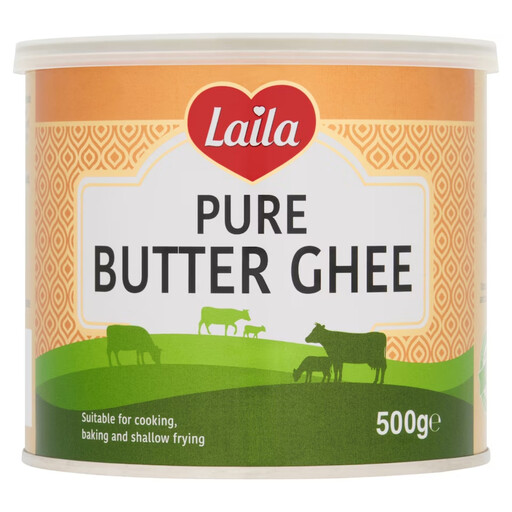
This option is ghee for cooking, not a conventional salted or unsalted butter block. Check whether your recipe calls for ghee before choosing it in place of block butter.
 No image available
For an Italian-themed meal, this 500 g ghee is a different format from block butter. Check the recipe before substituting it for a block; the product information identifies milk, so check the pack if serving anyone who must avoid it.
An unsalted block is a useful choice when cheese, stock, cured meat or pasta water will also contribute salt: you can taste the dish before adding more. Check the exact butter’s label, because its declared salt content depends on the product.
Yes, if its salt suits the dish or you want a salted butter flavour with bread. Account for that salt before adding more elsewhere; Anchor lists 1.7 g salt per 100 g for its Original salted block.
Do not serve dairy butter to a guest who must avoid milk. The Food Standards Agency identifies milk as a common ingredient in butter; check the exact pack and arrange a suitable alternative.
Follow the instructions on the pack. Anchor advises refrigerating its unsalted block until needed and always keeping its spreadable butter refrigerated. Anchor also says its butter products can be frozen for approximately three months and defrosted slowly in a fridge at approximately 5°C.