Home cooks making sauces or risotto
An unsalted block gives you a starting point when stock, cheese or cured ingredients will also affect the dish’s seasoning. Check the salt declaration on the pack before cooking.


Choose an unsalted butter block for a sauce or risotto when you want to adjust the seasoning after adding ingredients such as stock or cheese. A salted block suits a dish where you want the butter to contribute salt; a butter-and-oil blend is intended for easy spreading on bread, but should not be assumed to replace block butter in a recipe.
An unsalted block gives you a starting point when stock, cheese or cured ingredients will also affect the dish’s seasoning. Check the salt declaration on the pack before cooking.
If you want to spread butter straight from the fridge, compare spreadable butter-and-oil blends with blocks. Check the ingredients before using a blend in a recipe that calls for block butter.
The Food Standards Agency identifies milk as a common ingredient in butter. Check the current pack’s allergen information before serving it to someone with a milk allergy.
Start with how the butter will be used, then check the exact pack’s salt, ingredients and storage instructions. A reference to filtered longer-life milk does not replace those butter-specific checks.
| Priority | What to check | Your needs |
|---|---|---|
| Seasoning | Check whether the block is salted or unsalted, and compare the salt declaration on the exact pack. Anchor lists 1.7% salt in its Original Block Butter. | For risotto with stock and cheese, I would rather add salt after the other ingredients. |
| Cooking or spreading | Check whether the product is a butter block or a butter-and-oil blend. Anchor recommends its regular block for cooking; Tesco lists Lurpak Slightly Salted Spreadable as a 75% blended spread. | I need butter for a sauce, or something I can spread on bread straight from the fridge. |
| Ingredients and allergens | Read the current ingredient and allergen statements. The Food Standards Agency identifies milk as a common ingredient in butter. | When serving guests, I need to know whether the product contains milk and whether its ingredients have changed. |
| Storage and dates | Follow the pack’s storage directions and identify its date mark. GOV.UK distinguishes use-by dates, which concern safety, from best-before dates, which concern quality. | If I am buying ahead of dinner, I want to know how to store the pack and what its date means. |
Tesco lists Lurpak Slightly Salted Spreadable as a blend containing milk fat and rapeseed oil, rather than a plain butter block. The ingredients matter when a recipe calls for butter.
Read the product description and ingredient list before substituting a tub. Anchor recommends its regular block rather than its spreadable product for cooking.
Anchor lists 1.7% salt in its Original Block Butter, so it gives you a different seasoning starting point from its unsalted block.
For a sauce or risotto containing stock, cheese or cured ingredients, check the butter’s salt declaration and adjust the dish’s seasoning accordingly.
Ingredients and allergen information can change, so an earlier listing may not describe the pack being served.
Check the physical pack’s ingredients, allergen statement, storage directions and date mark before preparing food for guests.
GOV.UK explains that use-by dates concern food safety, while best-before dates concern quality.
Read the date wording and follow the pack’s storage instructions; do not use smell or taste to override a use-by date.
These brand examples help distinguish blocks from spreadable blends; they do not indicate which products are available in the Joybuy selection below.
Anchor lists salted and unsalted butter blocks alongside a spreadable product.
Kerrygold lists salted and unsalted butter in its UK range.
Lurpak appears in UK listings as block butter and as a spreadable blend.
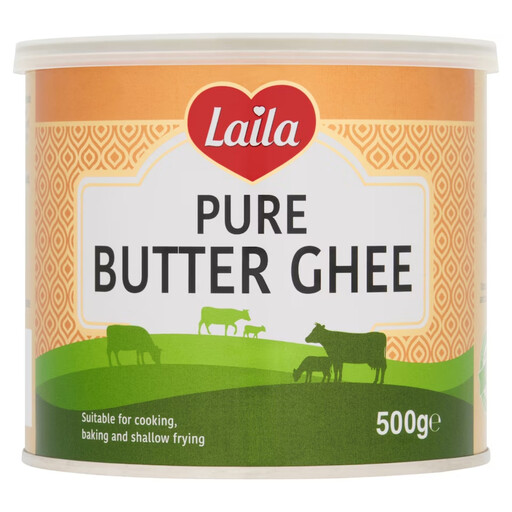
This Joybuy option is ghee for cooking. It is distinct from the unsalted blocks, salted blocks and spreadable blends discussed above; check what your recipe calls for before substituting it.
 No image available
Ghee is a different format from block or spreadable butter. Do not assume it will substitute like-for-like in a sauce or risotto; check the recipe and the current pack before buying for those dishes. It contains milk.
Choose an unsalted block if you want to adjust seasoning after adding stock, cheese or cured ingredients. Anchor’s Original Block Butter lists 1.7% salt, so check the declaration on the particular pack if you choose salted butter.
Not always. Tesco lists Lurpak Slightly Salted Spreadable as a butter-and-rapeseed-oil blend, and Anchor describes its spreadable product as butter blended with rapeseed oil. Check the ingredients before using a spreadable tub in a recipe calling for block butter.
Do not assume standard butter is milk-free. The Food Standards Agency identifies milk as a common ingredient in butter; check the actual pack’s allergen statement and use an appropriate alternative when milk must be avoided.
Follow the storage directions on the pack you buy. Check its date mark too: GOV.UK explains that use-by dates concern safety, whereas best-before dates concern quality.