Families making sandwiches before school
If butter is suitable for the pupil, consider whether a block will be workable when you prepare lunch or whether a spreadable blend would be more convenient straight from the fridge.


For a secondary-school sandwich, a spreadable butter blend may be easier to use straight from the fridge, while a block suits a household that prefers butter and salt and can prepare it while workable. Compare the exact labels rather than assuming every spreadable has less saturated fat: Anchor lists 21g saturates per 100g for Lighter Spreadable, while Tesco lists 52.1g per 100g for its salted block. Butter is unsuitable for a pupil with a milk allergy; check the school’s allergy arrangements and plan to keep perishable lunch foods cold.
If butter is suitable for the pupil, consider whether a block will be workable when you prepare lunch or whether a spreadable blend would be more convenient straight from the fridge.
Use the saturates figure per 100g on each product’s label. Anchor Lighter Spreadable lists 21g per 100g, whereas the Tesco and Sainsbury’s salted blocks each list 52.1g per 100g; those figures describe the named products, not every spread or block.
Butter commonly contains milk, according to the Food Standards Agency. Check the exact food label and the school’s allergy arrangements before choosing a sandwich filling for a pupil with a milk allergy.
Check whether milk is suitable first, then compare preparation, labels and how the lunch will be stored until it is eaten.
| Priority | What to check | Your needs |
|---|---|---|
| Milk and school rules | Read the current milk declaration on the exact product. Check the school’s packed-lunch and allergy arrangements before sending food for a pupil with a milk allergy. | If milk is unsafe for the pupil, I need a suitable alternative to butter whose current allergen label meets their requirements. |
| Morning preparation | Check whether the product is a block or a spreadable blend, and whether its maker describes it as suitable for spreading from the fridge. | I make sandwiches shortly before school and need to know whether the spread will be workable straight from refrigerated storage. |
| Saturated fat and ingredients | Compare saturates per 100g on the exact labels and read what else a spreadable blend contains. Anchor lists 21g per 100g for Lighter Spreadable; Tesco lists 52.1g per 100g for its salted block. | For our sandwiches, I want to compare products on the same per-100g basis rather than judging them by the word “spreadable”. |
| Storage until lunch | Follow the finished product’s refrigeration instructions. Safefood advises keeping foods that go off quickly, including dairy, in the fridge; consider how perishable lunch foods will stay cold during the school day. | The lunch may spend hours away from a fridge, so I need a practical way to carry perishable food cold until lunchtime. |
The reviewed butter blocks and spreadable blends contain milk. The Food Standards Agency identifies milk as a common ingredient in butter.
For a pupil with a milk allergy, choose a suitable alternative only after checking its current allergen label and the school’s arrangements.
Spreadability describes how a product is used, not its saturates figure. Anchor lists 21g saturates per 100g for Lighter Spreadable, while Tesco lists 52.1g per 100g for its salted block.
Compare the per-100g figures on the exact products you are considering.
A chilled product’s storage instructions still matter once it becomes part of a packed lunch. Safefood advises keeping foods that go off quickly, such as dairy, in the fridge.
Check the pack and plan how to keep perishable lunch foods cold when the school does not refrigerate lunchboxes.
Wording about milk used elsewhere in the grocery shop does not replace the storage direction on a finished butter product. Tesco and Sainsbury’s instruct shoppers to keep their reviewed salted blocks refrigerated.
Follow the instructions on the butter pack you buy.
Its Spreadable Slightly Salted range is a butter blend to consider for sandwiches prepared from refrigerated ingredients.
Anchor has Original and Lighter Spreadable products as well as block butter; compare the named variants rather than treating them as interchangeable.
Kerrygold Pure Irish Salted Butter is a 200g block option for households considering conventional butter.
Tesco British Salted Block Butter is a 250g chilled block.
Sainsbury’s British Salted Butter is a 250g chilled block.
Asda British Salted Butter is a 500g chilled block.
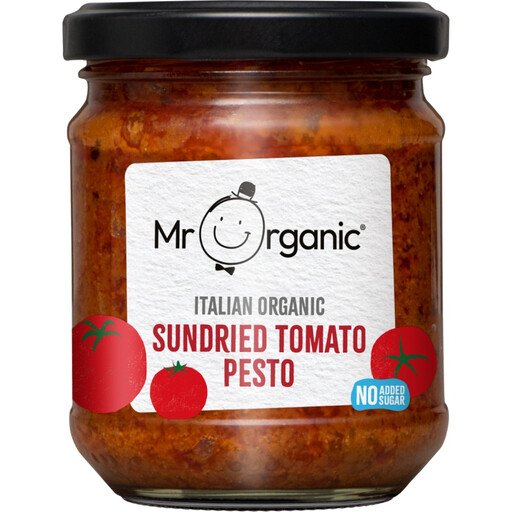
This tomato pesto is a savoury sandwich-filling option to consider instead of butter, not another type of butter. If milk must be avoided, check its current allergen label and the school’s requirements before use.
 No image available
For a sandwich without butter, this 190g sundried tomato pesto offers a different flavour and format rather than a like-for-like butter replacement. Check the current ingredients, precautionary allergen wording and storage instructions against the pupil’s needs and the school’s policy.
Butter is not suitable for a pupil with a milk allergy: the Food Standards Agency identifies milk as a common ingredient in butter, and the reviewed butter products declare milk. Check the current label of any alternative and the school’s allergy arrangements before packing it.
Follow the butter pack’s storage instructions and plan to keep perishable lunch food cold. Safefood advises keeping foods that go off quickly, including dairy, in the fridge; consider an insulated lunch bag where school refrigeration is unavailable.
Follow the storage directions on the finished butter product, rather than milk wording elsewhere in the shop. The reviewed Tesco and Sainsbury’s salted butter packs both instruct shoppers to keep them refrigerated.
Check the individual school’s packed-lunch and allergy arrangements before sending one. In England, Department for Education guidance says schools must publish an allergy safety policy setting out how they reduce contact with known allergens; that does not establish the same lunchbox rule for every UK school.
Do not assume that from the format alone: compare the named products’ saturates figures per 100g. Anchor lists 21g per 100g for Lighter Spreadable, while Tesco lists 52.1g per 100g for its British Salted Block Butter; the figures do not describe every spreadable blend or block.