
24/7 Customer Support

Free returns

Same-day & Next-day Delivery

Quality Guaranteed

Unlock Your Welcome Offers: FREE Delivery | Up to 80% OFF | Free 30-day JoyPlus trial
Download the APP
As a Joybuy Product Recommendation Officer, my role is to help you navigate the crowded online marketplace. When it comes to pantry staples like baking flour, the convenience of online shopping can sometimes lead to simple but frustrating mistakes. A successful bake starts with the right foundation, and choosing the correct flour is the first step. This guide cuts through the clutter to help you understand what really matters when you decide to buy baking flour online, ensuring you get the right product for your needs, every time.
Getting your baking ingredients delivered is a time-saver, but a few common oversights can lead to disappointing results in the kitchen and wasted money. Here are the main traps to avoid:
To avoid the pitfalls above, focus on these core parameters. They are the true indicators of whether a flour is right for your recipe.
This is the most critical factor. The protein in wheat flour forms gluten, which gives structure to your bakes. Different bakes require different levels of gluten.
Consider how frequently you bake. A standard 1kg or 1.1kg bag is fine for most households. However, if you bake weekly or are stocking up, multi-packs offer better value and ensure you always have your preferred home baking supplies on hand. Look for options sold in bundles of three, four or six.
When choosing a gluten-free option, check if it's a "1-to-1" or "all-purpose" blend. These have been formulated with a mix of flours (e.g., rice, potato, tapioca) and stabilisers (like xanthan gum) to mimic the behaviour of regular wheat flour. This makes adapting your favourite recipes much simpler. Brands like Doves Farm offer well-regarded gluten-free blends that are trusted by the coeliac community.
Here are a few recommendations from our catalogue, matched to different types of home bakers.
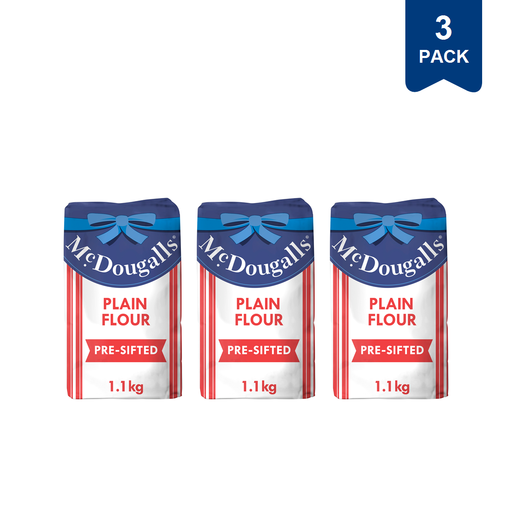
Why This Fits Their Persona: This multi-pack is ideal for the baker who regularly makes biscuits, pastries and sauces. McDougalls is a trusted UK brand, and buying in a pack of three offers excellent value and convenience, reducing the frequency of re-ordering.
It solves the unit price problem by offering a bulk discount. As a standard plain flour, it's a versatile pantry staple, reducing the risk of having the wrong type for general cooking and baking.
Pre-sifted for lighter results and convenience. Milled from UK wheats for consistent quality.
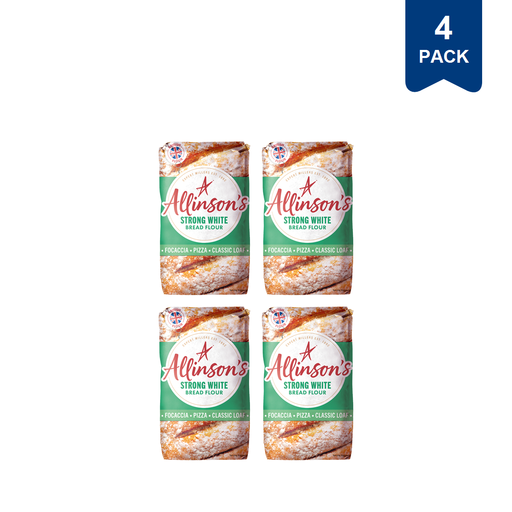
Why This Fits Their Persona: For anyone serious about making their own loaves, sourdough or pizza bases, a high-protein bread flour is non-negotiable. This four-pack from Allinson's ensures a dedicated bread baker has a steady supply of the correct flour for achieving a great rise and chewy texture.
This is a specific product for a specific purpose, eliminating the risk of using the wrong flour type. The 12g protein per 100g is clearly stated, allowing the user to make an informed choice.
High protein content for strong gluten development. Suitable for vegetarians and vegans.
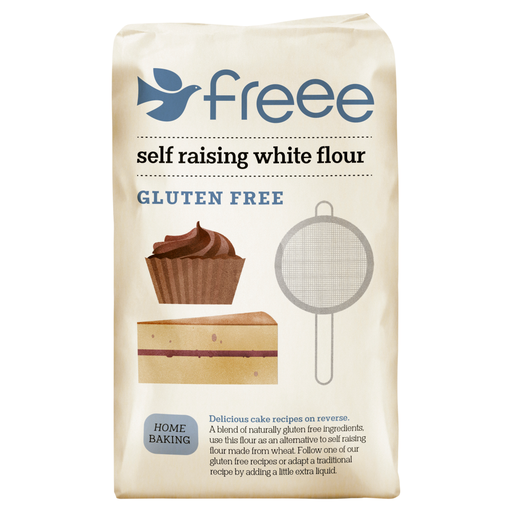
Why This Fits Their Persona: This flour is for anyone who needs to bake without gluten but doesn't want to compromise on results. It's a carefully formulated blend that includes raising agents and a thickener, designed to be a straightforward substitute for conventional self-raising flour in cakes, scones and muffins.
It directly solves the gluten-free baking pitfall. By providing an all-in-one blend with raising agents and xanthan gum, it removes the guesswork and the need to buy multiple special ingredients.
Certified by Coeliac UK for peace of mind. Milled from a blend of naturally gluten-free grains for a balanced texture.
We have compiled a complete, real-time list of products that fully satisfy these strict selection criteria and UK safety regulations.
1. Can I use plain flour instead of self-raising flour? Yes, you can make your own self-raising flour. The standard ratio is to add 2 teaspoons of baking powder for every 150g of plain flour. Sift them together thoroughly before adding to your other ingredients to ensure the raising agent is evenly distributed.
2. How long does flour last once opened? Once opened, most wheat flours should be used within 6-8 months for optimal freshness. Store it in a cool, dry place in an airtight container to protect it from moisture and pests. Wholemeal and gluten-free flours often have a shorter shelf life due to their higher oil content, so it's best to check the packaging and use them within 3-6 months.
3. Is strong bread flour really necessary for making bread? While you can make a loaf with plain flour, the result will be denser and less chewy. The high protein content in strong bread flour is what creates the robust gluten structure needed to trap air and achieve the light, airy texture characteristic of good bread. For consistently great results, using the correct flour is highly recommended.