
24/7 Customer Support

Free returns

Same-day & Next-day Delivery

Quality Guaranteed

Unlock Your Welcome Offers: FREE Delivery | Up to 80% OFF | Free 30-day JoyPlus trial
Download the APP
Planning a sizzling Korean BBQ, a comforting stew, or an interactive hot pot night? The centrepiece, beef short ribs, can make or break your meal. Yet, when you try to buy beef short ribs online, the sheer variety of cuts, names and preparations can be overwhelming. Choosing incorrectly can lead to disappointing results—meat that’s tough on the grill or disintegrates into a braise.
Many home cooks fall into a few common traps. They might grab a cut meant for slow cooking and wonder why their Korean BBQ beef ribs are chewy, or use thin slices in a stew only to find them lost in the pot. To help you navigate the options and select the right product for your recipe, we've identified the key pitfalls to avoid and the essential factors to check before you buy.
The "One-Cut-Fits-All" Myth: The most frequent mistake is assuming all short ribs are the same. A thick, bone-in English cut is structured for slow braising, where its collagen and fat render over hours to create a tender, succulent result. Using this for a quick grill will result in tough, unpleasantly chewy meat. Conversely, using thin LA galbi ribs in a three-hour stew will cause them to break down completely.
Misinterpreting "Premium" and "Wagyu" Labels: Seeing terms like 'Wagyu' or 'Prime' often comes with a higher price tag, but the name alone doesn't guarantee it's the right choice for your dish. Without understanding the cut style (Flanken cut short ribs vs. English cut) or the level of marbling, you might be paying a premium for a feature that doesn't suit your cooking method.
To ensure you get restaurant-quality results at home, focus on these two non-negotiable factors.
The way the rib is butchered is the single most important factor.
Once you've chosen the cut, consider its preparation.
To make your choice easier, we've matched some excellent options to different cooking styles and needs.

Why This Fits Their Persona: This is for the home cook who wants an authentic, convenient LA galbi night. The ribs are already cut and marinated, removing all the prep work for a quick, flavourful meal straight on the grill.
It uses the correct Flanken-cut, which is specifically designed for high-heat grilling to ensure tenderness. This prevents the common mistake of using a tough slow-cook cut for BBQ.
The marinade uses natural fruit enzymes from apple and pineapple to tenderise the meat. The ribs are sourced from British farms in Kent.
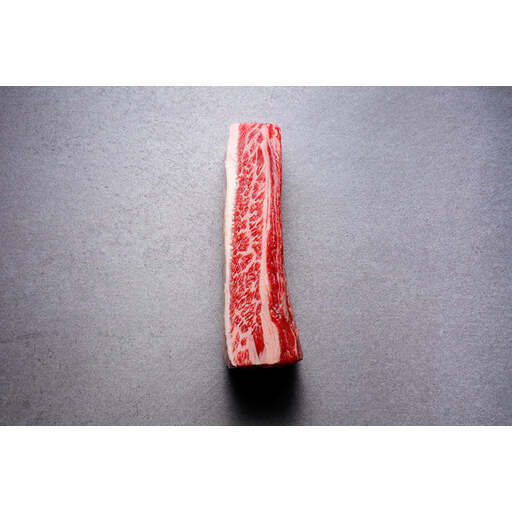
Why This Fits Their Persona: For the cook dedicated to crafting a rich, fall-off-the-bone braise or stew. This is a substantial, high-quality cut that rewards patience and low, slow cooking.
This is a classic English cut, specifically intended for braising. Its thickness and structure are designed to become exceptionally tender over several hours, avoiding the "disappearing meat" problem of using thin slices.
Sourced from grass-fed British Aberdeen Angus or Hereford cattle. The meat is dry-aged for a minimum of 28 days in a Himalayan salt chamber, which concentrates its flavour.
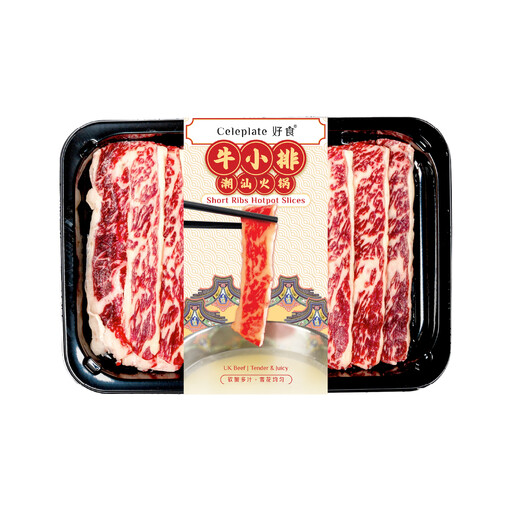
Why This Fits Their Persona: Perfect for those hosting a hot pot or shabu-shabu dinner. These slices are purpose-cut to be dipped into simmering broth for a few seconds, delivering a tender, flavourful bite every time.
These are specifically prepared as beef for hot pot. The ultra-thin slicing prevents the common error of using thicker BBQ or stewing cuts, which would become tough and take too long to cook in the broth.
Thinly sliced from British beef short ribs. The balanced marbling melts quickly, enriching the hot pot broth with a deep, savoury beef flavour.
We have compiled a complete, real-time list of products that fully satisfy these strict selection criteria and UK safety regulations.
The primary difference is the direction of the cut. Flanken cut slices are cut thinly across the bones, making them ideal for quick-cooking methods like Korean BBQ. English cut ribs are cut parallel to the bone, resulting in one large, thick piece of meat on a single bone, which is perfect for slow cooking and braising for hours until tender.
Yes, you can, provided they are sliced correctly. Look for boneless beef short rib slices that are around 3-5mm thick. A solid block of boneless short rib is not suitable for grilling and should be reserved for stews or braises. While convenient, boneless slices will lack the extra flavour and structural integrity that the bone provides in traditional Flanken-cut ribs.
For hot pot, the most critical factor is thickness. You need to find meat that is labelled specifically as beef for hot pot or 'shabu-shabu slices'. These are sliced paper-thin (1-2mm), allowing them to cook in 10-15 seconds when swirled in boiling broth. Using any thicker cut will result in a chewy texture.