
24/7 Customer Support

Free returns

Same-day & Next-day Delivery

Quality Guaranteed

Unlock Your Welcome Offers: FREE Delivery | Up to 80% OFF | Free 30-day JoyPlus trial
Download the APP
The vibrant world of Korean cuisine, popularised by everything from K-dramas to global food trends, is more accessible than ever. With a few clicks, you can have a wide array of ingredients and snacks delivered to your door. However, navigating the growing market for Korean food online in the UK can be tricky. It's easy to be disappointed by products that don't live up to the authentic flavours you were hoping for.
As a Joybuy Product Recommendation Officer, my role is to help you sidestep the common pitfalls. Before you fill your basket, let's look at a few frequent issues that can lead to a dissatisfying purchase.
To ensure you get the quality and taste you're paying for, focus on a few key details. These non-negotiable checks will help you shop with confidence at any Asian supermarket online.
The most straightforward indicator of authenticity is the country of origin. For foundational ingredients like gochujang (chilli paste), doenjang (soybean paste) and gim (seaweed), a "Made in South Korea" label is a strong sign that the product follows a traditional recipe. Beyond the origin, scan the ingredients list. For example, high-quality tteokbokki rice cakes should list rice as the primary ingredient, often with a high percentage like 99% rice. This ensures the signature chewy texture.
If you have specific dietary needs, such as finding vegan Korean food, diligence is key. Look for explicit "plant-based" or "vegan" certifications. Check ingredient lists for hidden animal products like fish sauce, shrimp or milk powder, which are common in many seasonings. For flavour, look for specific ingredients instead of vague terms. A "Bulgogi" flavour should list soy sauce, garlic and onion, while a kimchi flavour should mention cabbage and red chilli pepper. This helps you gauge the flavour profile more accurately.
When you buy Korean street food to cook at home, check the product page for storage and shipping information. Reputable sellers will state that items are kept at -18°C and shipped in insulated packaging. This is crucial for maintaining the integrity of products like frozen mandu (dumplings), kimbap and corn dogs, ensuring they arrive ready for your freezer, not your bin.
To help you get started, we've matched a few products from our selection to different needs and preferences, showing how they align with the practical criteria we've discussed.

Why This Fits Their Persona: Perfect for those wanting to try an iconic snack seen in Korean media. It's an affordable, accessible entry point into the world of savoury Korean snacks, delivering a genuine taste without a big commitment.
This avoids the "authenticity trap" as it's from Nongshim, a major Korean brand. The flavour is specific, using a kimchi seasoning blend rather than a generic "spicy" label.
Baked, not fried, for a satisfyingly crisp texture. The flavour is crafted from real ground shrimp and a tangy kimchi seasoning for an authentic taste.
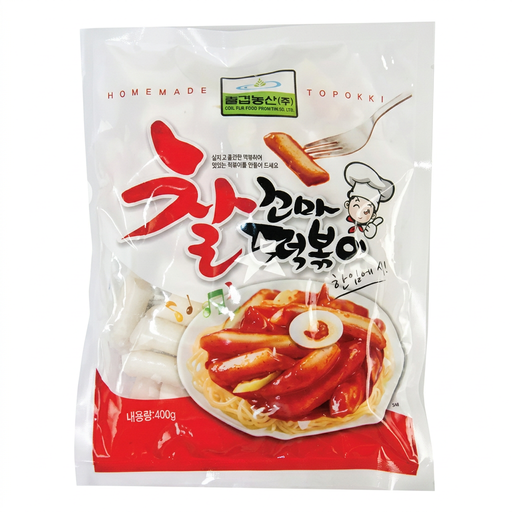
Why This Fits Their Persona: Ideal for anyone wanting to recreate authentic Korean street food like Tteokbokki at home. This is a core ingredient, and its quality directly impacts the final dish. The frozen format provides convenience and a long shelf life.
It sidesteps the "frozen food gamble" by being a product designed for freezing, preserving its texture. The simple, authentic ingredient list (Rice 99%) guarantees the correct chewy consistency, avoiding the "inauthentic" trap.
The high rice content delivers the classic chewy, satisfying bite essential for Tteokbokki. It is versatile enough for use in soups (Tteokguk) or stir-fries.
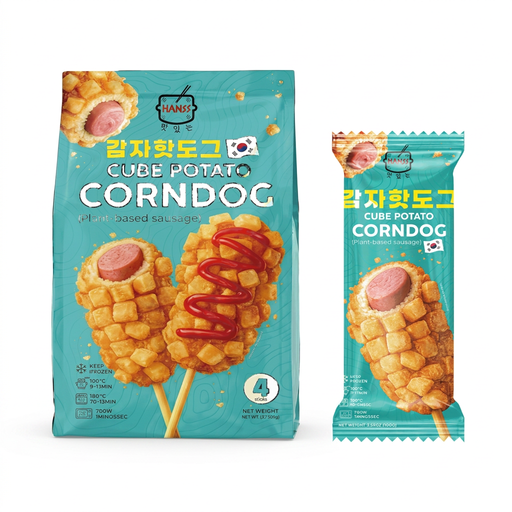
Why This Fits Their Persona: This allows vegans and plant-based eaters to enjoy the hugely popular Korean corn dog trend without compromise. It's a fun, convenient and flavourful street food experience made for a modern, conscious diet.
It directly solves the problem of finding authentic-tasting vegan Korean food. The "plant-based sausage" is clearly labelled, and the ingredients confirm it's made from soy protein, avoiding hidden animal products.
The unique potato cube coating provides an extra layer of crispy texture. It's highly convenient, with instructions for air fryer, deep fryer and microwave cooking.
We have compiled a complete, real-time list of products that fully satisfy these strict selection criteria and UK safety regulations.
Upon arrival, you should immediately transfer any frozen Korean food UK deliveries into your freezer. It should be kept at a stable temperature of -18°C or below. Before storing, give the package a quick check to ensure it hasn't thawed in transit. As a rule, you should not refreeze food that has completely defrosted, as this will compromise its texture and safety.
Seasoned seaweed snacks can be a lighter alternative to many other savoury snacks like crisps. They are typically roasted instead of deep-fried and seaweed itself contains various minerals. However, it's wise to check the nutrition label for the salt and oil content, as this varies significantly between brands. They are a great occasional snack as part of a balanced diet.
The most reliable method is to filter for products explicitly labelled 'Vegan' or 'Plant-Based'. Always take a moment to read the full ingredients list to check for non-vegan additives like fish sauce, shrimp paste, milk or eggs, which can be present in sauces and coatings. Many brands like Bibigo and Hanss are now offering excellent vegan Korean food options, from mandu and kimbap to plant-based meat alternatives.