
24/7 Customer Support

Free returns

Same-day & Next-day Delivery

Quality Guaranteed

Unlock Your Welcome Offers: FREE Delivery | Up to 80% OFF | Free 30-day JoyPlus trial
Download the APP
Mochi has taken the UK by storm, moving from a niche Japanese delicacy to a mainstream treat found everywhere from social media feeds to supermarket freezers. But if you're looking to buy mochi online in the UK, the sheer variety can be confusing. Is it a cake? Is it ice cream? Is it sweet or savoury?
The truth is, it can be all of those things. Mochi is a uniquely versatile food, and understanding the different types is the key to finding the one you'll love. This guide is designed to cut through the clutter, explaining the main categories of mochi and offering some practical advice to help you choose the perfect Japanese rice cakes for any occasion, whether it's a quiet night in or a get-together with friends.
Before you add to your basket, a little knowledge goes a long way. Here are a few key points to consider when browsing for Japanese snacks online.
Not all mochi is created equal. The main difference usually lies in the filling and how it's served.
Little Moons have made this style a household name in the UK. Due to its frozen nature, it requires careful mochi delivery.savoury mochi snacks. These can range from plain, unsweetened rice cakes (kirimochi) that you can grill or add to soups, to crispy, flavoured rice crackers that offer a satisfying crunch.How you plan to store and eat your mochi is a crucial factor.
Royal Family mochi are individually wrapped and can be stored in a cool, dry cupboard, making them ideal for lunchboxes, picnics or simply having a treat on hand.Mochi ice cream must be kept in the freezer at or below -18°C. For the ideal texture, it's often recommended to let it sit at room temperature for about 5 minutes before eating. This allows the outer mochi layer to soften to its signature chewiness.While the mochi dough itself is often simple, the fillings can contain various ingredients. Many traditional mochi are naturally gluten-free mochi, as glutinous rice does not contain gluten. However, it's always essential to check the label for specific allergens like milk, soya, peanuts or wheat, which may be present in the fillings or flavourings.
To help you get started, we've selected a few different types of mochi that showcase the variety available.
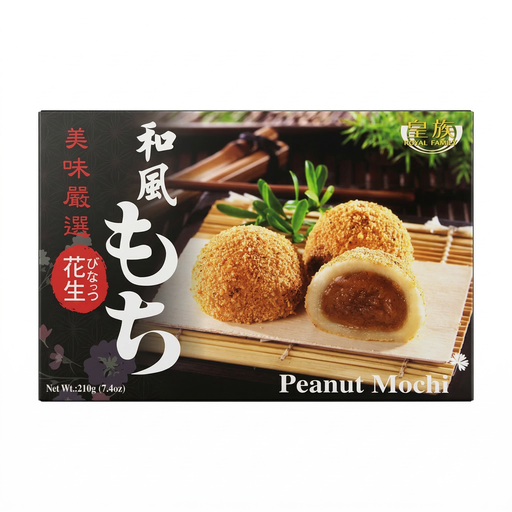
sweet mochi. The Royal Family brand uses a Japanese-style technique to create a soft, pliable outer skin that gives way to a rich and sweet peanut butter filling. The texture is dense and satisfyingly chewy.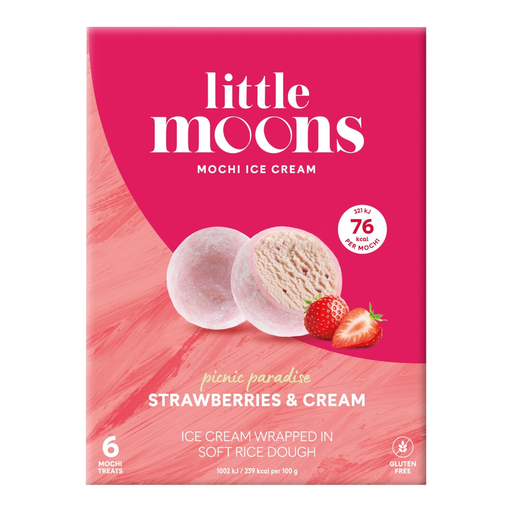
mochi ice cream. This product features creamy artisan gelato with a classic strawberries and cream flavour, all wrapped in a delicate mochi dough. The brand notes that its gelato has a higher density for a more intense taste.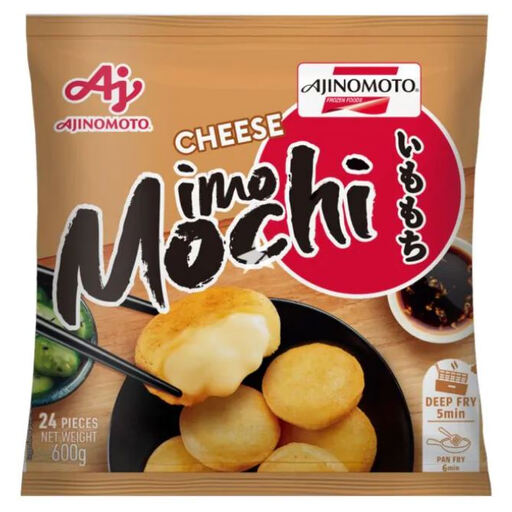
savoury mochi snacks from Ajinomoto combine the chewy texture of mochi with the crispness of puffed rice, all coated in a rich, umami cheese seasoning. It's a completely different experience from sweet mochi.Japanese rice cakes.Our recommendations are just the beginning. The world of mochi is vast, with countless flavours and formats to discover, from matcha and black sesame to mango and chocolate. If you're ready to continue your flavour journey, there are many more options to explore.
Discover different fillings, try new brands and find your next favourite snack by browsing our complete collection.
Explore our full range of mochi food
1. What does mochi taste like? The mochi dough itself has a very mild, slightly sweet flavour from the rice. The primary taste comes from its filling. This can be a sweet paste (like red bean or peanut), a fruity purée, creamy ice cream or even a savoury cheese powder. The most defining characteristic of mochi is its unique texture: soft, springy, and enjoyably chewy.
2. Is mochi gluten-free? Often, yes. The dough for traditional mochi is made from glutinous rice flour, which, despite its name, is naturally free from gluten. However, fillings, flavourings and coatings can sometimes contain gluten (from ingredients like wheat or barley malt). It is always best to carefully read the ingredients and allergen information on the packaging. For instance, the Little Moons product listed above is noted as gluten-free mochi, while the Ajinomoto savoury snack contains wheat.
3. How do you eat mochi? This depends entirely on the type. Shelf-stable sweet mochi is typically ready to eat straight from the packet. Mochi ice cream is best enjoyed after letting it rest at room temperature for about five minutes to allow the outer layer to soften. Savoury rice cake snacks can be eaten as they are or gently warmed in an oven for a few minutes to enhance their texture.