
24/7 Customer Support

Free returns

Same-day & Next-day Delivery

Quality Guaranteed

Unlock Your Welcome Offers: FREE Delivery | Up to 80% OFF | Free 30-day JoyPlus trial
Download the APP
As a nation of animal lovers, we enjoy rewarding our furry companions. However, when you want to buy pet treats online, the sheer volume of choice can be overwhelming. Navigating claims of "healthy," "natural" and "gourmet" can feel like a full-time job. Many UK pet owners find themselves with cupboards full of treats their pets ignore, or worse, treats that contribute to weight gain and other issues.
As the Joybuy Product Recommendation Officer, my role is to help you see past the marketing jargon. Let's look at the common pitfalls to avoid and what really matters when choosing the right reward for your cat or dog.
Before adding anything to your basket, be aware of these frequent traps that can lead to poor choices for your pet and a waste of your money.
To ensure you're making a sound purchase, focus on these key parameters. They provide a much clearer picture of a treat's suitability than the flashy packaging.
The ingredients list is your most powerful tool. In the UK, ingredients must be listed in descending order by weight.
Not all treats serve the same function. Understanding their purpose helps you choose more effectively.
Treats should form only a small part of your pet's daily food intake, typically no more than 10%. Always check the feeding guidelines and the calorie content. A low calorie cat treat might have fewer than 2 kcal per piece, allowing you to reward your cat multiple times a day without concern. Remember to reduce their main meal slightly to account for the extra calories from treats.
Based on these practical criteria, here are a few options suited to different types of pet owners across the UK.
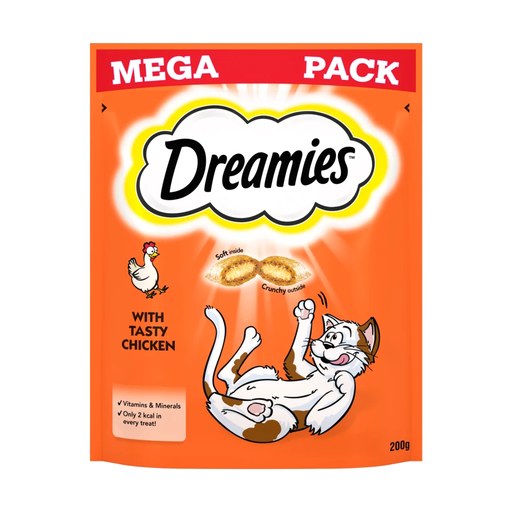
Why This Fits Their Persona: For cat owners who love to treat their pet frequently for good behaviour or just for being cute. The large, resealable pack offers good value, and the low calorie count means you can reward them throughout the day without guilt.
It directly counters the "healthy halo" trap by being transparent about its low calorie content (less than 2 kcal per treat). This allows for responsible treating and easy portion control.
The dual texture with a crunchy outside and soft centre is highly palatable for most cats. It is fortified with essential vitamins and minerals.
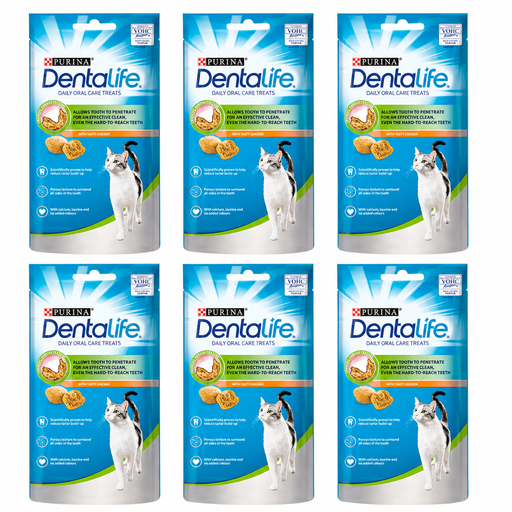
Why This Fits Their Persona: This is for the cat owner who wants a treat that does more. They are looking for a functional product to incorporate into their cat's daily routine to support dental hygiene.
It avoids the "one-size-fits-all" trap by being a specialised dental chew. Its porous texture is scientifically designed to help clean teeth, a specific function that a standard biscuit treat does not offer.
This product is accepted by the Veterinary Oral Health Council (VOHC) for helping to control tartar. It is also enriched with calcium and taurine.
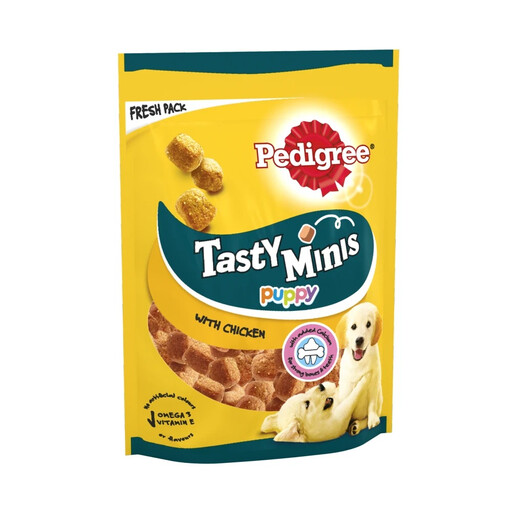
Why This Fits Their Persona: Perfect for owners of new puppies who are focused on training and development. These small, chewy cubes are ideal for positive reinforcement without being too hard for young teeth.
This is a life-stage specific product, avoiding the trap of giving an inappropriate adult treat to a young dog. It is formulated for puppies from 4 months old, with ingredients to support their growth.
These treats are enriched with calcium to support strong teeth and bones and Omega 3 to help keep them fit. The soft texture is ideal for a puppy's mouth.
We have compiled a complete, real-time list of products that fully satisfy these strict selection criteria and UK safety regulations.
1. How many treats are too many for my cat or dog? A good rule of thumb is the 10% rule: treats should not make up more than 10% of your pet's total daily calorie intake. Always check the feeding guide on the packaging, as the recommended amount varies by the pet's size and the treat's calorie density. If you provide treats, it's wise to slightly reduce the portion of their main meal to prevent weight gain.
2. Are grain-free pet treats actually better? For most pets, grains are a perfectly acceptable and digestible source of carbohydrates. However, for a small number of dogs and cats that have a specific grain allergy or sensitivity, grain-free pet treats are an excellent choice. If your pet has no such issues, there is no compelling nutritional reason to exclusively choose grain-free options. The overall quality of the ingredients is more important than the presence or absence of grain.
3. Can I give my kitten or puppy adult treats? It's generally not recommended. Kitten treats and puppy treats are specifically formulated for their needs. They are typically smaller, softer and fortified with nutrients essential for growth, such as calcium and DHA. Adult treats may be too hard for their developing teeth, too large or have a nutritional profile that is not optimised for a growing animal. Always choose a treat that is appropriate for your pet's life stage.