
24/7 Customer Support

Free returns

Same-day & Next-day Delivery

Quality Guaranteed

Unlock Your Welcome Offers: FREE Delivery | Up to 80% OFF | Free 30-day JoyPlus trial
Download the APP
Buying pork online can save a trip to the shops, but product pages do not always make comparisons straightforward. Pack sizes vary, “fresh” may mean chilled rather than recently butchered, and a low price can look attractive until you factor in trimming, bones or preparation time.
For UK households, the most useful approach is to match the cut and storage format to the meal you plan to cook. Whether you need frozen pork for meal planning, British pork for a Sunday roast, Spanish pork for Asian-style recipes or a larger pack for catering, the following checks can help prevent avoidable buying mistakes.
Pork belly, pork collar and pork ribs all contain different proportions of lean meat, fat, skin and bone. A thin pork slice may suit hot pot but dry out during a long braise. Conversely, pork belly chunks can be wasteful if you only need quick stir-fry ingredients.
Before ordering, decide whether you need pork for braising, pork for grilling, pork for hot pot, roasting or mince-based recipes. This makes the product description more useful than broad terms such as “tender” or “restaurant-style”.
A 1kg pack may appear economical, but diced ribs and bone-in cuts do not provide the same edible yield as boneless pork. Skin and fat can also affect how much meat remains after preparation.
Check the net weight, whether the product is bone-in or boneless, and whether it is sliced, diced or supplied whole. Smaller 200g packs can be practical for one or two portions, while 500g to 1kg packs may suit families, batch cooking and professional caterers.
Chilled pork normally requires prompt refrigeration and use within the period shown on the packaging. Frozen pork offers more flexibility, but it still needs suitable freezer space and safe defrosting. Do not assume that frozen meat can be refrozen after thawing.
Read the storage instructions carefully. Several products listed here require storage at -18°C or below, with defrosting in the refrigerator before cooking. Some chilled items have shorter use windows, so delivery timing matters.
The cut should reflect the recipe:
Thickness also changes cooking time. Thick pork belly retains moisture during slow cooking but needs sufficient time for the fat and connective tissue to soften. Thin slices cook quickly, so overcrowding a pan can cause steaming instead of browning.
The country of origin is a useful comparison point, but it should not be treated as a guarantee of flavour or quality. The listings include pork from the United Kingdom, Spain and Germany, depending on the product. For shoppers specifically seeking British pork, the HG Walter and Wicks Manor listings state UK origin. Several Kinda and Celeplate products state Spanish origin.
Also check whether the product is:
For example, the Honor Soya Pig Ear is pre-cooked and may be eaten cold or reheated, whereas frozen pork belly, ribs and trotters require thorough cooking.
Follow the product label rather than relying on appearance alone. For frozen pork, defrost it thoroughly in the refrigerator, keep it covered and place it on the bottom shelf to prevent drips contaminating other food. Do not refreeze meat after thawing unless the packaging specifically permits it.
Use a clean board for raw pork and wash hands, utensils and surfaces after preparation. Cook pork until thoroughly cooked, with no raw-looking centre and clear juices. Where the label provides a temperature instruction, use a food thermometer and follow that guidance; the supplied product information commonly specifies an internal temperature above 70°C.
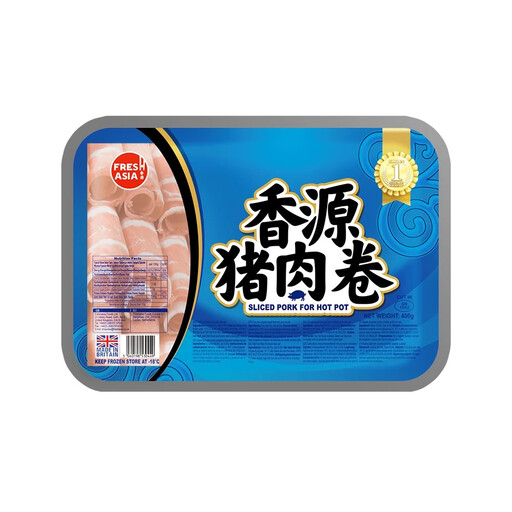
Why This Fits Their Persona: Thin frozen slices reduce preparation time for smaller households making hot pot, soup or quick stir-fries.
The 400g net weight and thin-slice format make the usable quantity clear, avoiding a large pack that may not suit quick meals.
Frozen storage at -18°C or below; suitable for hot pot, stir-frying and soup.
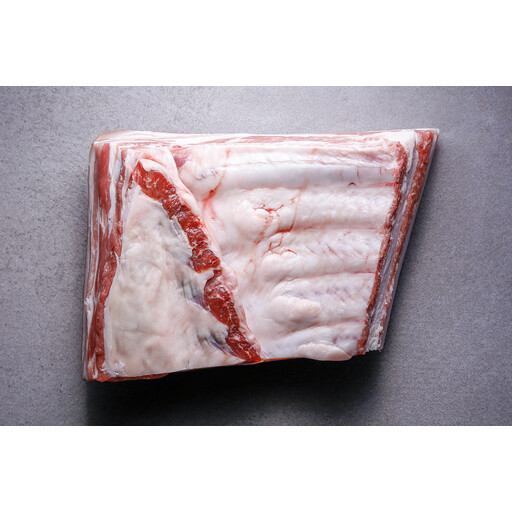
Why This Fits Their Persona: A 500g chilled British pork portion suits a roast dinner or a slower weekend cooking project.
The listing clearly states skin-on, bone-in, chilled storage and a cooking method, so the buyer can plan around trimming and roasting time.
UK origin stated; scored skin and a roasting guide are included in the product information.
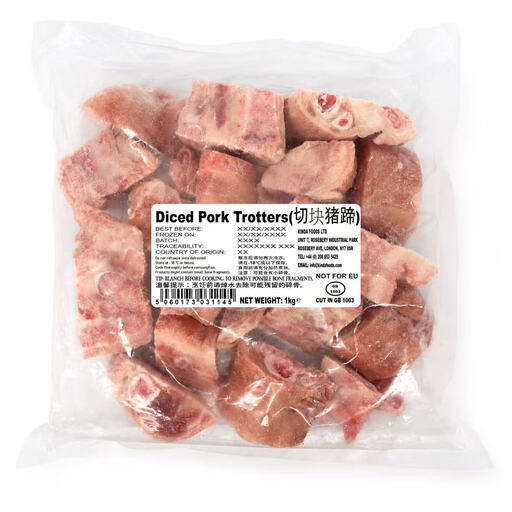
Why This Fits Their Persona: The 1kg frozen pack is suited to batch cooking, traditional soups and long braises for larger households or catering use.
The product is already cleaned, de-haired and diced, reducing preparation work while making the bone-in nature of trotters clear.
Spanish origin stated; diced pieces are intended for soups, stews and slow cooking.
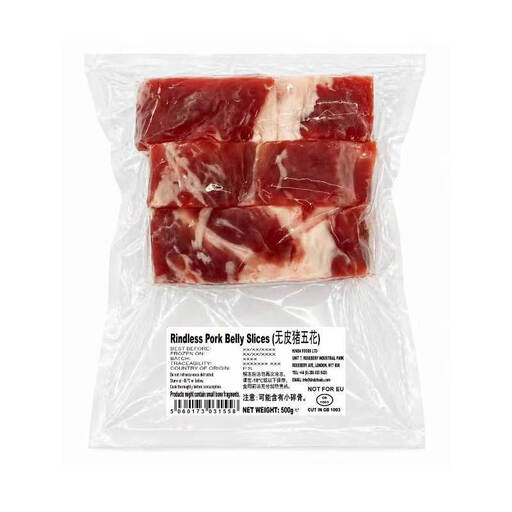
Why This Fits Their Persona: Rindless Spanish pork belly slices are convenient for Korean BBQ, Chinese pork recipes, twice-cooked pork and hot-plate meals.
The rindless format and 500g quantity are specified, avoiding uncertainty about skin removal and preparation time.
100% pork; vacuum-packed and sliced for quick frying, grilling and stir-frying.
We have compiled a complete, real-time list of products that fully satisfy these strict selection criteria and UK safety regulations.
Yes, provided it remains frozen at the temperature stated on the label and is defrosted safely in the refrigerator. Frozen pork can be useful for meal planning because it allows you to keep specific cuts available for hot pot, barbecue, braising or midweek stir-fries.
The amount depends on the cut and meal. Boneless meat generally provides more usable food than bone-in ribs or trotters. For a main meal, compare the pack’s net weight with the number of diners, then allow for bones, skin and trimming where applicable. A 200g pack may suit a small meal or ingredient portion, while 500g and 1kg packs are more practical for families or batch cooking.
There is no single answer for every recipe. British pork may appeal to shoppers prioritising stated UK origin, while Spanish pork is available in cuts commonly used for Chinese, Korean and Spanish dishes. Compare the origin, cut, storage format, pack size and cooking suitability rather than relying on origin alone.