
24/7 Customer Support

Free returns

Same-day & Next-day Delivery

Quality Guaranteed

Unlock Your Welcome Offers: FREE Delivery | Up to 80% OFF | Free 30-day JoyPlus trial
Download the APP
If you want to buy prawns online in the UK, the choice can look straightforward until you compare pack sizes, preparation methods, storage instructions and ingredient lists. A low headline price may not represent good value once you account for shell-on waste, added water or a pack designed for only one meal.
This guide from the Joybuy Product Recommendation Officer focuses on practical details rather than marketing language, helping you choose prawns, shrimp and related seafood for everyday cooking, entertaining and Asian-inspired dishes.
A 1kg pack of whole, head-on prawns will not provide the same ready-to-eat amount as 1kg of peeled prawns. Shells and heads can add presentation value, but peeled or cooked prawns may be more suitable for quick meals. Compare net weight, preparation style and approximate piece count, not only the price shown in search results.
Cooked prawns can generally be thawed and served, but they may become tough if boiled or fried for too long. Some products are cooked and peeled, while others require peeling. By contrast, prawn gyoza, shrimp dumplings, shrimp paste and hotpot seafood usually require thorough cooking, even if the filling contains pre-cooked or processed seafood.
Prawns are crustaceans, a regulated allergen in the UK. Prepared products may also contain wheat, fish, soya, sesame, peanuts, eggs, milk or sulphites. Always check the current product label before ordering, particularly when buying gyoza, scampi or mixed seafood.
Frozen products should normally remain at -18°C or below. Do not refreeze food after thawing unless the packaging specifically permits it. Refrigerated ready-to-eat prawns may have a shorter use period after opening, so delivery timing and fridge space matter.
Choose the format according to the recipe:
Size labels such as 31–40 per lb or 10–20 per kg indicate approximate quantity rather than an exact count. Larger prawns work well as a centrepiece, while smaller shrimp can distribute more evenly through fried rice, pasta or salad. If you are feeding several people, check both the total weight and the intended number of servings.
A short ingredient list can make a product easier to use in simple recipes, while prepared foods contain additional wrappers, coatings, oils or seasonings. For example, a cooked peeled prawn product may contain prawns, water, salt and stabilisers, whereas gyoza can include wheat, vegetables, soya and sesame.
Also check whether the product is:
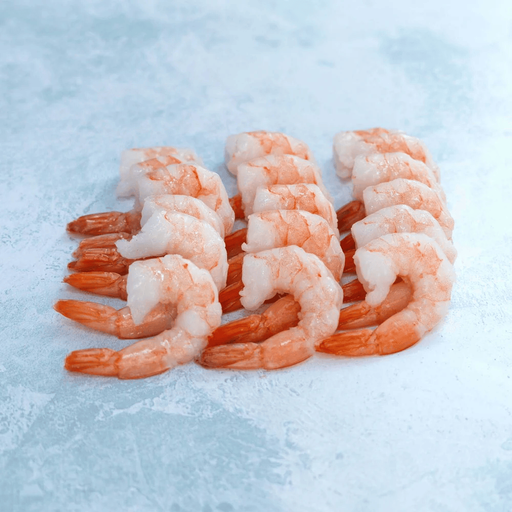
Why This Fits Their Persona: A 250g cooked, peeled pack gives smaller households and first-time online seafood shoppers a manageable format for lunches, salads and quick pasta dishes.
The product description clearly identifies it as cooked and peeled, reducing preparation uncertainty. The label also lists crustaceans and stabilisers for checking before purchase.
Cooked and peeled; 20g protein per stated serving; suitable for quick cold or warm meals.

Why This Fits Their Persona: The 1kg format and whole head-on, shell-on presentation suit hosts preparing seafood platters, paella or several meals for a larger household.
The HOSO format and 10–20-per-kilogram grading are stated clearly, so buyers can anticipate shells, heads and larger individual pieces before ordering.
Cooked and frozen; extra-large stated grading; 1kg quantity for entertaining and batch use.

Why This Fits Their Persona: Designed for households wanting a convenient Asian-style meal, this frozen pack can be pan-fried from frozen and served as a main, side dish or sharing plate.
The cooking method is specific: pan-fry with water and cover before heating until the base is golden. The ingredient list flags wheat, egg and crustaceans.
600g frozen pack; suitable for pan-frying or steaming; thin wrappers and a shrimp-based filling.
We have compiled a complete, real-time list of products that fully satisfy these strict selection criteria and UK safety regulations.
Before placing an order, check whether the item is frozen or chilled and whether your delivery slot allows you to store it promptly. Frozen prawns are convenient for planned meals, while ready-to-eat prawns are useful when you need a quick lunch or starter.
For chilled products, follow the stated 0–5°C storage guidance where applicable and observe the use-by or best-before information on the packaging. For frozen products, thaw in the refrigerator where instructions recommend it. Keep raw and ready-to-eat seafood separate, and wash hands, boards and utensils after handling.
Some are. Product descriptions may state “ready to eat”, while others are intended to be warmed through. Always follow the packaging instructions. If adding cooked prawns to pasta, curry or stir-fry, add them towards the end to reduce the risk of a tough texture.
The overall value depends on the usable weight, pack size, preparation and delivery cost. Frozen prawns can reduce waste because you can store them for later use, while cooked and peeled formats save preparation time. Compare the price per 100g and check whether the product includes shells, coating or added ingredients.
Follow the best-before date and storage instructions printed on the product. Keep the freezer at -18°C or below, and do not refreeze prawns after they have thawed unless the packaging specifically says this is permitted. Once opened or defrosted, use the product within the stated period.