
24/7 Customer Support

Free returns

Same-day & Next-day Delivery

Quality Guaranteed

Unlock Your Welcome Offers: FREE Delivery | Up to 80% OFF | Free 30-day JoyPlus trial
Download the APP
As a Joybuy Product Recommendation Officer, my role is to help you navigate the crowded market of winter sports equipment. Preparing for a ski holiday should be exciting, not a chore filled with confusing jargon and marketing claims. This guide focuses on the essential ski gear, helping you understand what truly matters for safety, comfort and value, so you can hit the slopes with confidence.
Before you add anything to your basket, be aware of these common traps that catch out many UK skiers and snowboarders each year.
To avoid the pitfalls above, focus on these key technical specifications. Understanding them is the difference between a great day on the mountain and a frustrating, uncomfortable experience.
Your helmet is the most critical piece of ski gear. Beyond a durable outer shell (often polycarbonate) and a shock-absorbing EPS foam liner, look for a MIPS (Multi-directional Impact Protection System).
Clear vision is paramount for safety and enjoyment. Two key features determine a goggle's performance:
To ensure your hands stay warm and dry, a pair of waterproof ski gloves or ski mittens must have a multi-layer construction:
For added durability, some high-performance gloves feature KEVLAR reinforcement on the palms and fingers to resist abrasion from ski edges and poles.
Based on these practical criteria, here are some items of ski gear matched to different user needs.
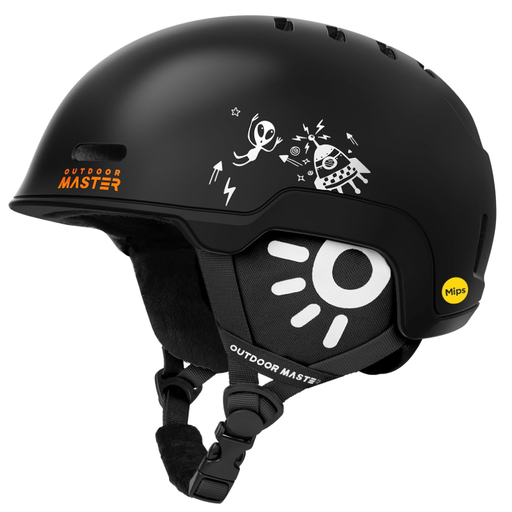
Why This Fits Their Persona: You prioritise your child's safety above all else. This helmet provides advanced MIPS protection, often found in more expensive adult models, in a design specifically for younger skiers. The adjustable fit system ensures it stays secure and can adapt as they grow.
It directly counters the "basic safety" trap by incorporating the MIPS system, which is designed to manage rotational forces, offering a higher level of protection than standard certified helmets.
Features the MIPS safety system and an integrated dial fit for a secure, customised fit. The removable liner and ear pads make cleaning easy.
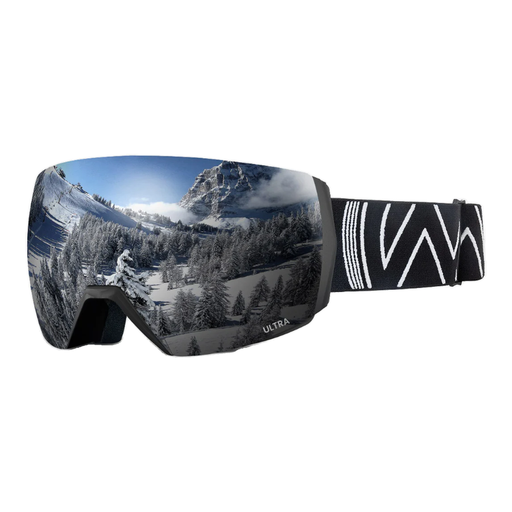
Why This Fits Their Persona: You ski from the first lift to the last, no matter the weather. This bundle provides the versatility you need, with a magnetic quick-change system and two lenses—one for bright sun (VLT 10%) and one for flat light (VLT 90%)—so your vision is always optimised.
It solves the "anti-fog myth" by combining a triple-layer foam for ventilation, advanced lens coatings and the ability to switch to the correct VLT lens, preventing eye strain and fogging.
The MagKlick magnetic system allows for one-second lens swaps. The bundle includes a second lens, providing excellent value and adaptability for all conditions.
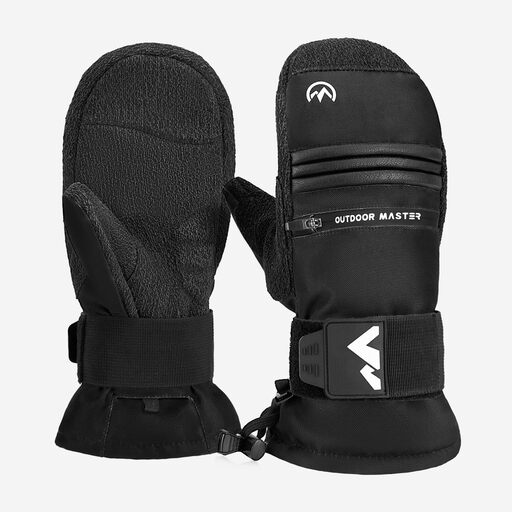
Why This Fits Their Persona: You're tough on your gear and need it to last more than one season. These mittens are built for resilience, with Kevlar reinforcement on the palm and shell to withstand abrasion from carrying skis, holding poles or grabbing tow ropes.
This mitten avoids the trap of poor durability by integrating Kevlar, a material known for its high cut and abrasion resistance. It also features a true TPU waterproof membrane, not just a "water-resistant" coating.
Exceptional durability from Kevlar reinforcement combined with the proven warmth of 3M Thinsulate insulation and reliable waterproofing from a TPU membrane.
We have compiled a complete, real-time list of products that fully satisfy these strict selection criteria and UK safety regulations.
A well-fitting ski helmet should be snug but not uncomfortably tight. Place it on your head so it sits level, about one to two finger-widths above your eyebrows. Shake your head gently from side to side; the helmet should move with your head, not wobble independently. Finally, fasten and tighten the chin strap. You should be able to fit no more than two fingers between the strap and your chin. There should be no significant gap between the top of your ski goggles and the brim of the helmet.
MIPS stands for Multi-directional Impact Protection System. It is an internal slip-plane liner designed to reduce the rotational forces on the brain that can occur during an angled fall. While all helmets must pass standard safety tests, MIPS adds a layer of protection specifically for the types of impacts common in skiing. For many, this additional safety feature provides valuable peace of mind.
Yes, provided you choose the right type of goggles. Look for models specifically labelled as OTG (Over-The-Glasses). These are designed with a deeper frame and have small channels on the sides to accommodate the arms of your prescription eyewear without causing pressure points on your temples or nose bridge. Trying to force regular goggles over glasses will be uncomfortable and can distort your vision.