
24/7 Customer Support

Free returns

Same-day & Next-day Delivery

Quality Guaranteed

Unlock Your Welcome Offers: FREE Delivery | Up to 80% OFF | Free 30-day JoyPlus trial
Download the APP
Buying snacks online should make the weekly shop easier, but attractive packaging and broad health claims can make comparison surprisingly difficult. Whether you need cereal bars, biscuits, crisps, children's snacks or breakfast snacks, the product that looks most suitable may not match your dietary needs, portion preferences or household routine.
This guide explains the practical checks to make before you buy snacks online in the UK, followed by recommendations matched to different shopping profiles.
A product labelled “zero sugar” may still contain substantial carbohydrates, fat and calories. For example, the Oreo Zero Sugar Sandwich Cookies listing states 0g sugars per 100g, while also listing 442 kcal, 18.8g fat and 68.5g carbohydrates per 100g. Its sweetness comes from maltitol, so shoppers should read the full nutrition panel rather than relying on the front-of-pack message.
This does not make the product unsuitable, but it does show why low-sugar snacks still need to be assessed in context.
Fruit and nut bars can contain useful ingredients, but dried fruit contributes naturally occurring sugars and bars may also include syrups or other sweeteners. Similarly, cereal bars containing oats or whole grains can still be relatively high in sugar, fat or salt.
Check the per-serving figures, not only the ingredient imagery. A 30g or 40g serving may look modest, while eating several bars from a multipack changes the overall intake.
Online snack descriptions can include several allergen warnings. Wheat, milk, peanuts, tree nuts, soya and oats appear frequently across cereal bars, biscuits and protein snacks. “Gluten-free” also needs careful checking: do not assume an oat-based product is suitable unless the packaging and product information clearly support that choice.
For children, age guidance and supervision matter. Products intended for young children should be offered according to the listed age recommendation, with appropriate supervision to help reduce choking risks.
UK food labels generally provide nutrition information per 100g and may also show per-serving values. Use both:
A cereal bar with 145 kcal per 30g bar will have a different role from a 230 kcal 50g oat bar, even if both are marketed as convenient on-the-go snacks.
Ingredients appear in descending order by weight. If sugar, glucose syrup, dates, rice syrup or another sweetening ingredient appears near the beginning, the product may be notably sweet even if it contains oats or fruit.
Look for clearly stated allergens, including:
For a diagnosed allergy or coeliac disease, check the current packaging and manufacturer information before purchase, as recipes and warnings can change.
The right snack depends on how it will be used:
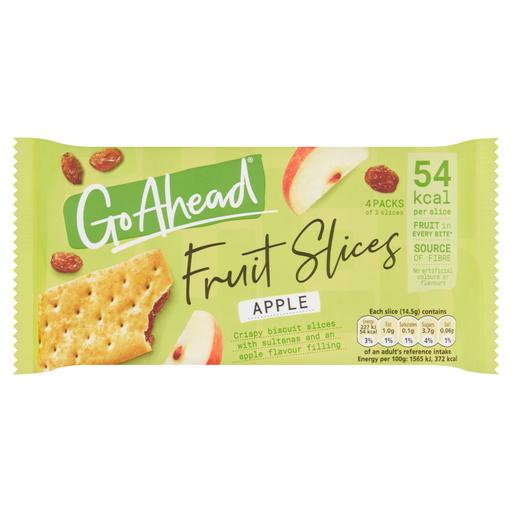
Why This Fits Their Persona: A four-bar format gives occasional snack shoppers a simple way to stock the cupboard, desk or lunch bag without buying a large multipack.
The listing provides a per-bar format and ingredient details, helping shoppers judge portion size instead of relying only on fruit-focused packaging.
Individually portioned 44g bars with crispy biscuit layers and apple-flavoured filling; suitable for lunchboxes or travel.

Why This Fits Their Persona: Shoppers looking for a short ingredient list and a gluten-free, dairy-free format may find this fruit and nut bar convenient for work, commuting or walks.
The ingredients are listed as dates, raisins, cashews, almonds and freeze-dried blueberries, making it easier to assess what the bar contains. It is not a low-sugar product, so the nutrition panel still matters.
35g bars made from fruit and nuts; listed as gluten-free and dairy-free. Contains almonds and cashews.

Why This Fits Their Persona: Active adults and commuters wanting a more substantial bar can use the individually wrapped portions before or after activity.
The listing gives per-40g values, including 10.4g protein, 5.8g sugars and 202 kcal, allowing a realistic comparison with other protein bars.
Each bar provides 10.4g protein and 5.5g fibre per 40g serving. Contains peanuts, almonds, milk and soya.
We have compiled a complete, real-time list of products that fully satisfy these strict selection criteria and UK safety regulations.
Check the serving size, nutrition values, ingredients, allergen statement, storage instructions and best-before information. For children, also confirm the recommended age and supervision guidance.
They can be convenient, but suitability depends on the individual product and portion. Compare sugars, fibre, protein and energy per bar, then consider pairing a smaller bar with other breakfast foods rather than assuming every cereal bar is nutritionally equivalent.
Look for a clear gluten-free statement and review the allergen information each time. Some products contain wheat, barley or other cereals containing gluten, while oat-based products may require additional checking. Always use the current packaging information for dietary decisions.