
24/7 Customer Support

Free returns

Same-day & Next-day Delivery

Quality Guaranteed

Unlock Your Welcome Offers: FREE Delivery | Up to 80% OFF | Free 30-day JoyPlus trial
Download the APP
Buying soup online can make lunches, light meals and cupboard planning much easier. However, product listings often use similar-looking pack sizes and broad descriptions, making it difficult to compare value, ingredients and preparation times. Whether you are shopping for tinned soup, canned soup, instant soup or a more speciality flavour, a few checks can prevent disappointing purchases.
A 400g can may be labelled as two servings, while another product of the same size may be intended for one. Instant soup listings can also show the total box weight rather than the number of sachets or cups.
Check:
For a quick lunch, a single-serving soup may be more convenient. For families or batch cupboard shopping, multi-packs and larger formats may offer more practical value.
Vegetable soup can contain milk, butter, cream, chicken stock or other animal-derived ingredients. For example, some creamy recipes include milk allergens even when the main flavour is mushroom or vegetable.
If you follow a vegetarian diet, look for a clear suitability statement and read the allergen information. Also check flavours such as chicken soup, beef soup and Scotch broth, which generally contain meat or meat-derived ingredients.
“Low-fat” does not necessarily mean low in salt, and a product with a short ingredient list may still contain important allergens. Wheat, barley, milk, eggs, celery, crustaceans and sulphites appear across different soup recipes.
Always review:
Product recipes and packaging can change, so the label supplied with your order should take priority.
Tinned soup is convenient for home cupboards and usually needs heating in a saucepan or microwaveable bowl. It works well for a warm lunch with bread, but opened leftovers normally need transferring to a suitable container and refrigeration.
Instant soup and cup soup are useful in offices, student accommodation and smaller kitchens. Batchelors Cup a Soup Tomato, for example, is prepared by adding boiling water to the sachet. This reduces washing-up, although the resulting portion is generally lighter than a 400g canned meal.
Ready-to-eat chilled or ambient speciality soups may require different storage, so check whether the product should be kept in a cupboard or refrigerator.
Compare nutrition using the portion you are likely to eat. A label showing figures per 100g is useful for comparison, but it may not reflect the whole can or prepared cup.
For example:
These figures are product-specific, so use them to compare options rather than treating one nutrient claim as a guarantee of overall suitability.
Ingredients are listed in descending order by weight. Quantitative ingredient declarations can help you understand how prominent a featured ingredient is. Heinz Big Soup Beef & Vegetable, for instance, specifies 10% beef and 22% vegetables, while Baxters Vegetarian Country Garden Soup lists a 38% vegetable mix and 7% cooked rice.
For dietary shopping, distinguish between:
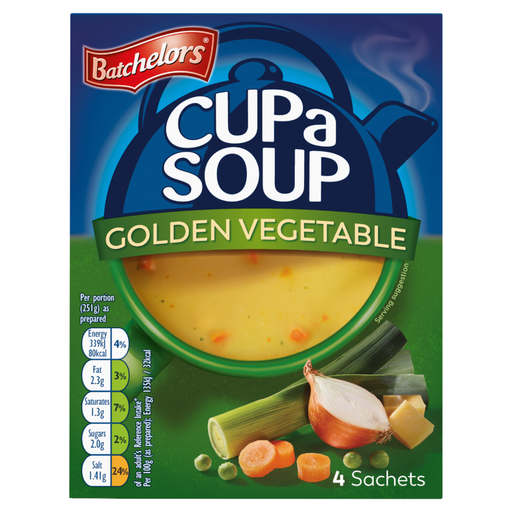
Why This Fits Their Persona: A sachet format suits students, office drawers and shoppers wanting a warm snack without opening a full can.
The listing identifies an 82g pack and prepared portion nutrition, making it easier to compare with other instant soup formats.
Vegetarian suitability is stated; each prepared portion is listed at 80 kcal.
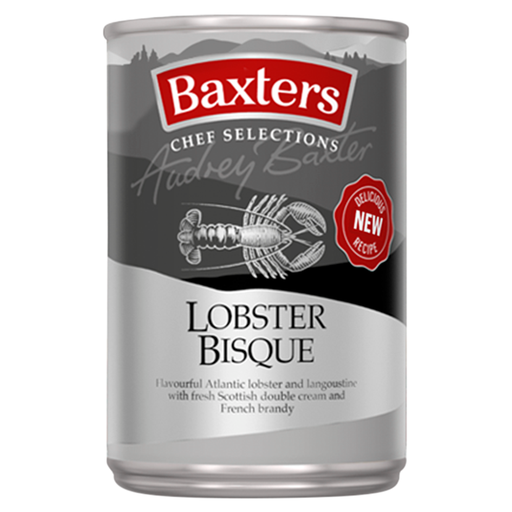
Why This Fits Their Persona: A suitable choice for a more considered starter or restaurant-style meal at home.
The ingredient list gives percentages for lobster, langoustines, cream and brandy, rather than relying only on a flavour description.
The 400g soup contains lobster and langoustines; it is listed as serving one.
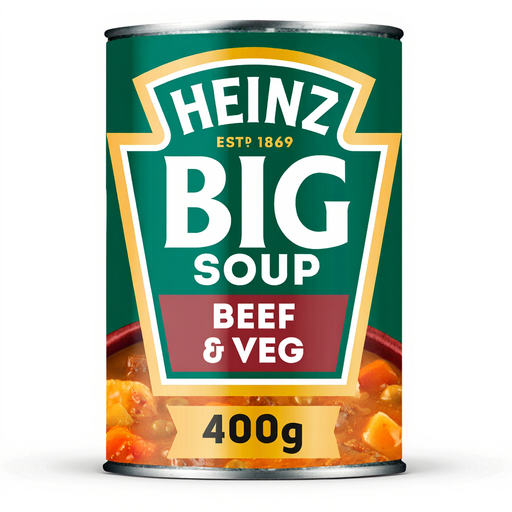
Why This Fits Their Persona: Chunkier soup is practical for workers and households wanting a more substantial quick meal with bread.
The listing states that the can serves two and gives quantified beef, potato and vegetable content, helping set realistic expectations.
Contains 10% beef and 22% vegetables; microwave and hob instructions are provided.
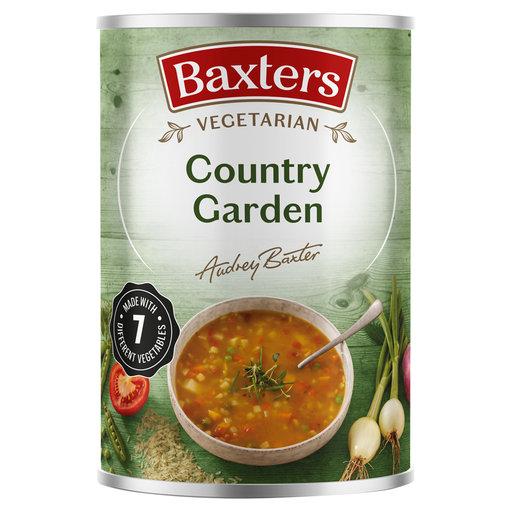
Why This Fits Their Persona: A cupboard-friendly option for households seeking a vegetable-based lunch that can be served with croutons or bread.
The product is labelled vegetarian and identifies milk as an allergen, avoiding the assumption that vegetable soup is automatically dairy-free.
Contains a 38% vegetable mix and 7% cooked rice; it is listed as free from cereals containing gluten.
We have compiled a complete, real-time list of products that fully satisfy these strict selection criteria and UK safety regulations.
It depends on the pack size, number of servings and delivery price. Tinned soup can provide two portions from one 400g can, while cup soup offers individually measured sachets and less preparation. Compare the cost per serving, not only the headline product price.
Transfer unused soup to a suitable covered, non-metallic container, refrigerate it and follow the product’s stated consumption period. Many listings specify eating leftovers within two days. Do not leave opened soup in the can at room temperature.
Instant soup and cup soup require only boiling water, making them useful where kitchen equipment is limited. If you have access to a microwave or hob, canned chicken, tomato, vegetable, beef or Scotch broth soup can provide a larger portion. Check preparation instructions, allergens and salt per serving before ordering.