
24/7 Customer Support

Free returns

Same-day & Next-day Delivery

Quality Guaranteed

Unlock Your Welcome Offers: FREE Delivery | Up to 80% OFF | Free 30-day JoyPlus trial
Download the APP
As a Joybuy Product Recommendation Officer, my role is to help you navigate the crowded shelves and find products that genuinely deliver. Today, we're looking at young green jackfruit, a fantastic ingredient that has become a staple in many UK kitchens for its versatility as a plant-based meat substitute.
However, its rising popularity has led to some confusion. Many first-time buyers make simple, costly mistakes that can ruin a recipe before it even begins. Let's clear up the common pitfalls to ensure your culinary adventures with this unique fruit are a success from the start.
To avoid disappointment, focus on these two non-negotiable factors when selecting your canned jackfruit.
The liquid inside the can dictates the fruit's taste and how you should prepare it. Always check the label for one of these three types:
A quality can of young green jackfruit should have a very simple ingredients list. Look for:
Avoid products with added sugars (unless you're buying the dessert kind), artificial flavours or a long list of chemical-sounding preservatives. The beauty of jackfruit is its natural texture and ability to take on flavour, so the fewer additives, the better.
We've selected a few options that meet these criteria, matching them to different cooking styles and needs.
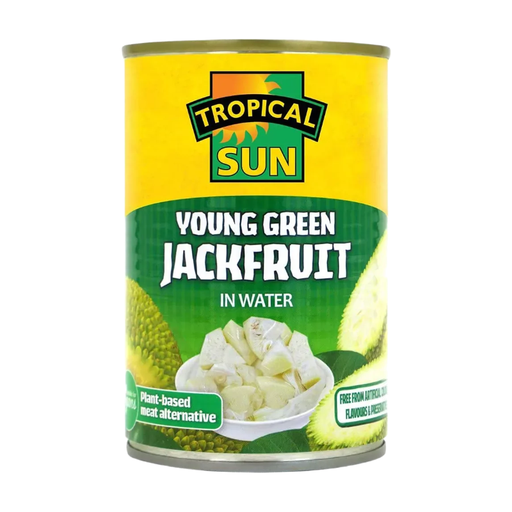
Why This Fits Their Persona: Ideal for those trying jackfruit for the first time. The 400g can is a perfect trial size, and being packed in water provides a neutral base that's easy to season without worrying about excess salt.
It's explicitly young green jackfruit in water, completely avoiding the sweet syrup trap and the complexity of managing brine.
Extremely versatile with a neutral flavour. Naturally gluten-free, soy-free and contains no added sugar.

Why This Fits Their Persona: This larger 565g can is economical for those who meal prep or cook for a family. It provides a generous amount for batch-cooking curries, stews or a big tray of vegan pulled pork.
While packed in brine, it's clearly labelled as 'young green jackfruit', ensuring you get the right type for savoury cooking. A quick rinse is all that's needed to manage the salt.
High jackfruit content (60%) offers great value. The brine helps to tenderise the pieces, making them easy to shred.
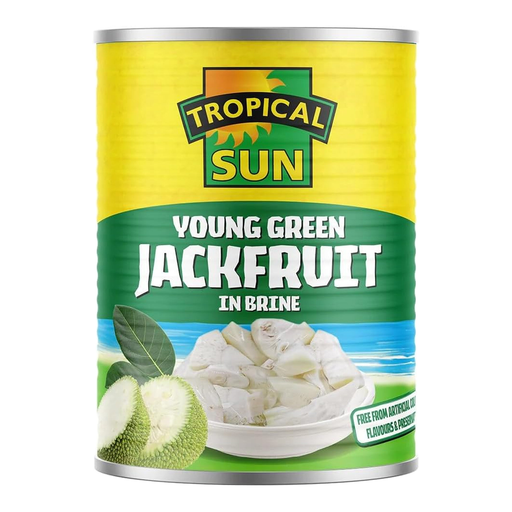
Why This Fits Their Persona: For the confident home cook who understands flavour balancing. The brine imparts a subtle savoury note that can add depth to rich, saucy dishes like tacos or stews.
This is clearly labelled for savoury use. The product description advises rinsing, empowering the cook to control the final salt level and avoid an overly salty dish.
The brine helps to break down the fibres slightly, resulting in a tender texture that shreds beautifully with a fork.
We have compiled a complete, real-time list of products that fully satisfy these strict selection criteria and UK safety regulations.
The secret to great-tasting jackfruit is in the preparation and seasoning. Here’s a simple method for how to cook jackfruit:
Young green jackfruit is a whole-food ingredient. It is low in calories and fat and it provides a good source of dietary fibre. Unlike many processed meat alternatives, it is naturally free from gluten and soy. It serves as a satisfying, texture-rich component in a balanced meal, though it is not a high-protein food, so consider pairing it with other protein sources like beans or lentils.
You have most likely purchased ripe jackfruit packed in syrup by mistake. This version is intended for desserts and has a naturally sweet flavour and soft, fruity texture. For savoury dishes, you must use young green jackfruit packed in either water or brine, which has a neutral flavour and a firm, shreddable texture. Always double-check the label before buying.