
24/7 Customer Support

Free returns

Same-day & Next-day Delivery

Quality Guaranteed

Unlock Your Welcome Offers: FREE Delivery | Up to 80% OFF | Free 30-day JoyPlus trial
Download the APP
A reliable cabin suitcase is an essential companion for any traveller, whether you're jetting off for a weekend city break or a week-long business trip. Yet, the market is flooded with options that look the part but fail when you need them most. A wobbly wheel at the boarding gate or a cracked shell after one trip is a frustrating and costly experience.
As a Joybuy Product Recommendation Officer, my role is to help you see past the marketing jargon. We'll look at the common pitfalls that lead to buyer's remorse and focus on the key features that genuinely matter. This guide will help you select a piece of carry-on luggage that is not just a container for your belongings, but a dependable travel tool.
Before you add any suitcase to your basket, be aware of these frequent issues that can turn a promising purchase into a disappointment.
The "Ultra-Lightweight" Material Trap: Many brands advertise extremely lightweight luggage, but this often comes at a cost. To achieve that low weight, some manufacturers use thin, brittle ABS plastic. While light on the scales, it can crack under the pressure of an over-packed overhead locker or a rough baggage handler, leaving your belongings vulnerable. A durable hard shell suitcase should offer a balance of low weight and high impact resistance.
The Wobbly Wheel Failure: A smooth glide through the airport is a non-negotiable. The most common point of failure on cheaper suitcases is the wheels. Single, poorly constructed wheels are prone to jamming, wobbling or snapping off entirely. This forces you to drag your bag, defeating the purpose of having wheels in the first place. Always look for a suitcase with spinner wheels, specifically double-wheel designs, for superior stability and manoeuvrability.
The "Airline Approved" Size Deception: The term "airline approved cabin bag" can be misleading. While a case might fit the criteria for one airline, it could be oversized for another, particularly budget carriers in the UK and Europe. Relying on a generic label without checking the exact dimensions (including wheels and handles) can lead to unexpected fees at the gate.
To ensure you get a durable and practical cabin suitcase, focus on these three core specifications.
The material of your hard shell case is the single most important factor in its durability.
Forget two-wheeled cases that you have to pull behind you. The modern standard is four 360-degree spinner wheels. These allow you to effortlessly glide the case alongside you, navigate tight spaces and switch directions without strain. For the best performance, look for double spinner wheels on each corner, as they distribute weight more evenly and provide a smoother, more stable roll.
A 20 inch suitcase is a common size for carry-on luggage, but always verify the exact external dimensions (height x width x depth) against your most frequently used airlines. Remember to include wheels and handles in your measurement. For security, a built-in TSA lock suitcase is essential. This allows security agents to inspect your bag without damaging the lock, providing peace of mind, especially on international routes.
To help you find the right fit, we've matched a few options to different traveller profiles.

Why This Fits Their Persona: Ideal for those who take several short trips a year and need a reliable, no-fuss case. It provides all the essential modern features without a premium price tag, making it a smart choice for holidaymakers and occasional business travellers.
It uses 100% polypropylene (PP) for its shell, avoiding the 'ultra-lightweight' trap of brittle ABS plastic. It also features four 360° spinner wheels, preventing the dreaded 'wheel wobble' common in cheaper cases.
Excellent value, combining a durable and lightweight luggage construction with essential features like an integrated TSA lock and organised interior dividers.
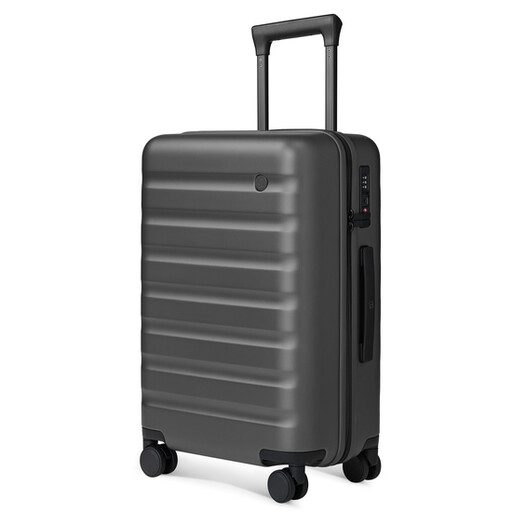
Why This Fits Their Persona: For the professional who is always on the move, convenience and durability are paramount. This case is designed for efficiency, with thoughtful features that make airport life easier, from a stable work surface to snag-free hardware.
Its 100% Polycarbonate (PC) shell offers superior impact resistance. The SGS-certified silent double spinner wheels provide an exceptionally smooth and quiet glide, a direct counter to the 'wobbly wheel' issue.
The unique flush top handle creates a flat surface for a laptop or coffee. It also features a burst-proof zipper and fully recessed hardware to prevent damage during transit.
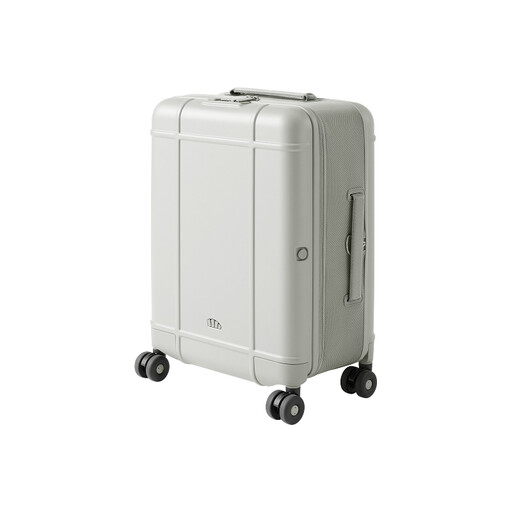
Why This Fits Their Persona: For those living in city flats or homes where storage is at a premium, a bulky suitcase is an inconvenience. This innovative design offers the capacity and protection of a standard case but collapses for easy storage.
Despite its folding mechanism, it doesn't compromise on protection. The StrongShield system combines PC panels with durable fabric, offering robust impact resistance without the rigidity that prevents collapsing.
Its one-touch folding mechanism reduces its thickness to just 5.1 inches, allowing it to be stored under a bed or in a narrow wardrobe. It still includes essential features like 360° spinner wheels and a TSA lock.
We have compiled a complete, real-time list of products that fully satisfy these strict selection criteria and UK safety regulations.
Most TSA locks are preset to 0-0-0. To set your own code, you typically open the lock, press a small reset button with a pen or pointed tool until you hear a click, turn the dials to your desired combination and then slide the main button or lever to set it. Always check the specific instructions that come with your hand luggage.
Think of it as flexibility versus rigidity. Polycarbonate (PC) is more flexible and can absorb impacts by bending, making it very crack-resistant. Polypropylene (PP) is a lighter, very strong plastic that is more rigid but still highly durable and resistant to scratches. Both are excellent choices and far superior to cheaper ABS plastic.
Not necessarily. While a 20 inch suitcase is a common cabin size, airlines like Ryanair and EasyJet have very specific dimension limits that include wheels and handles. A case might be 20 inches tall, but its width or depth could exceed the allowance. Always check the exact dimensions (e.g., 56 x 38.5 x 23 cm) against the airline's current policy before you fly to avoid extra charges.