If avoiding caffeine is the priority, choose a chai-style herbal infusion explicitly labelled caffeine-free, such as Pukka Spiced Vanilla Chai. If the taste of black tea matters more, decaffeinated black tea is another option, but it may retain traces of caffeine and is not necessarily chai-flavoured. For a lunch between lectures, check the ingredients and brewing instructions, and make sure you will have access to hot water.
Who is each option for?
For a lecture-day lunch, the choice turns on whether you need a drink labelled caffeine-free or would accept decaffeinated black tea for its familiar tea flavour.
Students avoiding caffeine at lunch
Look for a chai-style herbal infusion explicitly labelled caffeine-free. The word “chai” alone does not establish caffeine status: Pukka describes its Spiced Vanilla Chai as caffeine-free, while its Original Chai contains black tea.
Students who prefer black tea
Decaffeinated black tea is worth considering if the tea flavour matters more than avoiding caffeine altogether. Twinings offers All Day Decaf as a black-tea option, but decaffeinated tea can retain traces of caffeine; that product is not a chai blend.
Students making tea between lectures
Tea bags avoid the need for a loose-leaf infuser. Check the pack’s brewing instructions and whether you can get hot water where you plan to have lunch, rather than assuming there will be time or facilities to make a cup.
What should you check before buying?
Start with the caffeine statement, then choose the flavour and preparation format that fit your lunch break.
| Priority |
What to check |
Your needs |
| Caffeine status |
Read the explicit caffeine-free or decaffeinated statement and check whether the ingredients include black tea. Twinings notes that UK decaffeinated tea can retain traces of caffeine. |
I want a spiced drink without caffeine at lunch, so a herbal chai labelled caffeine-free fits better than decaffeinated black tea. |
| Tea flavour |
Check whether the drink is a herbal infusion or decaffeinated black tea. Pukka Spiced Vanilla Chai is a spiced herbal infusion; Twinings All Day Decaf is decaffeinated black tea, not chai. |
The taste of black tea matters more to me than a chai spice blend, and reduced rather than absent caffeine is acceptable. |
| Spice profile |
Compare the listed ingredients. Pukka Spiced Vanilla Chai includes cinnamon, ginger, cardamom and vanilla; Teapigs Pumpkin Spiced Chai takes a different direction with pumpkin and cocoa husk among its ingredients. |
I would like chai-style spices, but I want to choose the blend’s flavour rather than assume every product called chai tastes alike. |
| Preparation |
Check whether the tea is bagged, how long its pack says to brew it and whether hot water will be available at lunch. |
Between lectures, I need a drink I can make with the facilities and time I actually have. |
| Ingredients |
Read the current ingredients and allergen information. Pukka Spiced Vanilla Chai contains liquorice root; check its suitability with a pharmacist if you have medicine-interaction concerns. |
If an ingredient is a concern for me, I want to check the pack before making the tea a regular lunch choice. |
Common mistakes to avoid
-
Assuming every chai is caffeine-free
Chai describes a style of drink, not its caffeine status. Pukka describes Spiced Vanilla Chai as caffeine-free, but its Original Chai contains black tea.
Check both the caffeine statement and ingredients on the particular pack you intend to buy.
-
Reading “decaffeinated” as “no caffeine”
Decaffeination removes most caffeine from tea but does not necessarily remove every trace. Twinings makes this distinction for its UK decaffeinated tea range.
If you need a caffeine-free drink, choose one explicitly labelled caffeine-free rather than relying on a decaf black-tea label.
-
Choosing by flavour name without reading ingredients
Pukka Spiced Vanilla Chai contains liquorice root. Collingwood Health Group’s NHS GP information notes that black liquorice can interact with some medicines.
Check the current pack, and ask a pharmacist or clinician about regular use of a liquorice-containing blend if you have a relevant condition or take medicines.
Relevant brands and tea ranges
Pukka and Teapigs have caffeine-free chai-style infusions; the Twinings and Clipper products discussed here are decaffeinated black teas instead. Tesco is a retailer reference, not a separate type of tea.
Pukka
Spiced Vanilla Chai is a caffeine-free herbal infusion with chai-style spices, rather than decaffeinated black tea.
- Its listed spices include cinnamon, ginger and cardamom.
- It contains liquorice root; Pukka Original Chai is a different product and contains black tea.
Teapigs
Pumpkin Spiced Chai is described by Teapigs as naturally caffeine-free.
- Its ingredient profile includes pumpkin, cocoa husk and chai-style spices.
- It is a herbal blend, not a decaffeinated black-tea chai.
Twinings
All Day Decaf is a decaffeinated black-tea option for someone who prefers a conventional tea brew.
- The All Day Decaf product comes in individually wrapped pyramid bags.
- It is not chai-flavoured, and Twinings notes that decaffeinated tea can retain traces of caffeine.
Clipper
Organic Everyday Decaf is made with decaffeinated organically grown black tea.
- Clipper describes using a carbon-dioxide decaffeination process for this tea.
- Organic Everyday Decaf is a black-tea choice, not a chai-spiced blend.
Tesco
Tesco lists Pukka Organic Vanilla Chai as a caffeine-free herbal tea.
- Its product listing identifies the 20-bag pack and ingredients.
- Check the caffeine statement for any other chai product separately; a retailer’s chai category does not establish that every item is caffeine-free.
Joybuy chai options
This option is a bagged, caffeine-free chai-style herbal infusion for a lunch break with access to hot water. It does not provide the flavour of decaffeinated black tea.
 No image available
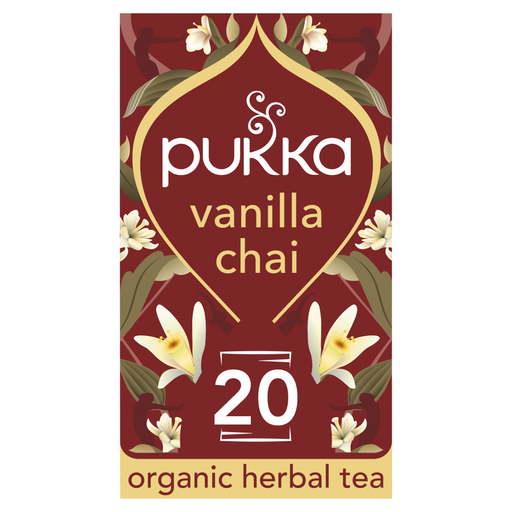
Pukka Vanilla Chai, 20 herbal tea sachets, 40g
This caffeine-free herbal infusion suits a lecture lunch when you want chai-style spices rather than black tea. The 20-sachet pack contains cinnamon, ginger, cardamom, vanilla and liquorice root. Check the current ingredients if liquorice is a concern for you, and follow the pack’s brewing instructions.
View on Joybuy
Questions about chai and decaf tea
Is decaf chai the same as caffeine-free chai?
No. A chai-style herbal infusion explicitly labelled caffeine-free is different from tea that has been decaffeinated. Twinings notes that UK decaffeinated tea can retain traces of caffeine, so check the particular product’s label if avoiding caffeine matters to you.
Which chai-style option can I choose if I want to avoid caffeine?
Pukka describes Spiced Vanilla Chai as caffeine-free. It is a herbal infusion containing spices including cinnamon, ginger and cardamom, not a black-tea chai; check its full ingredients, including liquorice root, before buying.
What do I need to make chai between lectures?
For a bagged tea, allow for the brewing time stated on its pack and make sure you can access hot water where you plan to have lunch. A reusable cup may be convenient if you intend to take the drink away.
What should I check if I have an allergy or intolerance?
Read the ingredients and allergen information on the current pack of the tea you intend to use. Do not rely on the flavour name or an older product description to establish what a particular blend contains.
Should I check before drinking a liquorice-containing chai regularly?
Yes, if you take medicines or have a relevant condition. Pukka Vanilla Chai contains liquorice root, and Collingwood Health Group’s NHS GP information notes that black liquorice can interact with some medicines. Ask a pharmacist or clinician about your circumstances before making it a regular drink.


